
Moroccan Hammam: The Essential Guide to 5 Incredible Bathhouse Experiences
The hammam is one of the most distinctly Moroccan experiences a visitor can have — and one of the most misunderstood. For centuries, the public bathhouse has served as far more than a place to wash. In Moroccan culture, the hammam is a social institution, a ritual of purification, a community gathering space, and a weekly tradition that punctuates the rhythm of life in every city, town, and village in the country.
Visiting a Moroccan hammam is genuinely transformative — an hour or two of steam, heat, scrubbing, and relaxation that leaves the body feeling entirely renewed and the mind strangely calm. But for first-time visitors, the prospect can also be intimidating. What happens inside? What do you need to bring? What are the rules? This guide answers every question about the Moroccan hammam experience so you can walk through the door with confidence.
What is a Moroccan Hammam?
A Moroccan hammam is a traditional steam bathhouse rooted in Islamic purification practices and North African bathing culture. The word hammam comes from the Arabic for “spreader of warmth,” and warmth — in multiple senses — is exactly what the hammam delivers.
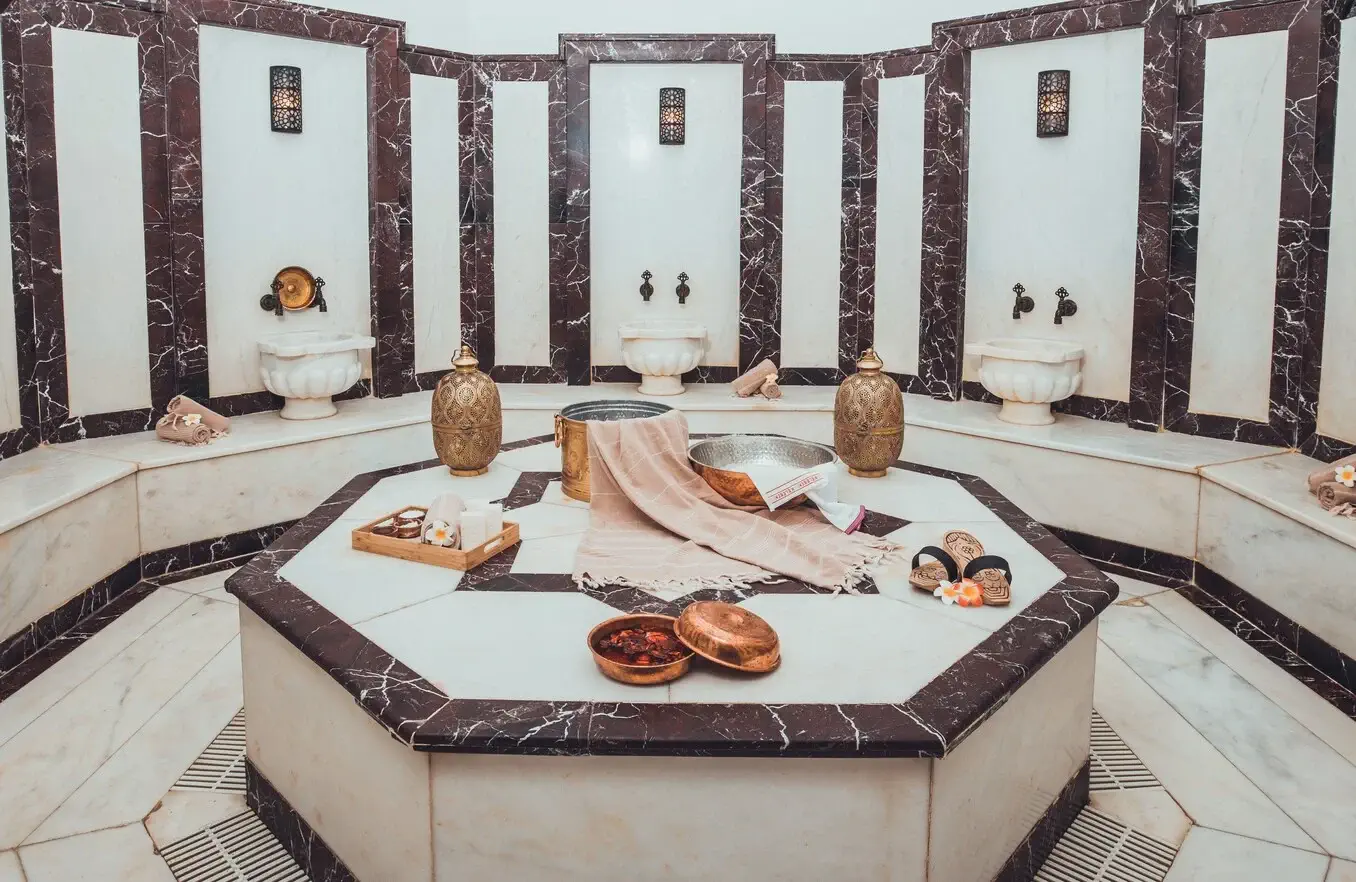
The basic structure of a traditional Moroccan hammam consists of three interconnected rooms at progressively higher temperatures: a cool outer room (used for undressing and resting), a warm middle room (for initial warming and soap application), and a hot inner room (for steaming and deep cleansing). The heat is generated by a wood-fired furnace (ferran) beneath the hot room floor and walls, which radiate warmth throughout the building.
Moroccan hammam culture is rooted in Islamic jurisprudence — ritual purification (tahara) before prayer is a religious obligation, and the hammam has historically served as the community facility for this purification, particularly before Friday prayers, religious festivals, and significant life events such as weddings.
Two Types of Moroccan Hammam
Understanding the distinction between the two main types of hammam helps set appropriate expectations for your visit.
The Traditional Public Hammam
The traditional public Moroccan hammam (hammam shaabi) is a neighborhood institution that serves the local community and has been doing so for centuries. These are not tourist attractions — they are functional, no-frills bathing facilities used by Moroccan families as a regular part of their weekly routine.
Traditional public hammams are segregated by gender, either with separate male and female sections operating simultaneously, or with alternating hours for men and women (typically mornings for women, afternoons and evenings for men, though this varies significantly by establishment).
The experience in a traditional public Moroccan hammam is authentic, inexpensive (typically 15–30 MAD entry), and genuinely communal — you share the space with local families, children, and elderly residents going about their normal bathing routine. It can initially feel overwhelming but is ultimately one of the most immersive cultural experiences Morocco offers.
The Tourist-Oriented Hammam
A growing number of hammams across Morocco’s major cities cater specifically to tourists, offering a more guided, private, and comfortable version of the traditional experience. These establishments typically feature private or semi-private bathing spaces, English-speaking staff, a menu of treatments (including gommage scrub, rhassoul clay mask, and massage), fixed price packages, and changing rooms with lockers.
Tourist-oriented hammams cost significantly more than traditional public hammams — typically 150–500 MAD for a basic package, rising to 800–1,500 MAD for luxury spa experiences in high-end riads. What you gain is predictability, privacy, and professional service; what you lose is the authentic communal atmosphere of the traditional experience.
For first-time visitors, a tourist-oriented hammam is often the more comfortable introduction. For those seeking genuine cultural immersion, the traditional public hammam is irreplaceable.
What Happens in a Moroccan Hammam: Step by Step
Arrival and Preparation
On arrival at the Moroccan hammam, you will typically be directed to a changing area where you remove your clothes and wrap yourself in a towel or a kees (a traditional woven glove used for scrubbing). In traditional hammams, swimwear or underwear is worn in the bathing rooms; in tourist hammams, you may be provided with disposable underwear.
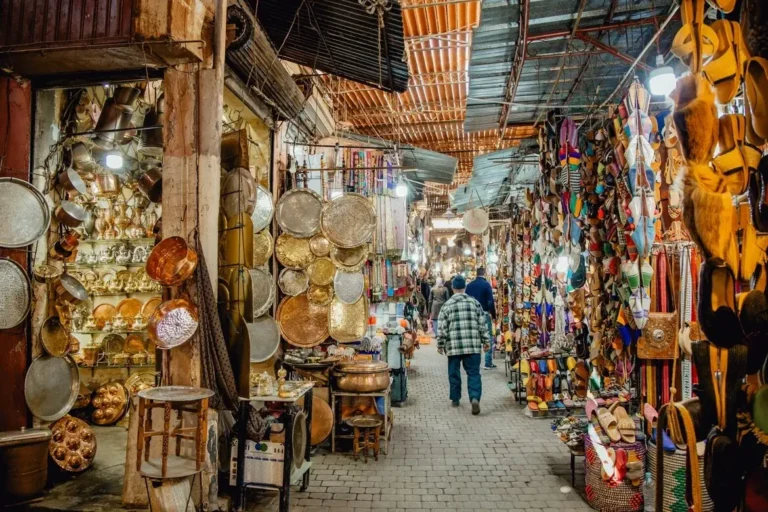
Leave your valuables at the reception desk or in a locker — do not bring them into the steam rooms. Bring or purchase a pair of plastic sandals (available cheaply at most hammams and in the souks) to wear on the wet floors.
The Three Rooms
You begin in the cool outer room, allowing your body to start adjusting to the warmth. After a few minutes, you move to the warm middle room, where you sit or lie on the tiled platform and allow the heat to open your pores.
The hot inner room of the Moroccan hammam is where the real work happens — the steam and heat here are intense, and most visitors find 10–20 minutes is sufficient before needing to return to the cooler rooms to rest and rehydrate.
The Black Soap Application
Before the scrubbing treatment, the body is covered in beldi soap (savon beldi) — a traditional Moroccan black soap made from olive oil, water, and potassium hydroxide. Unlike conventional soap, beldi soap is thick, dark, and intensely moisturizing. It is applied generously and left on the skin for several minutes to soften and loosen dead skin cells.
Beldi soap has a characteristic earthy, slightly herbal smell that is one of the most distinctive sensory memories of any Moroccan hammam visit. You can purchase beldi soap in the souks of Marrakech and Fes for 10–30 MAD to bring home.
The Gommage (Kessa Scrub)
The kessa scrub is the centerpiece of the Moroccan hammam experience. Using a kessa mitt — a rough, woven glove — the attendant (or you yourself, in a self-service hammam) scrubs the body vigorously, removing layers of dead skin. The results are dramatic and visible — rolls of grey dead skin accumulate on the surface, revealing the fresh, soft skin beneath.
The scrub is applied with significant pressure and is more intense than anything available in a conventional Western spa. First-time visitors are sometimes startled by the vigor of the process, but the sensation is not painful — it is deeply satisfying in a way that is difficult to describe and easy to become addicted to.
A full body kessa scrub in a traditional Moroccan hammam costs approximately 50–100 MAD when performed by an attendant. In tourist hammams, the gommage treatment is typically included in package prices.
Rhassoul Clay Mask (Optional)
Many Moroccan hammams offer a rhassoul treatment following the kessa scrub. Rhassoul is a mineral-rich clay from the Atlas Mountains that has been used in Moroccan hammams for centuries. Applied as a thick mask to the body and hair, rhassoul draws out impurities, conditions the skin, and leaves it extraordinarily smooth. It is one of Morocco’s finest natural beauty products and is genuinely worth experiencing in the context of the hammam.
Massage (Optional)
Following the scrub and any clay treatment, a massage can be arranged at most tourist-oriented hammams. Traditional Moroccan massage (tiflet) is firm and invigorating rather than gentle — more similar to sports massage than the delicate techniques of a conventional spa. Prices range from 100–300 MAD for a 30–60 minute session.
Rest and Refreshment
After the scrub and any additional treatments, you return to the cool outer room to rest, allow the body temperature to normalize, and rehydrate. Most Moroccan hammams offer mint tea during this rest period — accept it without hesitation. It is the perfect conclusion to the hammam experience.
What to Bring to a Moroccan Hammam
Essential:
- Swimwear or underwear to wear in the bathing rooms (or disposable underwear, often provided at tourist hammams)
- Plastic sandals or flip-flops for the wet floors
- A kessa mitt (available at the hammam or in the souks for 5–15 MAD)
- A change of clothes and underwear for after
- A small towel
Optional but recommended:
- Beldi soap (the hammam will provide it, but bringing your own is a nice touch)
- Rhassoul clay (available in the souks)
- A large towel or fouta (the traditional Moroccan hammam towel — a lightweight woven cotton wrap available in the medinas)
- Moisturizer for after — your skin will be very receptive following the scrub
Leave behind:
- Jewelry and valuables
- Your phone (steam and water damage risk)
- Expensive clothing (the hammam environment is humid and you will be flushed and warm afterward)
Moroccan Hammam Etiquette
Respect the gender segregation. Traditional public Moroccan hammams are strictly gender segregated. Never attempt to enter the wrong section.
Keep your voice low. The hammam is a place of relaxation and quiet community, not loud conversation. Follow the volume level of the locals around you.
Cover yourself when moving between rooms. Nudity norms in the Moroccan hammam depend on the establishment — in traditional public hammams, some level of modesty is always maintained. Follow the lead of the people around you and keep a towel wrapped when moving through the public areas.
Tip the attendant. If an attendant performs your kessa scrub or massage, a tip of 20–50 MAD is appreciated and expected.
Do not rush. The Moroccan hammam operates on its own time. Allow at least 90 minutes for the full experience, and do not try to compress it into a quick shower equivalent.
The Best Hammams to Visit in Morocco
Marrakech
Hammam El Bacha: One of the oldest and most architecturally impressive traditional hammams in Marrakech, located in the medina near the Bacha Palace. Used by locals for centuries, it offers an authentic experience at local prices (approximately 20–30 MAD entry, 50 MAD for a kessa scrub).
Les Bains de Marrakech: One of the finest tourist-oriented hammams in the city, offering a full menu of treatments in beautiful surroundings. Prices from approximately 400 MAD for a basic package. Advance booking essential.
Fes
Hammam Sidi Azouze: A traditional public hammam in the Fes el-Bali medina, popular with local families and offering an authentic experience at very low cost.
Chefchaouen
Several small traditional hammams operate in Chefchaouen’s medina, serving the local community. These are among the most welcoming of Morocco’s traditional hammams for curious visitors, in keeping with Chefchaouen’s generally relaxed attitude toward tourism.
Health Considerations
The high temperatures in a Moroccan hammam are contraindicated for people with certain medical conditions, including cardiovascular disease, high blood pressure, and respiratory conditions. If you have any of these conditions, consult a doctor before visiting. Pregnant women should also take medical advice before entering the high-temperature rooms.
Stay well hydrated before and after your Moroccan hammam visit. The combination of heat and sweating can cause dehydration more rapidly than expected, particularly in summer.
Final Thoughts
The Moroccan hammam is not a tourist attraction — it is a living cultural tradition that has been practiced across the Islamic world for over a thousand years and remains, in Morocco, an integral part of daily and weekly life. Visiting one with the right preparation, the right attitude, and the right expectations is an experience that will stay with you long after you leave Morocco.
Go to a traditional public hammam if you want genuine cultural immersion. Go to a tourist-oriented hammam if you want comfort and predictability. But go — whatever you choose. The Moroccan hammam experience is one that no amount of reading can fully prepare you for and that no amount of retrospection can fully describe.
For more on Moroccan culture and traditions, read our complete guide to Moroccan hospitality and our guide to bargaining in the souks. For more on planning your Morocco trip, visit Visit Morocco.
2 Comments