Imilchil Marriage Festival: Morocco’s Most Extraordinary Berber Celebration
Deep in the High Atlas Mountains, in a remote valley that most Morocco travelers never reach, one of the most extraordinary cultural events on earth takes place every September. The Imilchil Marriage Festival — known in Tamazight as Moussem Ait Hadiddou — is the annual gathering of the Ait Hadiddou Berber tribe, when unmarried men and women from across the surrounding mountains come together to meet potential spouses, celebrate their tribal identity, and in some cases formalize marriages on the spot before an official adoul.
This guide covers everything you need to know about the Imilchil Marriage Festival — its origins, its significance, what actually happens during the event, how to get there, and how to engage with it as a visitor in a way that is respectful, authentic, and genuinely meaningful.
The Legend Behind the Imilchil Marriage Festival
The Imilchil Marriage Festival is rooted in one of Morocco’s most beloved folk legends — the story of Isli and Tislit, two young lovers from rival Ait Hadiddou clans whose families refused to allow their marriage. Forbidden from being together, the two lovers wept so many tears that their tears formed two lakes — Isli (the groom’s lake) and Tislit (the bride’s lake) — before they died of broken hearts.
The two lakes still exist today, approximately 10 kilometers from Imilchil, and are among the most beautiful natural features of the High Atlas. Their names mean “his” and “hers” in Tamazight — a permanent memorial to the love story that gave rise to the Imilchil Marriage Festival.
According to tradition, the tribal elders of the Ait Hadiddou decided after this tragedy that young people should never again be denied the right to choose their own partners. The Imilchil Marriage Festival was established — a designated time and place where young men and women could meet freely, courtship could be conducted openly, and marriages could be arranged with the blessing of the community rather than the obstruction of feuding families.
Whether the legend is historically accurate matters less than the cultural truth it encodes — the Imilchil Marriage Festival genuinely does provide Ait Hadiddou young people with a socially sanctioned space for courtship and marriage choice that, in the context of a conservative Berber mountain culture, is remarkable and moving.
What Actually Happens at the Imilchil Marriage Festival
The Imilchil Marriage Festival takes place over three days in September — the exact dates vary by year and are determined by the Islamic lunar calendar and tribal tradition. The festival grounds are set up on the plateau above the village of Imilchil, at an altitude of approximately 2,200 meters.
The Market (Souk)
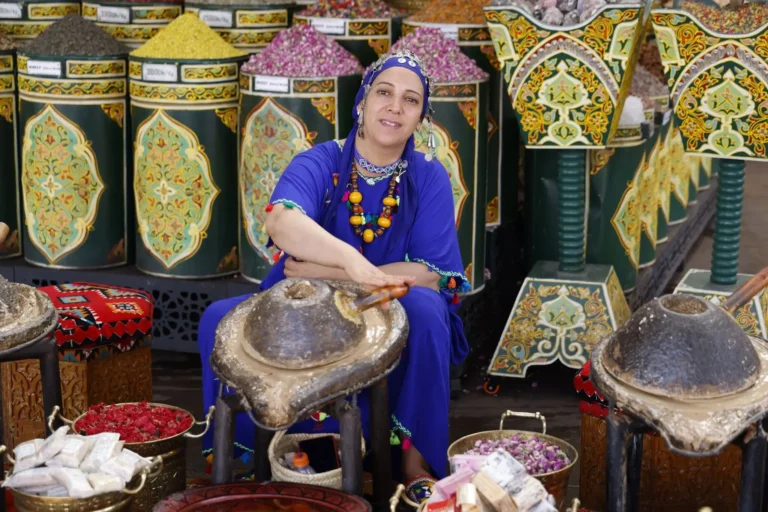
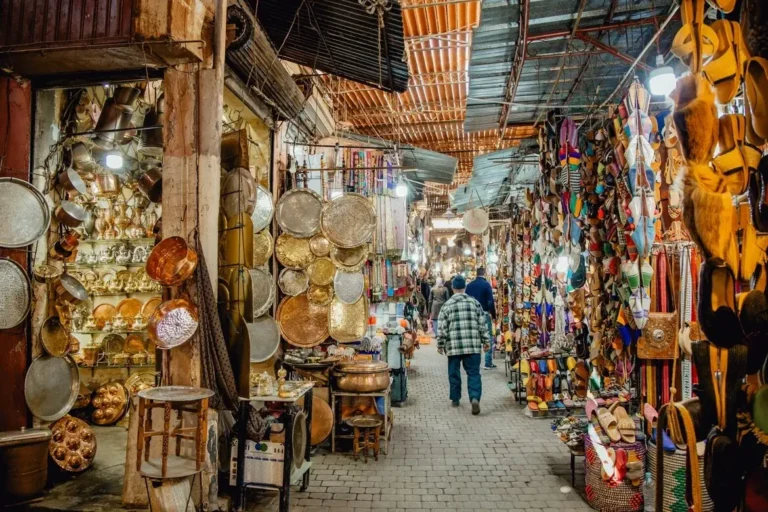
At its core, the Imilchil Marriage Festival is a moussem — a traditional Moroccan gathering that combines religious commemoration, commercial exchange, and social celebration. The market component of the festival is enormous — hundreds of stalls selling everything from livestock (sheep and goats are traded in significant numbers) to traditional Amazigh jewelry, textiles, spices, and household goods.
The livestock market is one of the most authentic and least touristed aspects of the Imilchil Marriage Festival — Berber men from across the surrounding mountains bring animals to sell and buy, conducting negotiations that have followed the same patterns for centuries.
The Courtship Rituals
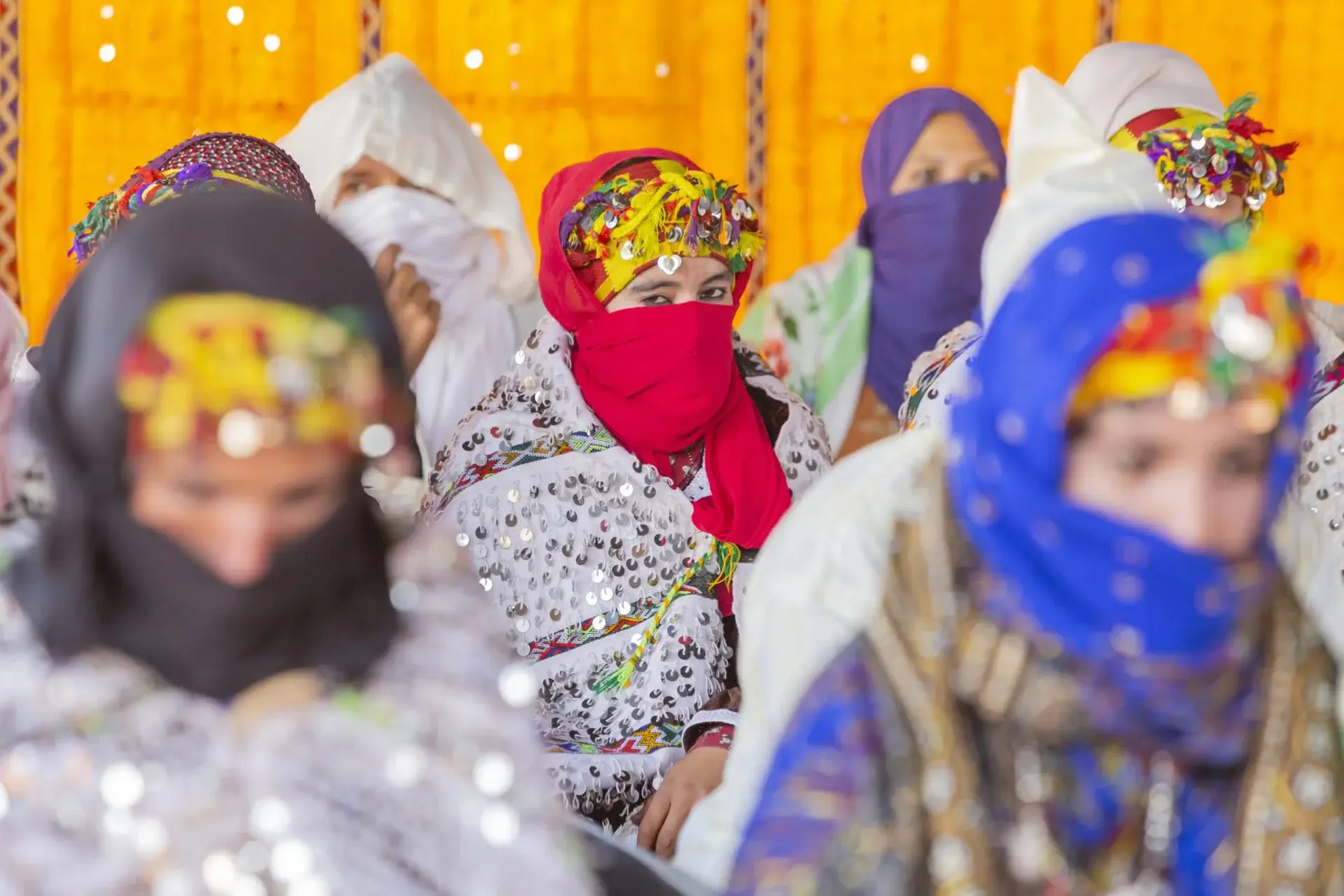
The most famous and most photographed aspect of the Imilchil Marriage Festival is the courtship between unmarried young men and women of the Ait Hadiddou tribe. Young women who are seeking marriage wear a distinctive costume — a white woolen robe (ahansal) with a large black and white striped wool hat — that signals their availability. Young men wear their finest traditional clothing and jewelry.
The courtship at the Imilchil Marriage Festival is conducted through conversation, eye contact, and the gradual process of two people discovering whether they are compatible. There is no formal ritual — no speed-dating, no arranged introductions — simply the social space created by the festival for young people to meet in ways that would not otherwise be possible given the distances between mountain communities and the social constraints of everyday Berber village life.
Couples who feel a connection may formalize their intention to marry at the festival itself, signing a preliminary marriage contract before an adoul (Islamic notary) who attends specifically for this purpose. This preliminary contract is later formalized through a full wedding ceremony at the family home.
The Music and Dancing
The Imilchil Marriage Festival is also a celebration of Ait Hadiddou musical traditions — the collective singing and dancing of the Ahidous tradition, in which men and women stand in alternating circles, clapping rhythmic patterns while individual voices carry improvised poetry above the percussion. The ahidous performances at the Imilchil Marriage Festival can involve hundreds of participants and last for hours — one of the most extraordinary communal musical experiences available anywhere in Morocco.
The Religious Dimension
Like all Moroccan moussems, the Imilchil Marriage Festival includes a religious component — prayers at the local shrine, Quranic recitation, and the general atmosphere of blessing and communal spiritual renewal that characterizes Moroccan religious gatherings. The religious and the celebratory are not separated at the Imilchil Marriage Festival — they exist together in a way that reflects the integration of Islamic practice into every aspect of Ait Hadiddou cultural life.
Getting to Imilchil
Imilchil is located in one of the most remote parts of the High Atlas Mountains — approximately 300 kilometers from Marrakech and accessible only by a long drive on mountain roads of varying quality. This remoteness is both the challenge and the appeal of visiting the Imilchil Marriage Festival — arriving here requires commitment, but the journey through the dramatic Atlas landscapes is extraordinary in its own right.
From Marrakech
The most common approach to the Imilchil Marriage Festival from Marrakech involves driving or being driven via the Tizi n’Tichka pass, Ouarzazate, Boumalne Dades, and the Dades Gorge, then north through the mountains toward Imilchil. This route covers approximately 350 kilometers and takes 7–9 hours depending on road conditions and stops.
An alternative route approaches from the north via Beni Mellal and Azilal — slightly shorter in distance but through equally demanding mountain roads.
Private driver: The most practical option for most visitors. A reliable private driver from Marrakech for a two or three day Imilchil Marriage Festival trip costs approximately 1,500–2,500 MAD including fuel and tolls. Your riad or hotel in Marrakech can recommend trusted drivers.
Organized tour: Several Marrakech-based tour operators offer specific Imilchil Marriage Festival packages including transport, accommodation, and a local guide. Prices range from 800–2,000 MAD per person depending on group size and inclusions.
4×4 rental: The road to Imilchil is paved for most of its length but the final section can be rough — a 4×4 vehicle is recommended, particularly if approaching via secondary mountain roads. For tips on renting a car in Morocco, read our complete car rental guide.
From Fes
Approaching from Fes via Midelt and Rich offers a slightly more direct route to Imilchil from the north — approximately 250 kilometers on generally good roads through the Middle Atlas and then the High Atlas approaches. Journey time approximately 5–6 hours.
Where to Stay for the Imilchil Marriage Festival
Accommodation options in and around Imilchil are limited and extremely basic — this is one of the most remote areas of Morocco and the infrastructure for visitors is minimal outside the festival period.
During the festival: Several basic gites and family homestays operate in Imilchil village and the surrounding area. Accommodation is dormitory-style or simple private rooms with shared facilities. Book well in advance through tour operators or local contacts — rooms fill quickly during the festival period.
Camping: Many visitors to the Imilchil Marriage Festival camp on the plateau near the festival grounds — the most atmospheric option and the one that puts you closest to the event. Bring a proper sleeping bag (temperatures at 2,200 meters in September can drop below 5°C at night) and a tent that handles wind.
Combining with a tour: Most visitors find it most practical to include the Imilchil Marriage Festival as part of a broader High Atlas and southern Morocco circuit — spending a night in Imilchil during the festival and continuing to the Todra Gorge, Merzouga, or back through the Atlas on the days either side.
When to Go
The Imilchil Marriage Festival takes place in September — the exact dates vary by year. The festival typically falls in the second or third week of September, though the Islamic lunar calendar means the date shifts slightly from year to year.
Check the dates in advance. Contact a Marrakech-based tour operator or check with local sources in Morocco before planning your visit — the exact festival dates are usually confirmed only a few weeks in advance.
The weather in September at Imilchil’s altitude (2,200 meters) is cool to cold — daytime temperatures of 15–20°C and nighttime temperatures that can drop to 3–5°C. Bring warm layers regardless of the September heat you may have experienced in Marrakech.
How to Engage Respectfully with the Imilchil Marriage Festival
The Imilchil Marriage Festival has attracted increasing numbers of outside visitors over the past two decades, and with that attention has come a legitimate concern among some community members that the event is becoming more of a tourist spectacle than an authentic cultural gathering.
Visiting the Imilchil Marriage Festival respectfully requires genuine attention to a few principles.
Come to observe, not to consume. The Imilchil Marriage Festival is a real cultural event with real participants for whom the festival has deep personal, social, and spiritual significance. It is not a performance put on for visitors. Approaching it with genuine curiosity and humility rather than as a colorful backdrop for photography produces a fundamentally different and much more meaningful experience.
Ask before photographing. The young women in their distinctive white robes and black-and-white hats are among the most photographed subjects in Morocco — and many of them are deeply uncomfortable with being photographed by strangers during what is, for them, one of the most significant and personal events of their lives. Always ask permission before photographing people, and accept refusal graciously.
Learn some Tamazight. Even a few words — “azul” (hello), “tanemmirt” (thank you), “iyeh” (yes) — signal genuine respect for the community you are visiting and are invariably met with warmth and appreciation.
Hire a local guide. A guide from the Imilchil area itself — rather than a Marrakech-based guide with no personal connection to the Ait Hadiddou community — provides context, facilitates appropriate introductions, and ensures your visit contributes directly to the local economy. The Bureau des Guides in nearby towns can connect you with appropriate local guides.
Buy from local vendors. The market at the Imilchil Marriage Festival offers extraordinary traditional Amazigh jewelry, textiles, and crafts at prices that reflect the local economy. Purchasing directly from the artisans and vendors who made the items — rather than from souvenir shops in Marrakech that claim to sell “Berber” crafts — ensures your spending benefits the community directly.
What to See Beyond the Festival
If your journey to the Imilchil Marriage Festival takes you through the High Atlas, the surrounding region offers extraordinary landscapes and cultural sites that justify extending your trip.
The Lakes of Isli and Tislit: The two lakes of the lovers’ legend are approximately 10 kilometers from Imilchil and among the most beautiful natural features in the High Atlas — glacial lakes set in a high plateau landscape that is unlike anything else in Morocco. The drive or walk between the two lakes, with the Atlas peaks rising on all sides, is extraordinary.
The Dades Gorge: On the route from Marrakech to Imilchil, the Dades Gorge is one of the most dramatic landscapes in Morocco — sheer rock walls rising above a narrow canyon, Berber villages clinging to the cliffsides, and a landscape that feels entirely untouched by modernity. Read our complete Dades Gorge guide for everything you need to know.
The Todra Gorge: Neighboring the Dades Gorge and equally spectacular, the Todra Gorge’s 300-meter vertical walls are a magnet for rock climbers and hikers. A natural complement to an Imilchil Marriage Festival visit.
The Plateau des Lacs: The high plateau surrounding Imilchil is extraordinary in its own right — an almost Tibetan landscape of high grassland, scattered lakes, and distant peaks that feels entirely remote from the Morocco most travelers experience. Walking on the plateau in the early morning before the festival crowds arrive is one of the finest experiences available in the High Atlas.
The Future of the Imilchil Marriage Festival
The Imilchil Marriage Festival faces the challenges that confront many traditional cultural events in the modern world — increasing outside attention, the disruption that large numbers of visitors bring to an intimate community gathering, and the gradual changes in Ait Hadiddou society that modernity inevitably produces.
Young people from the Ait Hadiddou community increasingly have access to phones and social media that allow connection with potential partners outside the festival context. Urban migration means that fewer young people spend their entire lives in the mountain villages that the festival was designed to serve. And the presence of tour buses and professional photographers creates pressures on the event’s authenticity that the community is actively navigating.
None of this means the Imilchil Marriage Festival is dying — it remains a genuinely important cultural institution for the Ait Hadiddou people and draws participants from across the mountain communities with genuine enthusiasm. But it does mean that visitors who approach the event with awareness of these tensions, and who engage with it in ways that support rather than undermine its authenticity, contribute to its survival rather than its transformation into something else.
Final Thoughts
The Imilchil Marriage Festival is one of the most extraordinary cultural events available to visitors in Morocco — genuinely remote, deeply authentic, and rooted in traditions that have barely changed in centuries. The combination of the legend of Isli and Tislit, the high plateau landscape, the ahidous music that fills the festival grounds, and the real human drama of young people meeting potential partners with the blessing of their community creates an experience of rare depth and genuine emotion.
Getting there is not easy. The roads are long and the accommodation is basic. But for travelers who make the effort, the Imilchil Marriage Festival offers something that no organized tour or museum exhibit can replicate — a living encounter with a culture that has maintained its identity and its traditions against extraordinary odds, and that celebrates both with joy, music, and the simple human desire to find love.
For more on Moroccan culture and traditions, read our complete guide to Berber culture in Morocco, our Atlas Mountains hiking guide, and our Moroccan hospitality guide. For official cultural event information, visit Visit Morocco.