
Morocco Airports Guide: The Complete Guide to Flying into Morocco in 2026
Morocco has an extensive network of international airports serving the country’s major cities, and choosing the right entry point for your itinerary can save significant time and money. This Morocco airports guide covers all the major airports — their locations, airlines, transport connections, and the practical details that make arrivals and departures as smooth as possible.
Overview: Morocco’s Major International Airports
Morocco has seven airports handling significant international traffic, with two — Mohammed V in Casablanca and Marrakech Menara — handling the vast majority of international arrivals.
Mohammed V International Airport (CMN) — Casablanca
Marrakech Menara Airport (RAK) — Marrakech
Fes-Saïss Airport (FEZ) — Fes
Ibn Batouta Airport (TNG) — Tangier
Al Massira Airport (AGA) — Agadir
Nador International Airport (NDR) — Nador
Oujda Angads Airport (OUD) — Oujda
Mohammed V International Airport (CMN) — Casablanca
Mohammed V International Airport is Morocco’s main international hub, handling the largest volume of passengers of any of Morocco’s airports. Located approximately 30 kilometers southeast of central Casablanca, CMN is connected to destinations across Europe, North America, the Middle East, Africa, and beyond by Royal Air Maroc and dozens of international carriers.
Airlines: Royal Air Maroc (hub), Air France, British Airways, Iberia, Lufthansa, Turkish Airlines, Emirates, Qatar Airways, Delta Air Lines, and many others.
Getting into the city: The ONCF train (Al Aouad express) runs directly from beneath the terminal to Casablanca Voyageurs and Casa Port stations in approximately 45 minutes (50 MAD). This is by far the most convenient and reliable option. Official taxis from the airport to central Casablanca cost approximately 250–350 MAD fixed rate. For connections to other cities, the train network from Casablanca connects to Rabat (1 hour), Fes (3.5 hours), and Marrakech (3 hours).
Facilities: Mohammed V is a modern, well-equipped airport with good food and retail options, currency exchange, and a reasonable range of car rental desks in the arrivals hall.
Marrakech Menara Airport (RAK) — Marrakech
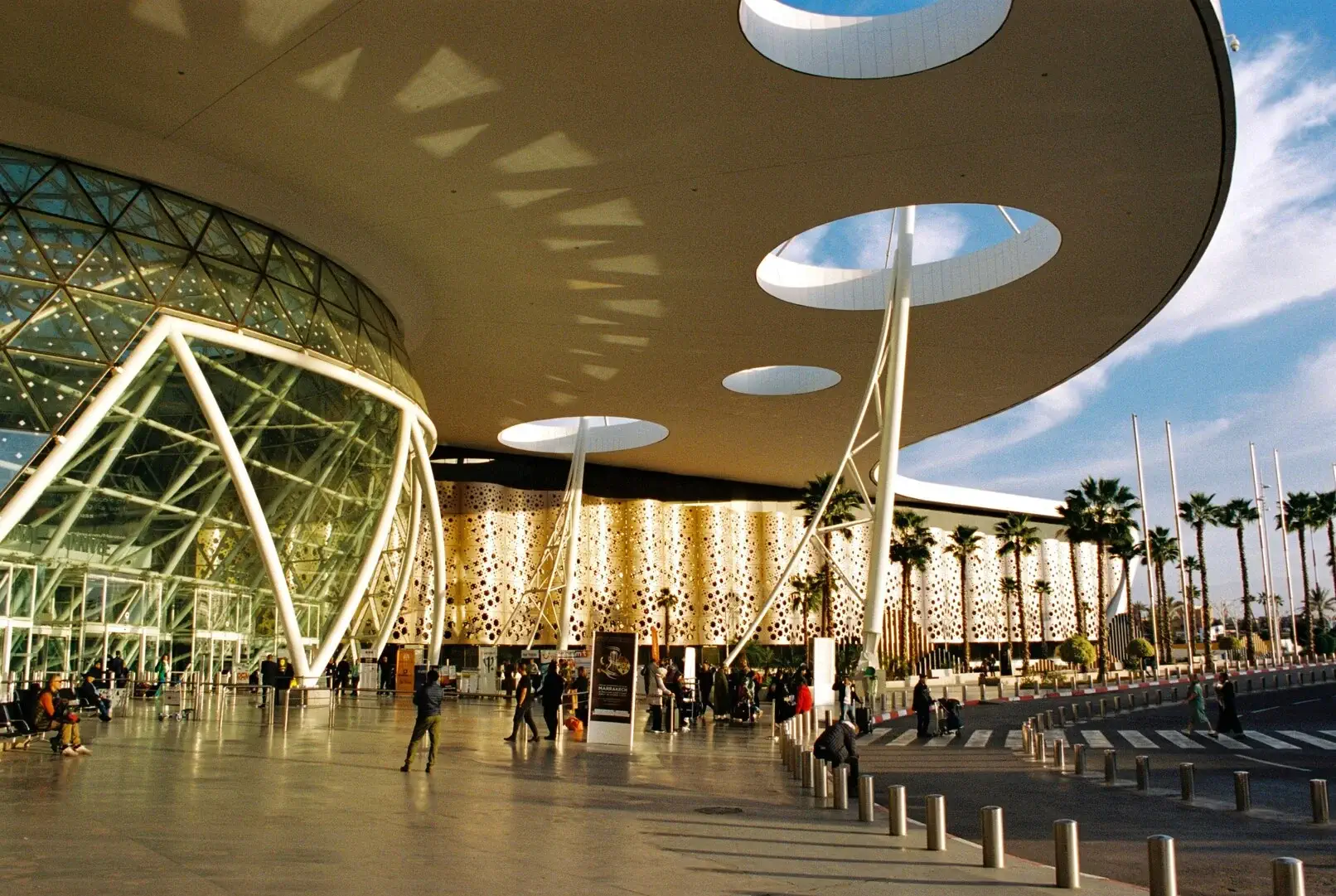
Marrakech Menara is Morocco’s second busiest international airport and the primary entry point for the large volume of tourists visiting Marrakech directly from Europe. Located approximately 6 kilometers southwest of the city center, RAK is served by an extraordinary range of European low-cost and scheduled carriers, making it one of the most connected airports in North Africa for European routes.
Airlines: Ryanair, easyJet, Transavia, Vueling, Royal Air Maroc, Air Arabia Maroc, TUI, Jet2, and many others. Direct flights from London, Paris, Amsterdam, Brussels, Madrid, Barcelona, Rome, Frankfurt, and dozens of other European cities.
Getting into the city: Official taxis from RAK to the medina cost a fixed rate of approximately 100–150 MAD (confirm before getting in). Bus line 19 runs between the airport and Djemaa el-Fna for approximately 30 MAD. Uber and Careem also operate from the airport. The journey to the medina takes 15–25 minutes depending on traffic.
Practical notes: Marrakech Menara handles very high passenger volumes during peak season (March–May and September–November). Immigration queues can be very long on busy mornings — allow adequate time before onward connections.
Fes-Saïss Airport (FEZ) — Fes
Fes-Saïss Airport serves Morocco’s cultural capital with direct connections to a range of European cities, making it possible to begin a Morocco itinerary in the north and travel south, or to exit Morocco from Fes without backtracking to Casablanca or Marrakech.
Airlines: Ryanair, easyJet, Royal Air Maroc, Transavia, and several charter operators. Regular connections to London, Paris, Brussels, Amsterdam, Madrid, and other European cities.
Getting into the city: Fes airport is approximately 15 kilometers from the city center. Taxis cost approximately 80–120 MAD to the medina. Bus services also operate but are less convenient with luggage.
Practical notes: Fes-Saïss is a smaller airport than CMN or RAK and handles lower passenger volumes — arrivals and departures here are typically smoother and faster than at Morocco’s two main airports.
Ibn Batouta Airport (TNG) — Tangier
Tangier’s airport has gained significantly in importance since the opening of the Al Boraq high-speed train link to Casablanca, Rabat, and the rest of Morocco’s rail network. Flying into Tangier and traveling south by Al Boraq is an excellent option for travelers planning a northern Morocco itinerary or a top-to-bottom journey through the country.
Airlines: Ryanair, easyJet, Royal Air Maroc, Air Arabia Maroc, Iberia, and others. Good connections to Spain, France, Belgium, the Netherlands, and the UK.
Getting into the city: Tangier airport is approximately 15 kilometers from the city center. Taxis cost approximately 100–150 MAD. The Al Boraq train station (Tangier Ville) is in the city center rather than at the airport — take a taxi to the station for onward rail connections.
Al Massira Airport (AGA) — Agadir
Agadir’s airport serves the country’s main beach resort destination and the gateway to the surf spots of Taghazout and the Anti-Atlas region. It handles significant charter and package holiday traffic from northern Europe.
Airlines: Ryanair, easyJet, TUI, Jet2, Royal Air Maroc, Air Arabia Maroc, and numerous charter operators.
Getting into the city: Agadir airport is approximately 25 kilometers from the city center. Taxis cost approximately 150–200 MAD. Bus services are available but infrequent.
Practical Tips for Arriving at Morocco Airports
Currency: Dirhams are available from ATMs in all major Morocco airports. Currency exchange desks are also available but typically offer less favorable rates than ATMs. It is worth withdrawing some dirhams on arrival rather than relying on card payments in taxis and medina establishments.
SIM cards: Local SIM cards from Maroc Telecom, Orange, or Inwi are available at kiosks in the arrivals halls of all major Morocco airports. A SIM card with 5–10GB of data costs 30–80 MAD and is strongly recommended for navigation and communication throughout your trip.
Taxi negotiation: As covered in our Morocco taxi guide, airport taxi drivers in Morocco frequently attempt to charge inflated rates to newly arrived visitors. Know the approximate correct fare before exiting the terminal and be prepared to negotiate or decline.
Car rental: All major Morocco airports have car rental desks in the arrivals hall. For tips on renting a car in Morocco, read our complete car rental guide.
Departure timing: Morocco airports can be congested during peak periods. Allow at least 2.5–3 hours before departure for check-in and security at Casablanca and Marrakech airports, and at least 2 hours at smaller airports.
Final Thoughts
Morocco’s airport network gives travelers genuine flexibility in how they enter and exit the country — something that significantly improves the efficiency of any Morocco itinerary. Flying into Marrakech and out of Tangier (or vice versa) eliminates the need to double back on your route and allows a cleaner linear journey through the country.
For transport planning beyond the airports, read our Morocco train travel guide and our Marrakech to Fes transport guide. For official airline and airport information, visit Royal Air Maroc and the ONDA airport authority.

2 Comments