
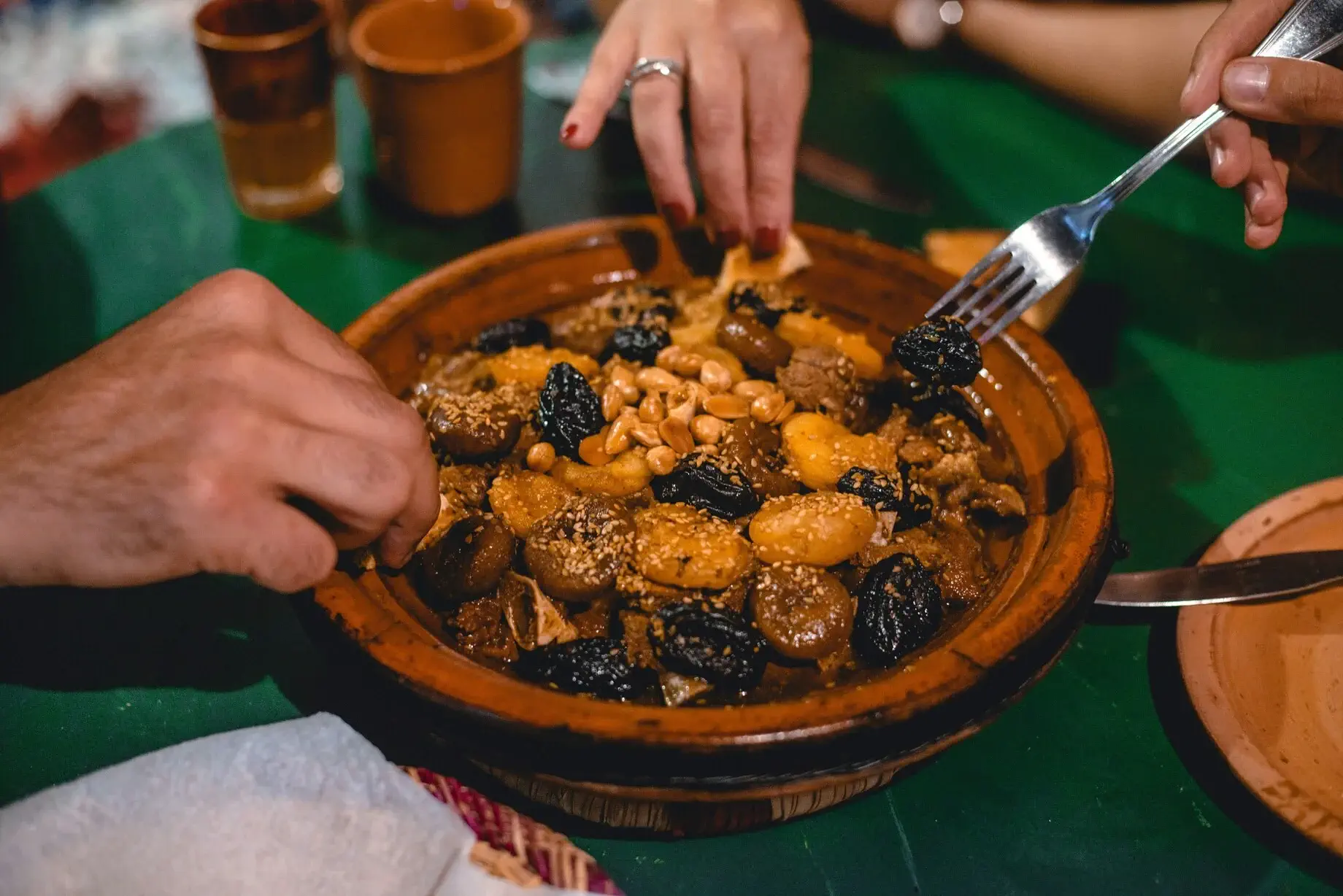
Moroccan Tagine Recipe: How to Make the Perfect Tagine at Home
The tagine is Morocco’s most celebrated dish — a slow-cooked stew named after the distinctive conical clay pot in which it is traditionally cooked, built on a foundation of aromatic spices, fresh herbs, and ingredients that meld over hours of gentle heat into something far greater than the sum of their parts. Learning to make a Moroccan tagine recipe at home is one of the most rewarding culinary projects available to any home cook — the techniques are straightforward, the ingredients are accessible in most Western supermarkets, and the results are extraordinary.
This guide covers three essential Moroccan tagine recipes — chicken tagine with preserved lemon and olives, lamb tagine with prunes and almonds, and vegetable tagine with chickpeas — plus everything you need to know about the spices, equipment, and techniques that make the difference between a good tagine and a great one.
Understanding the Moroccan Tagine
Before the recipes, some essential context that will make every Moroccan tagine recipe you attempt more successful.
The Tagine Pot
A traditional Moroccan tagine is cooked in a two-piece clay vessel — a wide, shallow base and a distinctive conical lid that circulates steam back down onto the ingredients, keeping everything moist and allowing slow, even cooking without a pressure cooker or significant added liquid.
You do not need an authentic Moroccan tagine pot to make excellent Moroccan tagine recipes — a heavy-bottomed casserole dish or Dutch oven produces excellent results. But if you want to invest in the authentic experience, Moroccan tagine pots are widely available online and in Moroccan souvenir shops. They require seasoning before first use (soaking in water for 24 hours, then rubbing with olive oil and heating in a low oven) and should be used on a heat diffuser on gas or electric hobs to prevent cracking.
The Spice Foundation
The distinctive flavor profile of a Moroccan tagine recipe is built on a specific combination of spices that appears, in varying proportions, in almost every version. Understanding these spices is the key to making authentic Moroccan tagine recipes.
Ras el hanout — literally “head of the shop,” this spice blend varies by merchant but typically contains 20 or more spices including cumin, coriander, cinnamon, ginger, turmeric, black pepper, cardamom, nutmeg, and rose petals. It is the single most important spice in any Moroccan tagine recipe and is now widely available in Western supermarkets.
Cumin — earthy, warm, and slightly bitter, cumin appears in almost every Moroccan tagine recipe and is used both in the cooking and as a table condiment.
Ginger — both fresh and dried ginger appear in Moroccan cooking. The dried powder provides warmth; fresh ginger provides brightness. Many traditional Moroccan tagine recipes use both.
Turmeric — provides the golden color that characterizes many Moroccan tagine recipes and adds a subtle earthy flavor.
Cinnamon — used in both savory and sweet applications in Moroccan cuisine, cinnamon is particularly important in tagines that combine meat with dried fruit.
Saffron — the most expensive spice in the world and a significant element in many traditional Moroccan tagine recipes. A small pinch dissolved in warm water and added to the cooking liquid adds color, aroma, and a flavor that is impossible to replicate with substitutes.
Preserved lemons — not a spice but an essential ingredient in many Moroccan tagine recipes. Preserved lemons are lemons that have been packed in salt for weeks or months, transforming their flavor from sharp and acidic to mellow, complex, and intensely savory. They are available in specialty food shops and are very easy to make at home.
Recipe 1: Chicken Tagine with Preserved Lemon and Olives
This is the most classic and most beloved of all Moroccan tagine recipes — the dish that appears on virtually every traditional Moroccan restaurant menu and the one that most people associate with Moroccan cuisine.
Serves: 4
Preparation time: 20 minutes plus marinating
Cooking time: 1 hour 15 minutes
Ingredients
For the marinade (chermoula):
- 1 whole chicken (approximately 1.5kg), cut into 8 pieces, or 8 bone-in chicken thighs
- 4 cloves garlic, finely minced
- 1 large onion, grated
- 3 tablespoons olive oil
- 1 teaspoon ground cumin
- 1 teaspoon ground ginger
- 1 teaspoon turmeric
- 1 teaspoon sweet paprika
- ½ teaspoon black pepper
- ½ teaspoon ground cinnamon
- Large pinch of saffron dissolved in 2 tablespoons warm water
- 1 large bunch fresh cilantro, roughly chopped
- 1 large bunch fresh flat-leaf parsley, roughly chopped
- Juice of half a lemon
- 1 teaspoon salt
For cooking:
- 3 tablespoons olive oil
- 2 medium onions, thinly sliced
- 200ml chicken stock or water
- 1 preserved lemon, flesh discarded, skin rinsed and cut into strips
- 150g green or purple olives, pitted
- Fresh cilantro and parsley to finish
Method
Step 1 — Marinate the chicken: Combine all the chermoula ingredients in a large bowl and add the chicken pieces. Mix thoroughly to coat every surface. Cover and refrigerate for a minimum of 2 hours, ideally overnight. The longer the marinating time, the deeper the flavor.
Step 2 — Build the base: Heat olive oil in the base of your tagine pot or heavy casserole over medium heat. Add the sliced onions and cook gently for 10–12 minutes until soft and translucent but not browned.
Step 3 — Brown the chicken: Remove the chicken from the marinade (reserve the marinade) and add to the pot. Brown lightly on all sides — approximately 3–4 minutes per side. This step is not strictly traditional in all Moroccan tagine recipes but significantly improves the depth of flavor.
Step 4 — Add the liquid: Pour the reserved marinade and the chicken stock over the chicken. The liquid should come approximately one third of the way up the chicken pieces — Moroccan tagine recipes use much less liquid than Western stews because the conical lid returns steam to the pot.
Step 5 — Slow cook: Bring to a gentle simmer, cover tightly with the tagine lid or casserole lid, and cook over the lowest possible heat for 45–50 minutes, or until the chicken is completely tender and falling from the bone.
Step 6 — Add preserved lemon and olives: Add the preserved lemon strips and olives to the pot and cook for a further 10 minutes uncovered, allowing the sauce to reduce slightly.
Step 7 — Finish and serve: Taste and adjust seasoning. Scatter with fresh cilantro and parsley. Serve directly from the tagine pot (if using one) with fresh Moroccan khobz bread for scooping, or with couscous.
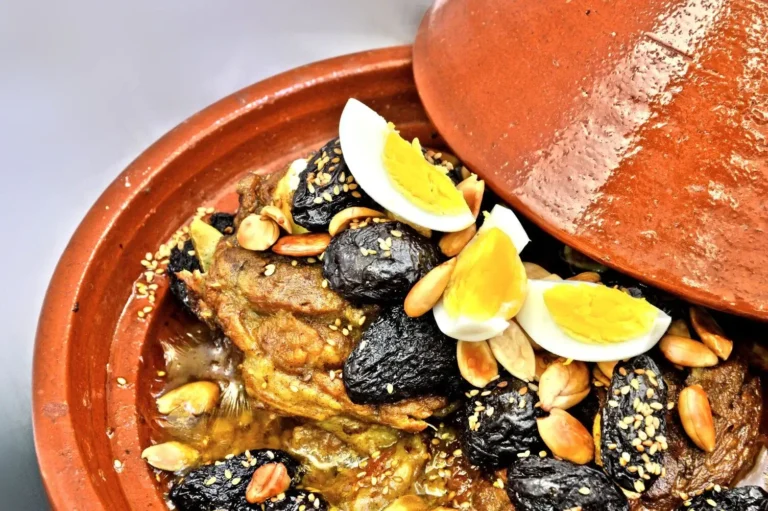
Recipe 2: Lamb Tagine with Prunes and Almonds
The combination of slow-cooked lamb with sweet dried fruit is one of the most distinctive and most celebrated elements of Moroccan cuisine — a flavor profile that reflects the Andalusian and Berber influences that define Moroccan cooking. This Moroccan tagine recipe is traditionally served at celebrations and special occasions.
Serves: 4–6
Preparation time: 15 minutes
Cooking time: 2 hours
Ingredients
- 1kg bone-in lamb shoulder, cut into large pieces
- 3 tablespoons olive oil or smen (aged Moroccan butter)
- 2 large onions, finely chopped
- 4 cloves garlic, minced
- 1 teaspoon ground ginger
- 1 teaspoon ground cinnamon, plus extra for finishing
- 1 teaspoon ground cumin
- ½ teaspoon turmeric
- ½ teaspoon black pepper
- Large pinch of saffron dissolved in 3 tablespoons warm water
- 300ml water or lamb stock
- 250g pitted prunes
- 2 tablespoons honey
- 100g blanched almonds, toasted in a dry pan until golden
- 1 tablespoon sesame seeds, toasted
- Salt to taste
- Fresh cilantro to finish
Method
Step 1 — Sear the lamb: Heat olive oil in the tagine base or casserole over medium-high heat. Season the lamb with salt and sear in batches until browned on all sides. Remove and set aside.
Step 2 — Cook the aromatics: Reduce heat to medium. Add onions to the same pot and cook for 8–10 minutes until soft. Add garlic, ginger, cinnamon, cumin, turmeric, and black pepper and cook for 2 minutes, stirring constantly.
Step 3 — Return the lamb: Return the lamb to the pot. Add saffron water and enough stock or water to come one third up the meat.
Step 4 — Slow cook: Bring to a simmer, cover, and cook over the lowest possible heat for 1 hour 30 minutes, checking occasionally and adding small amounts of water if the pot appears dry.
Step 5 — Add prunes and honey: After 90 minutes, the lamb should be very tender. Add the prunes and honey, stir gently, cover, and cook for a further 20 minutes until the prunes are soft and the sauce has thickened to a syrupy consistency.
Step 6 — Finish and serve: Transfer to a serving dish or serve in the tagine pot. Scatter with toasted almonds and sesame seeds. Dust lightly with cinnamon. Garnish with fresh cilantro. Serve with couscous or fresh bread.
Recipe 3: Vegetable Tagine with Chickpeas and Preserved Lemon
One of the finest Moroccan tagine recipes for vegetarians — and genuinely outstanding regardless of dietary preference. The key to a great vegetable tagine is using a variety of root vegetables that hold their shape during long cooking and building the spice base carefully so the dish has the same depth of flavor as the meat versions.
Serves: 4
Preparation time: 20 minutes
Cooking time: 50 minutes
Ingredients
- 3 tablespoons olive oil
- 2 large onions, thinly sliced
- 4 cloves garlic, minced
- 1 teaspoon ground cumin
- 1 teaspoon ground ginger
- 1 teaspoon turmeric
- 1 teaspoon sweet paprika
- ½ teaspoon ground cinnamon
- ½ teaspoon ground coriander
- 400g tin chopped tomatoes
- 200ml vegetable stock
- 2 medium carrots, cut into chunks
- 2 medium potatoes, cut into chunks
- 2 medium courgettes, cut into thick slices
- 1 small turnip, cut into chunks
- 400g tin chickpeas, drained and rinsed
- 1 preserved lemon, flesh discarded, skin rinsed and cut into strips
- 100g green olives
- Large bunch fresh cilantro and parsley
- Salt and pepper to taste
- Harissa to serve
Method
Step 1 — Build the base: Heat olive oil in the tagine base or casserole over medium heat. Add onions and cook for 10 minutes until soft. Add garlic and all the dry spices and cook for 2 minutes, stirring constantly.
Step 2 — Add tomatoes and stock: Add chopped tomatoes and vegetable stock. Stir well and bring to a simmer.
Step 3 — Add root vegetables: Add carrots, potatoes, and turnip — the denser vegetables that need the longest cooking. Stir to coat in the spiced tomato base.
Step 4 — Slow cook: Cover and cook over low heat for 20 minutes.
Step 5 — Add remaining vegetables: Add courgettes and chickpeas. Cover and cook for a further 15 minutes until all vegetables are tender but still holding their shape.
Step 6 — Finish: Add preserved lemon strips and olives. Cook uncovered for 5 minutes to concentrate the sauce. Taste and adjust seasoning generously — vegetable tagines often need more salt than meat versions.
Step 7 — Serve: Scatter with fresh cilantro and parsley. Serve with couscous or fresh bread and a small bowl of harissa on the side.
Essential Tips for Every Moroccan Tagine Recipe
Low and slow is non-negotiable. The magic of a Moroccan tagine recipe comes from extended gentle cooking — high heat produces tough meat and broken-down vegetables. If your tagine is cooking too quickly, reduce the heat and extend the time.
Use good quality spices. Spices lose their potency over time — if your cumin and ginger have been in the cupboard for two years, the Moroccan tagine recipe will taste flat regardless of technique. Buy fresh spices from a specialist spice merchant if possible.
Taste and adjust constantly. Moroccan cooking is not a precise science — the sweetness of your onions, the saltiness of your preserved lemons, and the potency of your spices will all vary. Taste throughout cooking and adjust.
Don’t skip the preserved lemon. Preserved lemon is not optional in any Moroccan tagine recipe that calls for it — it provides an irreplaceable flavor that fresh lemon cannot replicate. Make your own (salt-packed lemons in a jar, left for four weeks) or buy them from a specialty food shop.
Rest before serving. Like all slow-cooked dishes, a Moroccan tagine recipe benefits from 10–15 minutes of resting before serving — the flavors continue to develop and the sauce thickens slightly.
What to Serve with a Moroccan Tagine Recipe
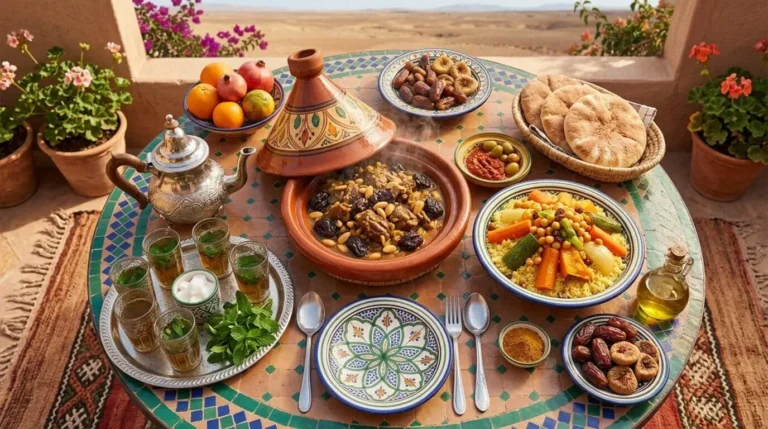
Moroccan khobz bread is the traditional accompaniment — a round, slightly dense flatbread that is perfect for scooping tagine directly from the pot. If you cannot make or buy khobz, any good quality crusty bread works well.
Couscous is the other classic accompaniment — steamed semolina that absorbs the tagine’s sauce beautifully. Instant couscous (prepared by pouring boiling water or stock over it and leaving for 5 minutes) is perfectly acceptable for home cooking.
Moroccan salads — zaalouk (roasted eggplant and tomato), taktouka (roasted pepper and tomato), carrot salad with cumin and orange blossom water — served as starters before the tagine create a complete Moroccan meal experience at home.
Final Thoughts
A Moroccan tagine recipe is one of those dishes that rewards every repeat — each time you make it, the spice balance becomes more intuitive, the judgment of when the meat is perfect becomes more instinctive, and the understanding of how the flavors build and develop deepens. Start with the chicken tagine with preserved lemon, which is the most forgiving and most universally loved. Then try the lamb with prunes. Then experiment with your own combinations.
Morocco’s greatest culinary gift to the world is not a single recipe but a way of cooking — slow, aromatic, patient, and deeply generous. These Moroccan tagine recipes are your introduction to that tradition.
For more on Moroccan food culture, read our complete guide to traditional Moroccan dishes and our Moroccan street food guide. For the best tagine restaurants in Morocco, read our best restaurants in Marrakech guide. For official Moroccan food culture information, visit Visit Morocco.


One Comment