
Moroccan Street Food Guide: 12 Must-Try Dishes and Where to Find Them
Moroccan street food is one of the great undiscovered pleasures of world cuisine. While the country’s tagines and couscous have achieved international fame, the real culinary soul of Morocco lives on the streets — in the steaming bowls of harira ladled out at dusk, the freshly grilled kefta smoking over charcoal in Djemaa el-Fna, the msemen flatbreads folded straight from the pan into waiting hands, the paper cones of spiced snails that locals crack open at the roadside while watching the world go by.
This Moroccan street food guide covers the 12 most essential dishes to try, where to find the best versions across the country, how much to expect to pay, and the practical tips that will help you eat like a local from your first day in Morocco.
Why Moroccan Street Food is Special
Moroccan street food is not a simplified or degraded version of Moroccan restaurant cooking — it is its own culinary tradition, with its own specialties, its own vendors, and its own rhythms that are tied to the time of day, the season, and the neighborhood. The man selling bissara from a cart at 7 AM is not competing with the riad restaurant serving tagine at 8 PM — they inhabit entirely different worlds of Moroccan food culture.
Understanding this is the key to navigating Moroccan street food well. Different vendors specialize in different things, different times of day bring different foods, and the best Moroccan street food is almost always found not in the tourist-facing stalls near the main squares but in the streets and neighborhoods where Moroccans actually live and eat.
The 12 Best Moroccan Street Food Dishes
1. Harira — Morocco’s Soul in a Bowl
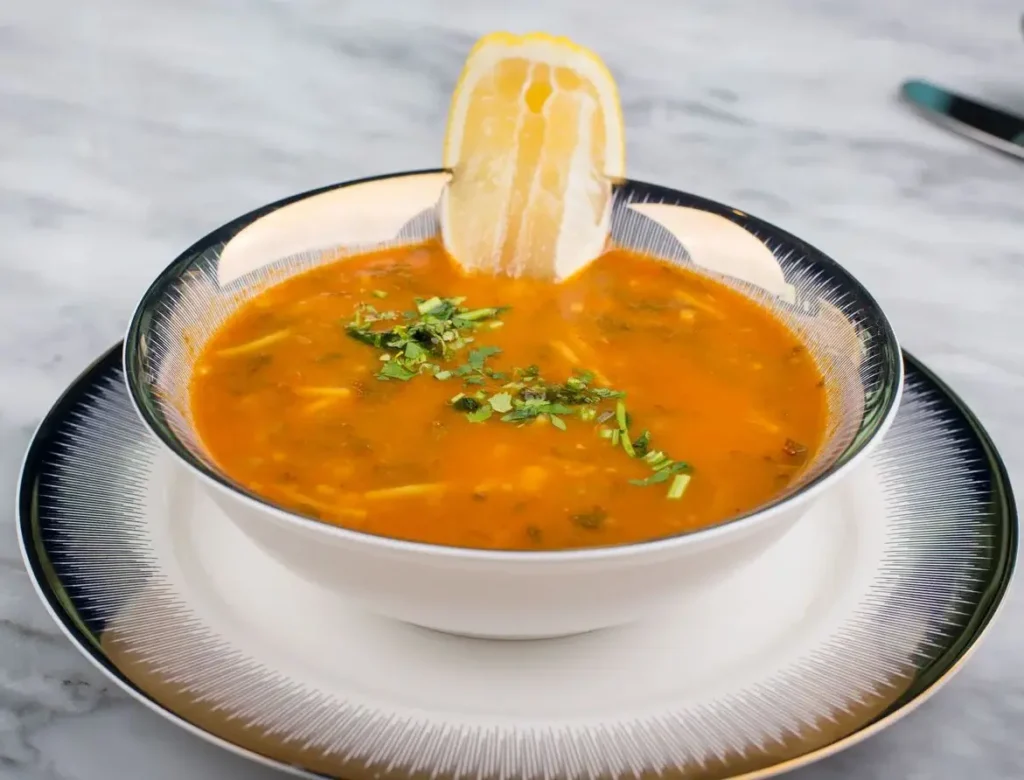
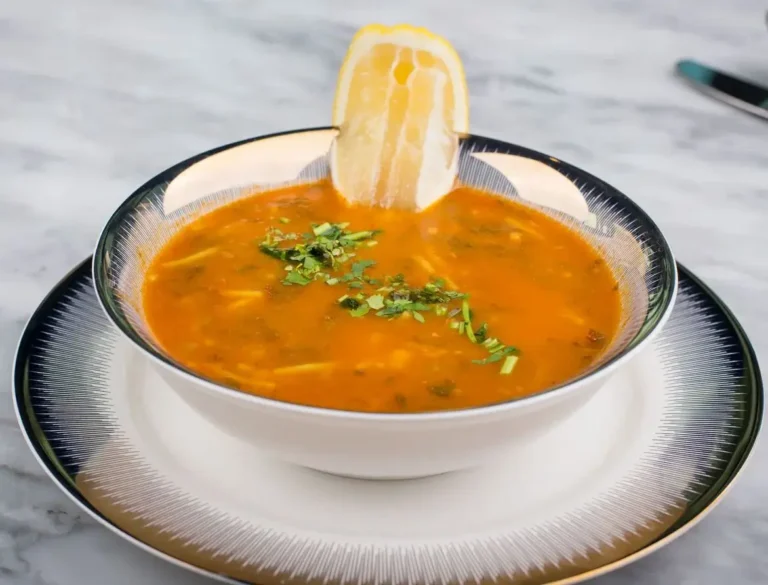
Harira is the dish that defines Moroccan street food culture more than any other. This thick, warming soup of tomatoes, lentils, chickpeas, fresh herbs (cilantro and parsley), lemon, and spices is Morocco’s most beloved everyday food — eaten for breakfast, as a late afternoon snack, and above all to break the Ramadan fast at sunset.
Street vendors sell harira from large pots, ladling it into small ceramic bowls and serving it with a wedge of lemon and a piece of bread. The ritual of eating harira at a street stall as the light fades over the medina is one of the most authentically Moroccan experiences any visitor can have.
Price: 5–10 MAD per bowl
Best time: Late afternoon and early evening
Best place: Street stalls throughout Morocco’s medinas, particularly near mosque gates at sunset
2. Msemen — The Moroccan Flatbread You Will Eat Every Day
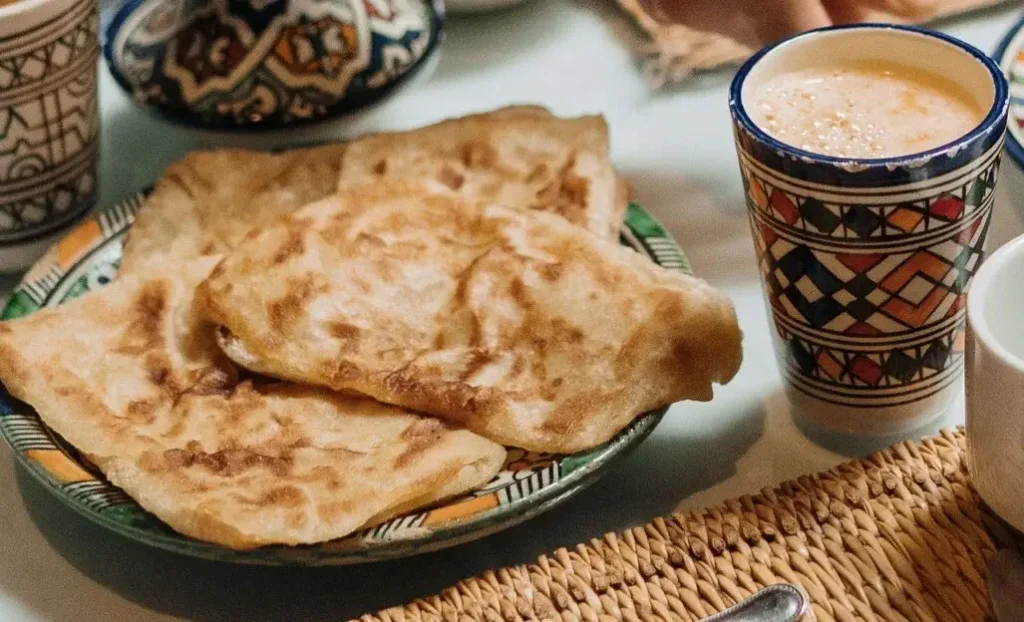
Msemen is a square, layered flatbread made from semolina and flour, folded repeatedly to create dozens of flaky layers, then pan-fried on a griddle until golden and crispy on the outside while remaining soft and yielding inside. It is one of the most satisfying and versatile pieces of Moroccan street food — eaten for breakfast with honey and argan oil, as a snack with zaalouk, or simply on its own, warm from the pan.
Watching a msemen vendor fold and cook the bread with practiced speed is itself a performance worth stopping for. The best msemen has perfectly even layers, is slightly translucent in places, and is eaten immediately — within minutes of leaving the griddle is optimal.
Price: 2–5 MAD per piece
Best time: Morning (7–11 AM) and late afternoon
Best place: Street stalls and small bakeries throughout Morocco
3. Kefta Brochettes — Grilled Moroccan Meatballs on Skewers
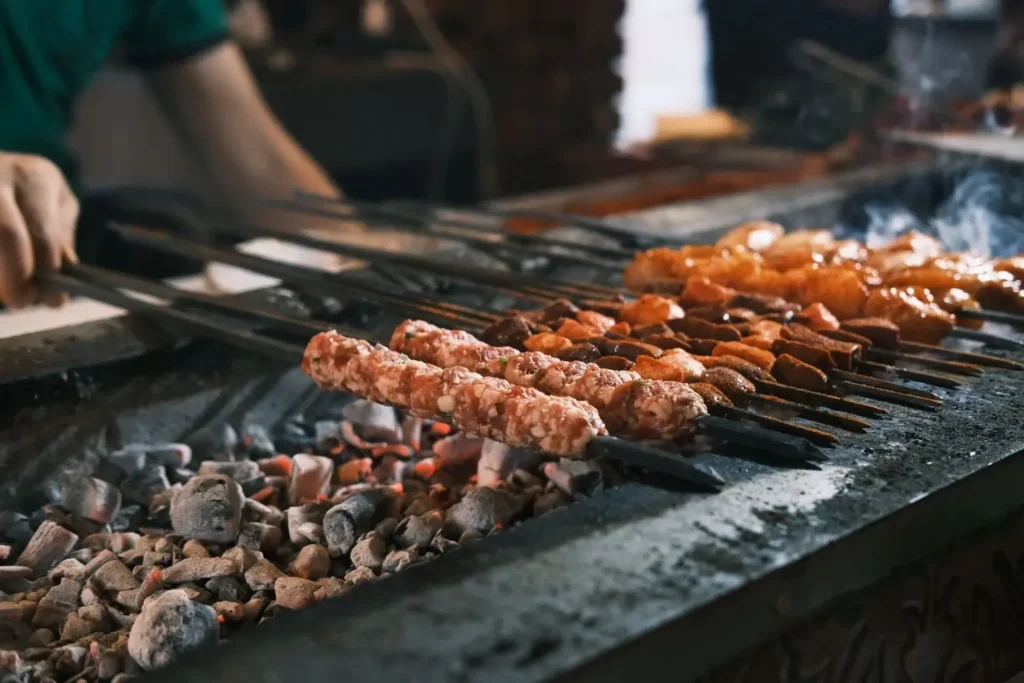
Kefta — spiced ground beef or lamb mixed with cumin, paprika, coriander, fresh parsley, and onion — is one of the most distinctive elements of Moroccan street food. Shaped onto long flat skewers and grilled over charcoal, kefta brochettes are found at grill stalls throughout Morocco, with Djemaa el-Fna in Marrakech being the most famous location.
The trick to excellent kefta is in the spicing — the combination of warm spices and fresh herbs creates a flavor that is complex and distinctive. The best kefta brochettes are slightly charred on the outside and remain juicy within. They are typically served with bread, fresh tomato and onion salad, and harissa.
Price: 10–20 MAD per brochette
Best time: Evening (from 6 PM)
Best place: Djemaa el-Fna in Marrakech, grill stalls throughout Morocco’s medinas
4. Bissara — The Fava Bean Soup of the North
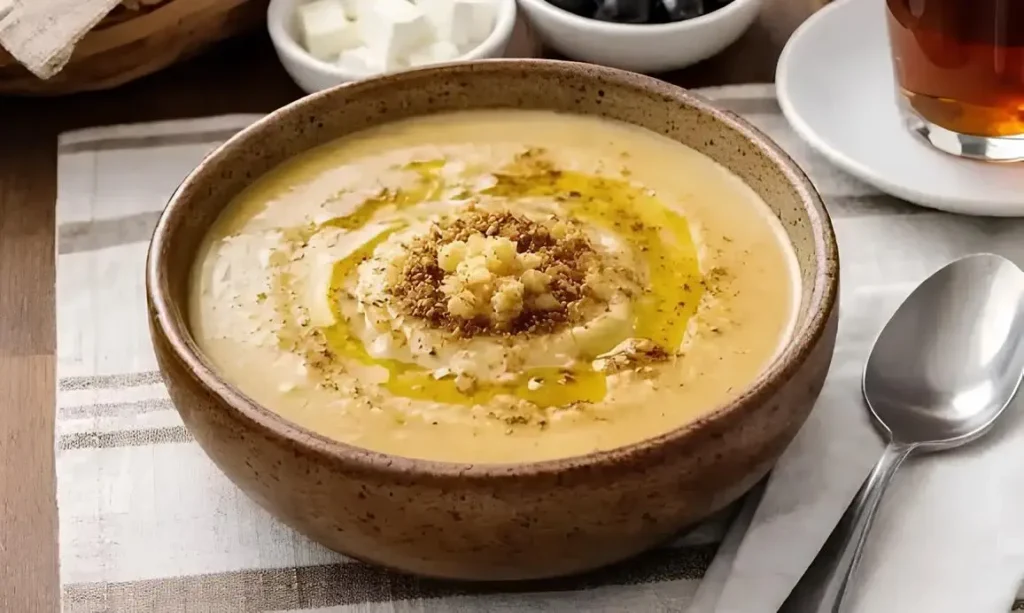
Bissara is a thick, creamy soup or dip made from dried fava beans pureed with garlic, cumin, paprika, and generous amounts of olive oil. It is a staple of Moroccan street food in the northern cities — Tangier, Chefchaouen, Fes — and represents some of the finest cold-weather comfort food in the country.
Served in a wide, shallow bowl with a pool of olive oil and a dusting of paprika on top, eaten with fresh bread, bissara is extraordinarily filling for its price. A bowl of bissara in the morning, eaten standing at a street stall, is one of the most authentic Moroccan street food experiences available.
Price: 5–10 MAD per bowl
Best time: Morning
Best place: Street carts in Fes, Chefchaouen, Tangier, and Meknes
5. Snails (Babbouche) — Morocco’s Most Surprising Street Food

Snails are one of the most characteristically Moroccan of all street food experiences, and one of the most surprising for visitors. In Morocco’s medinas, particularly in the late afternoon, vendors sell steaming bowls of snails cooked in a spiced broth of thyme, licorice root, orange peel, and dozens of other herbs and spices. The vendor provides a toothpick to extract the snail from its shell, and the hot, intensely flavored broth is sipped directly from the bowl.
This is Moroccan street food at its most authentic and most social — groups of friends and families gather around the snail cart for an afternoon snack that is as much about the conversation as the food.
Price: 5–10 MAD per small bowl
Best time: Late afternoon (3–7 PM)
Best place: Djemaa el-Fna in Marrakech, Place Boujloud in Fes, medina streets throughout Morocco
6. Fresh Orange Juice — The Four Dirham Miracle
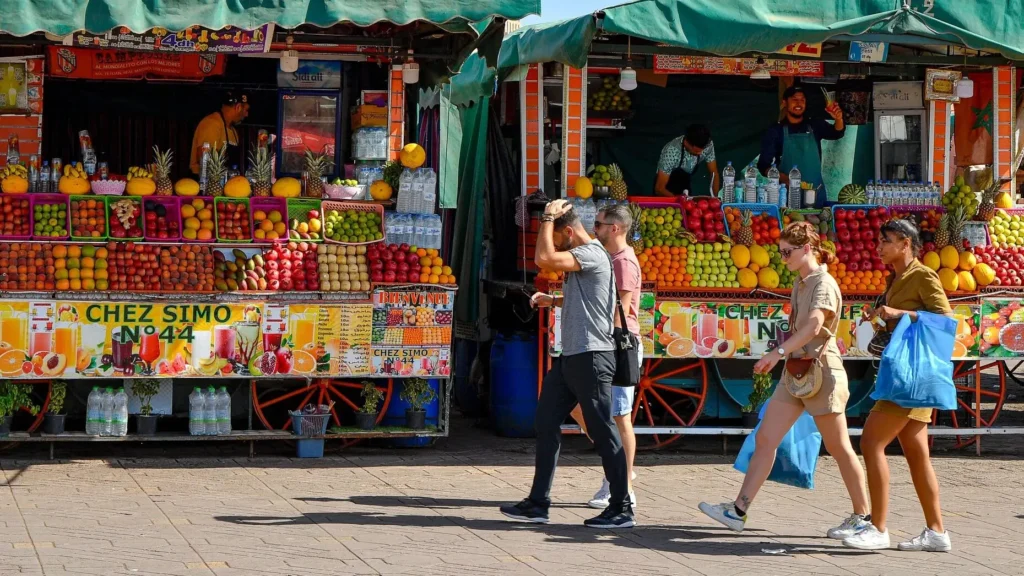
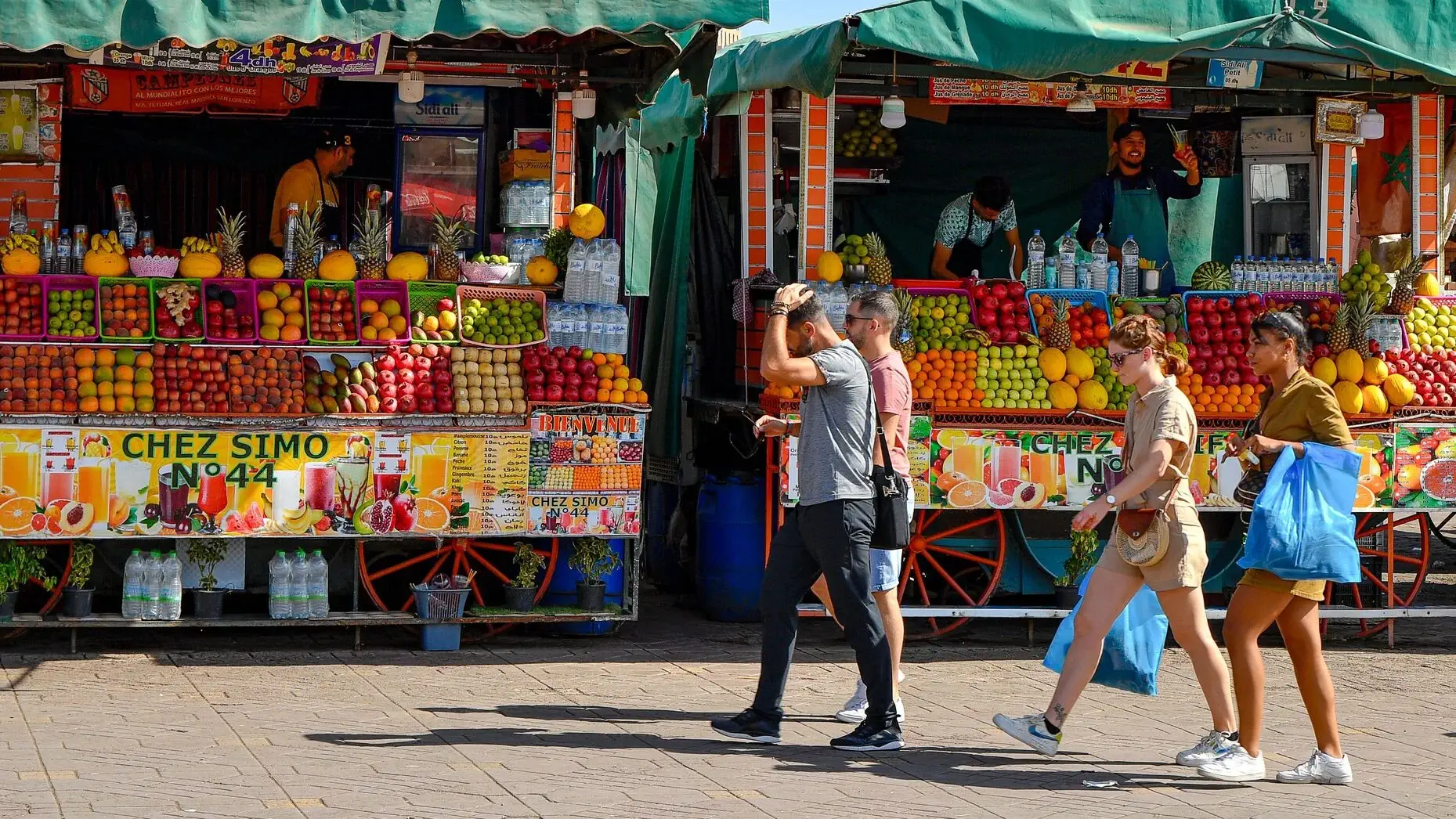
No Moroccan street food guide would be complete without Moroccan fresh orange juice. The orange trees that line Djemaa el-Fna and the streets of Morocco’s medinas produce extraordinarily sweet, flavorful fruit, and the juice stalls that squeeze it fresh to order serve what is arguably the finest orange juice in the world.
At 4 MAD per glass — less than fifty cents — Moroccan fresh orange juice represents the most extraordinary value in the country’s food scene. Drink it immediately, standing at the stall, before the flavors begin to oxidize.
Price: 4–6 MAD per glass
Best time: Morning and mid-morning
Best place: The juice stalls on Djemaa el-Fna in Marrakech, and throughout Morocco’s medinas
7. Meloui — The Spiral Flatbread
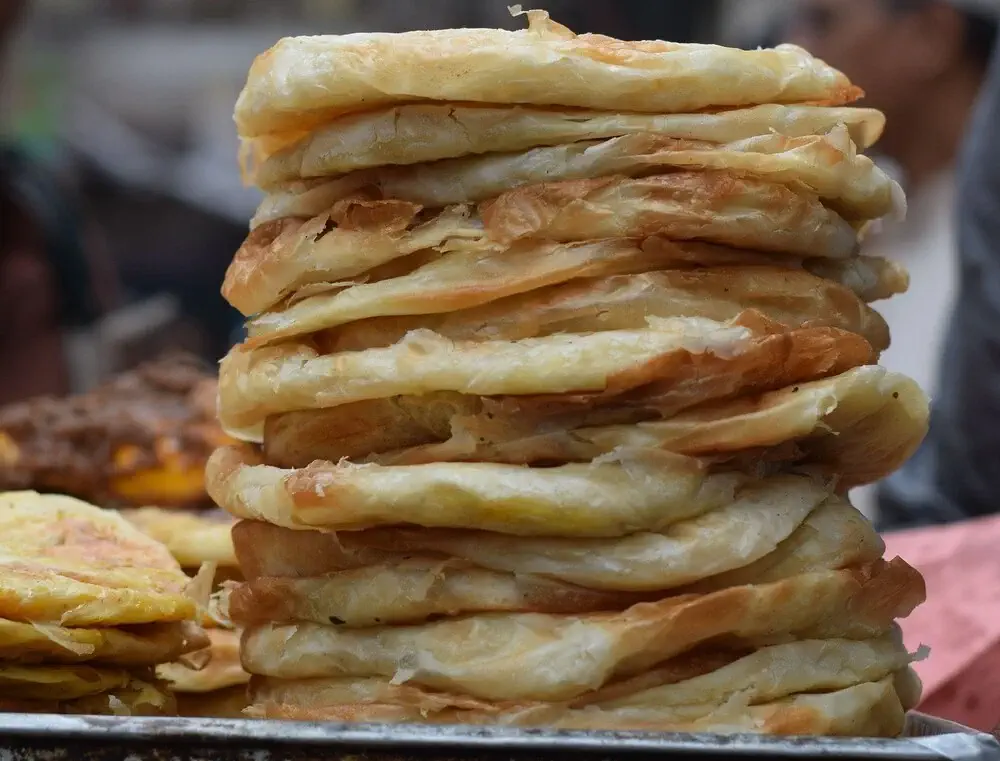
Meloui is the round, coiled cousin of msemen — made from similar dough but rolled into a spiral before cooking, producing a bread that is slightly chewier and more substantial than its square counterpart. Meloui is typically eaten for breakfast, torn into pieces and dipped in honey, olive oil, or a bowl of spiced argan oil.
Finding excellent meloui is one of the small pleasures of navigating Moroccan street food away from the tourist areas. The best versions are made by women at small neighborhood stalls who have been making the bread for decades.
Price: 3–6 MAD per piece
Best time: Morning
Best place: Neighborhood markets and small bakeries throughout Morocco
8. Grilled Corn — A Simple Moroccan Street Food Classic
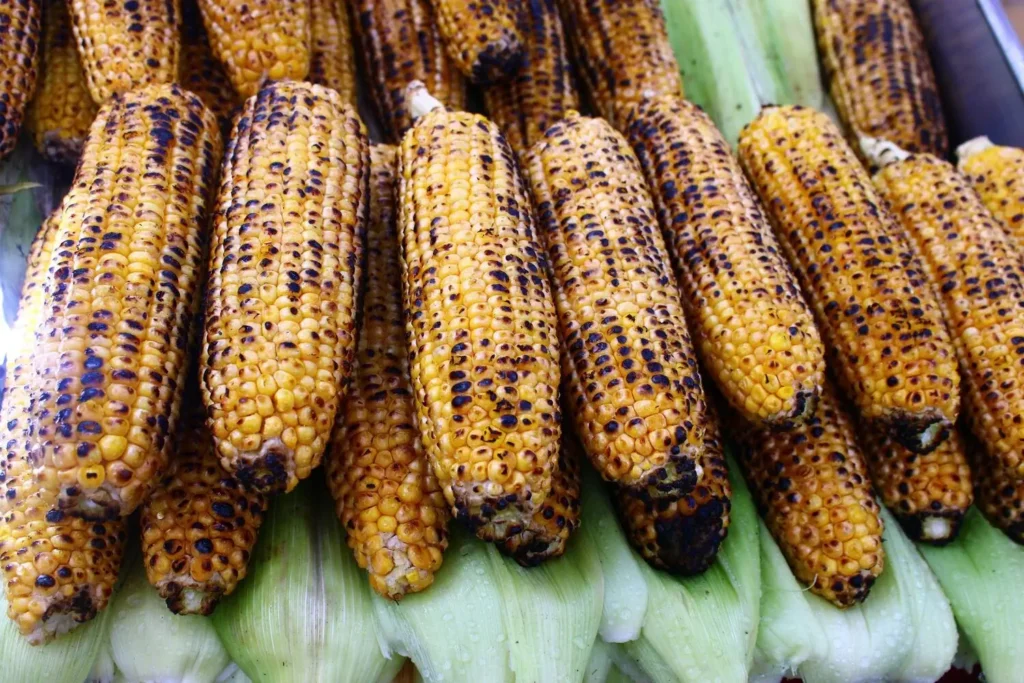
Across Morocco’s medinas and public squares, particularly in summer and autumn, vendors grill whole cobs of corn over charcoal and serve them with salt, cumin, and sometimes a squeeze of lemon. Moroccan street corn is simple, seasonal, and unexpectedly good — the charcoal grilling concentrates the sweetness while adding a slight smokiness that elevates what might otherwise be a forgettable snack.
Price: 5–10 MAD per cob
Best time: Evening
Best place: Public squares and medina streets throughout Morocco
9. Sfenj — Moroccan Doughnuts
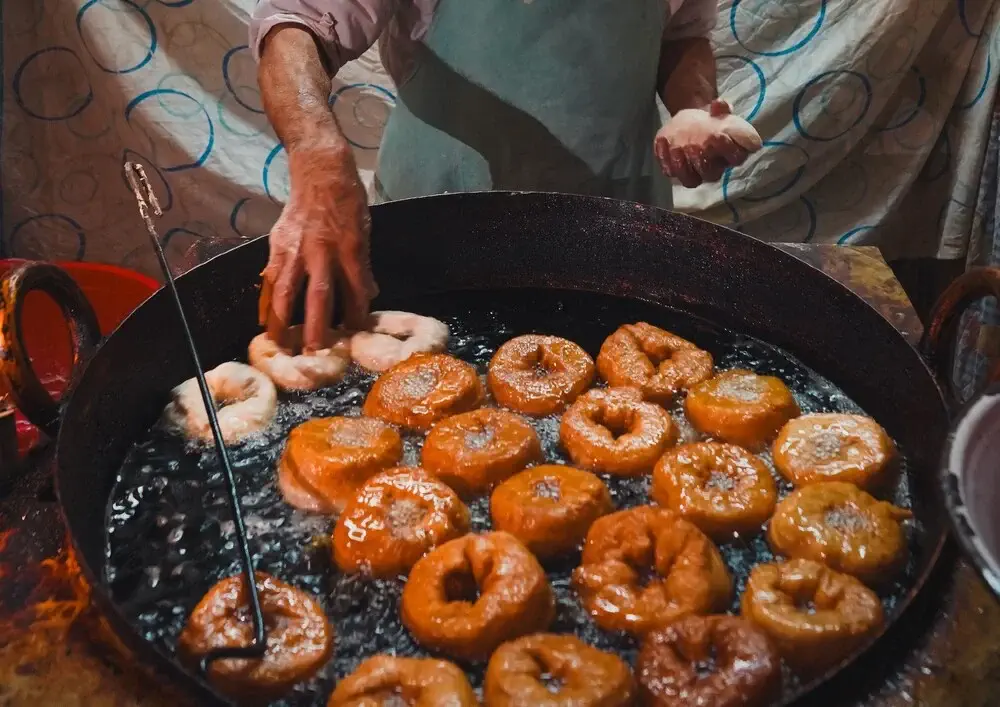
Sfenj are Moroccan doughnuts — irregular rings of yeasted dough fried in oil until golden and slightly crispy, then threaded onto a piece of palm leaf or straw and dusted with sugar. They are one of the most beloved Moroccan street food breakfast items and are found at sfenj stalls throughout Morocco’s cities, typically operating only in the morning hours.
Fresh sfenj, eaten hot from the oil with a glass of mint tea or café au lait, is one of the most comforting morning experiences in Morocco. The dough is slightly chewy with a crispy exterior and absorbs the sugar perfectly.
Price: 1–3 MAD per sfenj
Best time: Early morning (6–10 AM)
Best place: Sfenj stalls near neighborhood mosques throughout Morocco
10. Sandwich Marocain — The Moroccan Street Sandwich
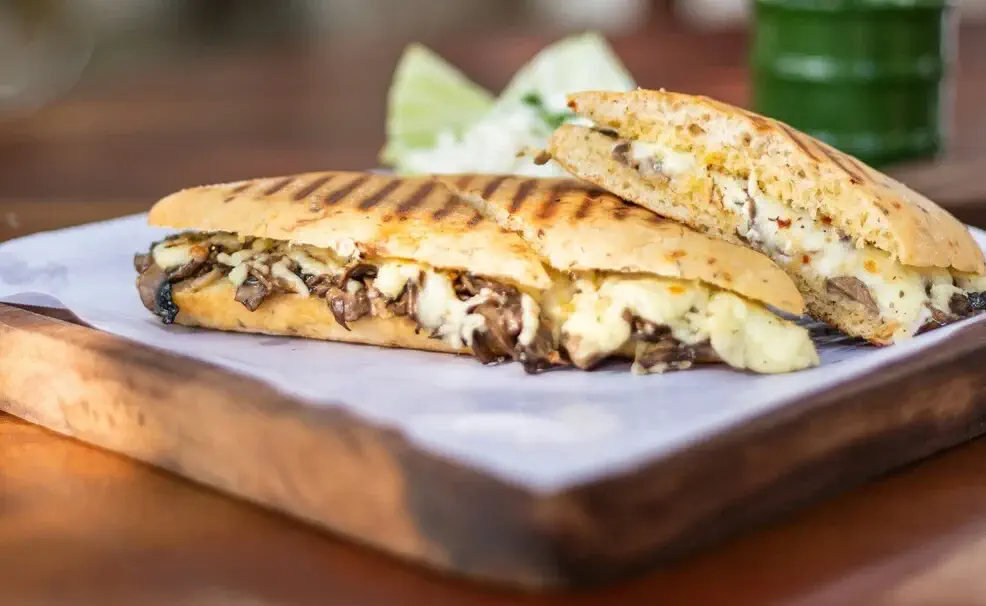
The Moroccan street sandwich is not a single defined item but a category of stuffed bread that varies by city, vendor, and the contents of the grill at any given moment. The base is typically a small baguette (a French colonial legacy), split and filled with a combination of kefta or merguez (spiced lamb sausage), fried egg, processed cheese, fresh tomato, olives, harissa, and cumin.
At its best — bought from a trusted grill stall at lunchtime — a Moroccan street sandwich is one of the most satisfying cheap meals available anywhere in the world. At its worst, it is mediocre fast food. Learning to identify the good vendors (busy with local customers, fresh ingredients visible, grill obviously active) is one of the key skills of navigating Moroccan street food well.
Price: 10–25 MAD
Best time: Lunch (noon–2 PM)
Best place: Street grill stalls throughout Morocco
11. Chebakia — The Festival Pastry
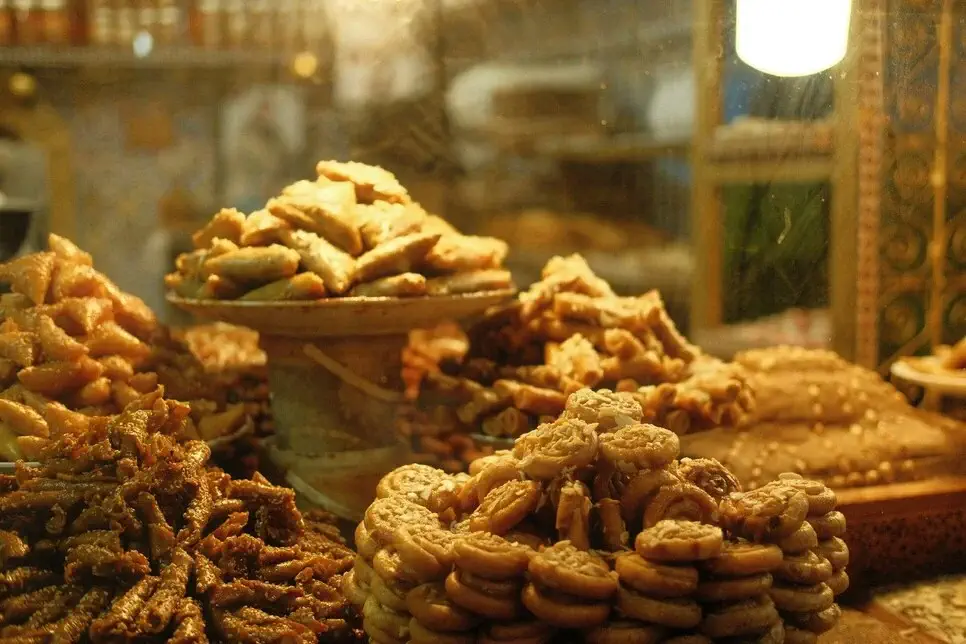
Chebakia are deep-fried sesame pastries flavored with orange blossom water, anise, and cinnamon, dipped while still hot in warm honey and rolled in sesame seeds. They are one of the most distinctive items in Moroccan street food culture — associated above all with Ramadan, when they are eaten alongside harira to break the fast, but available year-round in pastry shops throughout Morocco.
A piece of chebakia is intensely sweet, sticky, fragrant with orange blossom, and deeply Moroccan. Buying a small bag from a pastry vendor and eating them while walking through the medina is a simple pleasure that costs very little and delivers a great deal.
Price: 5–15 MAD per piece, or sold by weight (80–120 MAD per kilogram)
Best time: Any time, but especially during Ramadan
Best place: Pastry shops and market vendors throughout Morocco
12. Roasted Pumpkin Seeds and Nuts — The Medina Snack
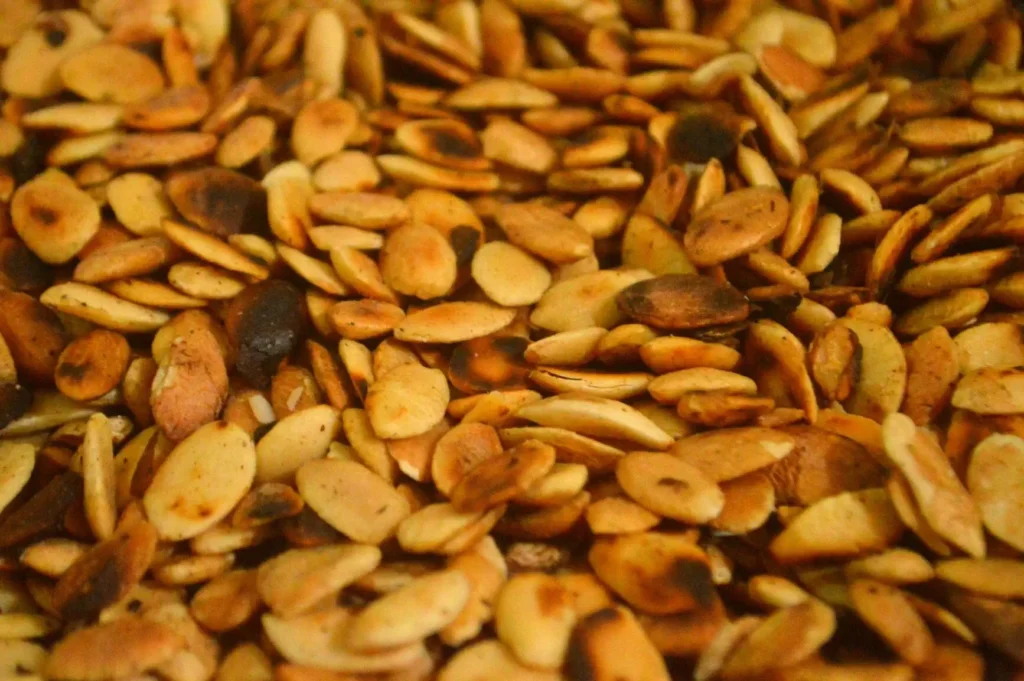
Throughout Morocco’s medinas, vendors sell paper cones of roasted pumpkin seeds, watermelon seeds, peanuts, almonds, and chickpeas — spiced with cumin and salt and roasted over coals. This is the Moroccan equivalent of the cinema snack, eaten while walking, talking, watching, and simply being in the medina.
Price: 5–15 MAD per cone
Best time: Any time
Best place: Medina streets and public squares throughout Morocco
The Best Places for Moroccan Street Food
Djemaa el-Fna, Marrakech: The most famous Moroccan street food destination in the world. By day, the square is dominated by juice stalls and snail vendors. By evening, dozens of grill stalls set up and the square fills with smoke, noise, and the smell of kefta and merguez. This is Moroccan street food as spectacle as well as sustenance.
Bab Bou Jeloud, Fes: The entrance to Fes’s medina is surrounded by street food vendors selling bissara, harira, msemen, and sandwiches to the students and locals who pass through throughout the day. This is Moroccan street food in its most everyday, unpretentious form.
Moulay Hassan Square, Essaouira: The harbor-front square combines harbor grill stalls selling fresh fish with medina vendors selling the full range of Moroccan street food. The seafood element gives Essaouira’s street food scene a distinctive character not found inland.
Uta el-Hammam Square, Chefchaouen: The main square of Morocco’s blue city has excellent small restaurants and street food vendors serving local specialties, including goat tagine and mountain herb dishes not found elsewhere.
Moroccan Street Food Safety Tips
Moroccan street food is generally very safe, but a few sensible precautions will help you avoid stomach issues:
Eat at busy stalls where food is cooked fresh and turned over quickly. Avoid food that has been sitting in the open for extended periods. The snail broth, harira, and other hot soups are generally safe because they are served at high temperatures. Salads and raw vegetables at grill stalls carry more risk — order cooked items if your stomach is not yet adjusted to Moroccan food in the first day or two.
Bottled water is always preferable to tap water in Morocco. Mint tea and freshly squeezed orange juice are completely safe. The ice used in some drinks may be made from tap water — ask for drinks without ice (bla glace) if you are concerned.
Final Thoughts
Moroccan street food is not just a way to eat cheaply — it is a way to connect with Morocco at its most authentic. The harira vendor who has been at the same corner for thirty years, the msemen lady whose bread is the finest in the neighborhood, the juice stall where the oranges come from a family farm in the Souss Valley — these are the human stories behind every bowl and paper cone, and they make eating on the streets of Morocco one of the most rewarding experiences travel offers.
Come hungry, carry small change, and follow the Moroccans. They know where the best food is.
For more on Moroccan food culture, read our guide to traditional Moroccan dishes and our vegetarian food Morocco guide. For the complete Marrakech experience, read our 3 Days in Marrakech itinerary.
5 Comments