
3 Days in Marrakech: The Perfect Itinerary for First-Time Visitors
Marrakech is one of those cities that hits you all at once. The moment you step out of your riad and into the medina, the senses are overwhelmed in the best possible way — the smell of spices, the sound of craftsmen at work, the kaleidoscope of colors in every direction. Three days in Marrakech is enough time to fall completely in love with the city, and this itinerary will make sure you don’t miss a thing.
Day 1: The Soul of the Medina
Morning: Djemaa el-Fna and Fresh Orange Juice
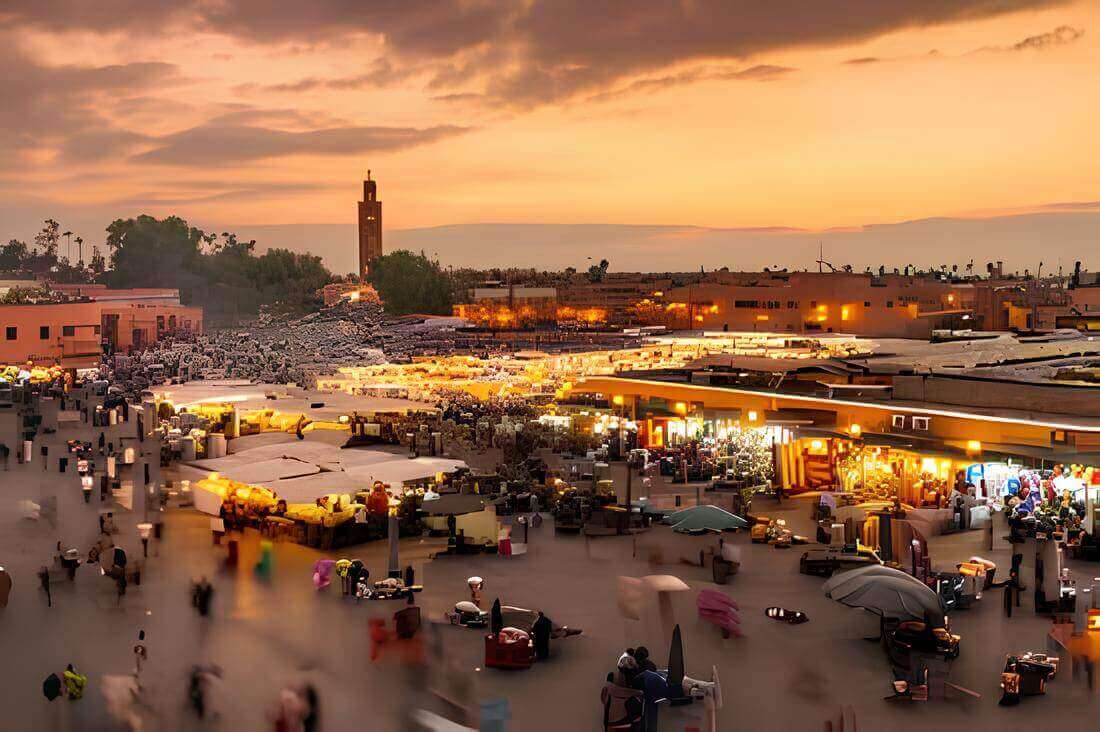
Begin your 3 days in Marrakech itinerary at the most famous square in Africa — Djemaa el-Fna. Arrive early, around 8 or 9 in the morning, before the heat and the crowds build up. The square is surprisingly calm at this hour, and you’ll have it largely to yourself.
Head straight to one of the orange juice stalls lining the edge of the square. A freshly squeezed glass costs around 4 MAD — less than fifty cents — and is genuinely one of the best things you’ll drink in Morocco. Sit, sip, and watch the city wake up around you.
From Djemaa el-Fna, walk north into the souks. The labyrinthine market streets of Marrakech’s medina are divided into specialized zones, each dedicated to a different craft or trade. Spend at least two to three hours exploring:
- Souk Semmarine for textiles, carpets, and clothing
- Souk el-Attarine for spices, perfumes, and soaps
- Souk Chouari for woodwork, furniture, and lanterns
- Souk des Teinturiers, the famous dyers’ souk, where vivid fabrics hang drying above the street
Bargaining is expected and part of the experience. Start at around 40 to 50 percent of the asking price and work your way up. Never feel pressured, and always be willing to walk away — the price usually drops immediately.
Afternoon: Medersa Ben Youssef
After lunch at a local restaurant in the medina (try a lamb tagine for around 70 MAD), make your way to the Medersa Ben Youssef, a 14th-century Islamic school that is one of the most beautiful buildings in all of Morocco. The interior courtyard is a masterpiece of Moroccan craftsmanship — intricate zellige tilework on the lower walls, carved stucco in the middle, and cedarwood screens above, all surrounding a serene marble fountain. Entry costs 70 MAD and is absolutely worth it.
Evening: Rooftop Sunset and Djemaa el-Fna After Dark
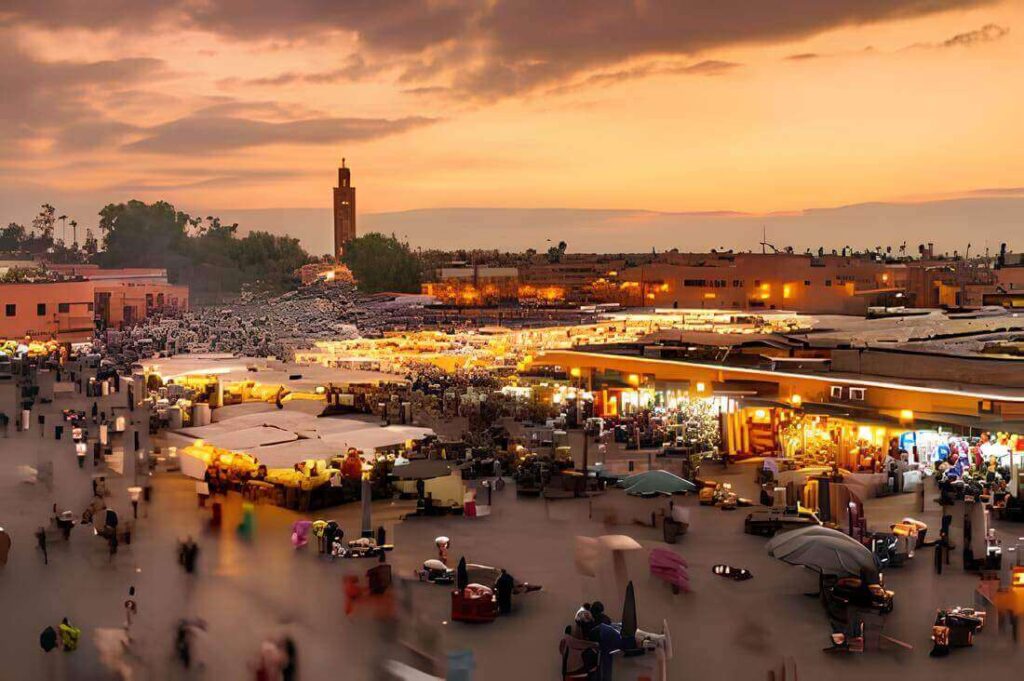
As the afternoon cools, make your way to one of the rooftop cafés overlooking Djemaa el-Fna. Café de France and Café Glacier both offer excellent views of the square below. Order a mint tea (15–25 MAD) and watch as the square transforms in the early evening — the snake charmers, the storytellers, the acrobats, and eventually the rows of steaming food stalls that fill the air with smoke and the smell of grilled meat.
Dinner on Djemaa el-Fna from the food stalls is an experience in itself. Stall number 14 is famous for its snails (a Marrakech delicacy), while others serve grilled kefta, harira soup, and fried fish. Budget around 60–100 MAD for a full evening meal.
Day 2: Palaces, Gardens, and Hidden Corners
Morning: Bahia Palace and El Badi Palace
Start day two with back-to-back palace visits in the southern medina. Bahia Palace, built in the late 19th century for the Grand Vizier of Morocco, is a stunning complex of courtyards, painted ceilings, and tiled gardens. The name means “brilliance” in Arabic, and the building lives up to it. Entry costs 70 MAD.
A ten-minute walk away lie the ruins of El Badi Palace, once considered one of the most spectacular palaces in the world. Today only the walls and sunken gardens remain, but the scale of the space is extraordinary — and the rooftop offers one of the best views over the medina. Entry costs 70 MAD.
Afternoon: Majorelle Garden and the Yves Saint Laurent Museum
No 3 days in Marrakech itinerary is complete without a visit to Majorelle Garden. Created by French painter Jacques Majorelle in the 1920s and 1930s, and later saved from demolition and restored by fashion designer Yves Saint Laurent, the garden is a botanical wonderland — cobalt blue buildings, towering cacti, bamboo groves, and lily ponds, all enclosed behind high walls that make the outside world disappear completely.
Entry to the garden costs 150 MAD. Book your ticket online in advance — queues can be very long, especially in spring and autumn. Adjacent to the garden is the Yves Saint Laurent Museum, which traces the designer’s career and his deep love for Marrakech. Combined entry is 250 MAD and highly recommended.
Allow yourself at least ninety minutes here. The garden is most beautiful in the mid-afternoon light.
Evening: Dinner in a Riad Restaurant
For your second evening, treat yourself to dinner in one of Marrakech’s beautiful riad restaurants. These are traditional houses converted into intimate dining spaces, where you eat in a candlelit courtyard surrounded by fountains and zellige tiles. Expect to pay 200–400 MAD per person for a full Moroccan feast — pastilla, tagine, couscous, and a dessert of orange and cinnamon. Reservations are essential.
Day 3: Beyond the Medina
Option A: Day Trip to the Ourika Valley
If you have energy for a day trip on your third day, the Ourika Valley in the Atlas Mountains is the obvious choice — and one of the most rewarding excursions from Marrakech. Located just 60km south of the city, the valley unfolds into a landscape of terraced fields, Berber villages, and the rushing Ourika River, with the snow-capped peaks of the High Atlas rising behind.
The trail to the Setti Fatma waterfalls takes about 45 minutes each way and rewards you with cool mountain air and spectacular views. A shared grand taxi from Marrakech costs around 30–50 MAD each way, or you can join an organized tour for 150–300 MAD including transport and a guide.
Option B: Hammam and Cooking Class
If you prefer to stay in the city, spend your final morning at a traditional hammam. Hammam El Bacha, one of the oldest and most atmospheric in the medina, offers a basic public hammam experience for around 100 MAD. Staff will guide you through the process — soaking in steam, being scrubbed with a kessa mitt, and emerging feeling completely renewed.
In the afternoon, take a Moroccan cooking class. Most riads and cookery schools offer three-hour classes for 300–500 MAD, teaching you how to make harira, a tagine, and Moroccan salads. You eat what you cook for lunch, which is always a highlight.
Where to Stay in Marrakech
For the most authentic and atmospheric experience, stay in a riad inside the medina. Riads are traditional Moroccan courtyard houses, often with beautiful tiled interiors, rooftop terraces, and extraordinary attention to detail. Prices range from budget options at 300–500 MAD per night to luxury boutique riads at 1,500–4,000 MAD per night. Book well in advance for spring and autumn travel.
If you prefer more modern comforts, the Gueliz neighborhood (the French-built new town) has a wide range of international hotels and is only a short taxi ride from the medina.
Getting Around Marrakech
The medina is best explored entirely on foot — most of the major sights are within a twenty-minute walk of each other, and the narrow streets are inaccessible to vehicles anyway. For longer journeys, small orange petit taxis are everywhere and cheap. Always agree on the price before you get in — most trips within the city cost 20–50 MAD.
Practical Tips for First-Time Visitors
- Dress modestly when in the medina and at religious sites — cover shoulders and knees
- Carry small denomination notes and coins for juice stalls, tips, and public toilets
- Download an offline map before you arrive — getting lost in the medina is easy and GPS is unreliable in the narrow streets
- Be polite but firm with unofficial guides who approach you in the souks
- The best time to visit Marrakech is March to May or September to November, when temperatures are comfortable for walking
Marrakech rewards those who slow down and pay attention. The best moments in this city are rarely planned — they happen in a chance conversation with a craftsman, a hidden courtyard stumbled upon by accident, or the simple pleasure of watching the sun go down over one of the most extraordinary cities on earth.
10 Comments