Visiting Morocco Ramadan: 7 Amazing Tips for Travelers
Visiting Morocco Ramadan is one of the most debated topics in Morocco travel. Some guidebooks warn against it — restaurants closed during the day, reduced service hours, a different atmosphere that can feel challenging for visitors unfamiliar with Islamic observance. Others celebrate it as the single most extraordinary time to experience the country — the medinas transformed at sunset, the communal spirit of iftar, the late-night music and celebration, and the genuine cultural immersion that no other time of year provides.
Both perspectives contain truth. Visiting Morocco during Ramadan requires adjustment, awareness, and realistic expectations. It also offers rewards that no other month can match. This guide gives you the complete, honest picture — everything that changes during Ramadan, how to navigate those changes as a visitor, and why many experienced Morocco travelers specifically seek out the Ramadan period for their visits.
What is Ramadan?
Ramadan is the ninth month of the Islamic lunar calendar — the holy month of fasting observed by Muslims worldwide. During Ramadan, Muslims abstain from food, drink (including water), smoking, and sexual relations from the pre-dawn meal (suhoor) until the sunset prayer (Maghrib). The fast is broken each evening with iftar — the breaking of the fast — beginning with dates and water, followed by the traditional Ramadan meal.
In Morocco, Ramadan is observed with particular intensity and community spirit. The country is approximately 99 percent Muslim, and Ramadan shapes virtually every aspect of daily life for the duration of the month. The rhythm of the Moroccan day is entirely restructured — the hours of daylight become a period of restraint and spiritual focus, while the hours after iftar transform into a celebration of community, music, food, and human connection that continues well into the night.
The dates of Ramadan shift approximately 11 days earlier each year according to the Gregorian calendar — by 2026 and 2027, Ramadan falls in late January to February, meaning visits in that period will coincide with the holy month.
What Changes During Ramadan in Morocco
Restaurants and Food Service
The most significant practical change for visitors during Ramadan is the closure of most local Moroccan restaurants during the day. Traditional Moroccan restaurants, street food stalls, and cafés that serve food are closed from dawn until iftar — typically opening in the 30–60 minutes before sunset and then operating late into the night.
What remains open during the day:
- International and tourist-oriented restaurants in major hotels and resort areas
- Restaurants in the tourist zones of Marrakech (particularly around Djemaa el-Fna and in the Gueliz neighborhood) often remain open for tourist customers
- Supermarkets and food shops remain open for purchasing food to eat privately
- Some hotel restaurants continue full service for guests
What to expect:
Finding lunch at a traditional Moroccan restaurant during Ramadan is genuinely challenging in smaller cities and away from tourist areas. In Marrakech, Fes, and other major tourist cities, the infrastructure for visitors means more options remain available, but the choice is significantly reduced.
The practical solution: Stock your riad room with snacks and water from the supermarket for daytime use. Eat a substantial breakfast at your hotel or riad. Plan your main meal around the iftar period when everything opens and the food is at its freshest and most celebratory.
Cafés and Beverages
Most traditional Moroccan cafés — the male-dominated street-level coffee shops that define the social life of Moroccan cities — are closed during the day during Ramadan. Tourist-oriented cafés in major cities often remain open.
Buying bottled water during the day is straightforward from supermarkets. Drinking water or eating in public during Ramadan is legal for tourists but is considered disrespectful to those who are fasting — use discretion and avoid eating or drinking openly in the medina streets during daylight hours.
Working Hours and Services
Government offices, banks, and many businesses operate reduced hours during Ramadan — typically 9 AM to 3 PM rather than the standard 8:30 AM to 5:30 PM. Plan any administrative tasks accordingly.
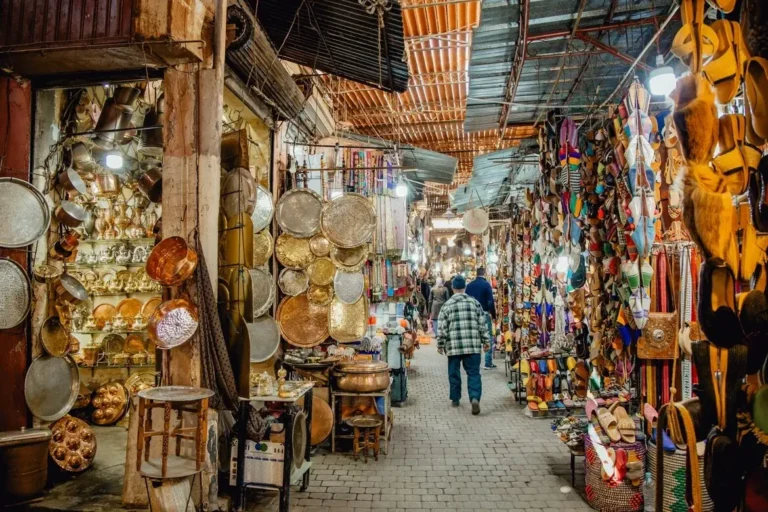
Shops in the medina and souks often open later in the morning and stay open significantly later at night during Ramadan — the late-night shopping culture that Ramadan produces means many souvenir shops, craft stores, and food vendors are active until midnight or later.
Transport
Public transport operates normally during Ramadan with the exception of slightly different scheduling on some routes. Grand taxis and petit taxis operate throughout the day, though drivers who are fasting may be less talkative than usual.
The hour immediately before and after iftar is the worst time for road traffic in Moroccan cities — virtually every Moroccan is either rushing home to break the fast or traveling after iftar. Avoid scheduling transport during this window (approximately 30 minutes before to 30 minutes after sunset).
Museums and Attractions
Most museums, historical sites, and major attractions in Morocco operate normal hours during Ramadan, though they may close slightly earlier. Confirm hours locally for specific sites, particularly on the final days of Ramadan (the last ten nights are considered the holiest) when some sites may have reduced operations.
What Gets Better During Ramadan
The changes to daily life described above are real and require management. But visiting Morocco during Ramadan also brings experiences that are genuinely extraordinary and available only during this month.
The Iftar Experience
The breaking of the Ramadan fast at sunset is the defining daily experience of visiting Morocco during Ramadan — and it is genuinely one of the most extraordinary food and cultural experiences Morocco offers at any time of year.
At the moment of Maghrib (the sunset call to prayer), every Moroccan simultaneously breaks their fast. On Djemaa el-Fna in Marrakech, the extraordinary sight of hundreds of people sitting at outdoor tables and eating together — harira soup, dates, chebakia pastries, hard-boiled eggs — while the call to prayer echoes across the rooftops and the last light fades from the sky is one of the most moving public events in Morocco.
If you have the opportunity to share iftar with a Moroccan family — and invitations to tourists are not uncommon during Ramadan, reflecting the season’s emphasis on generosity and communal spirit — accept without hesitation. The experience of sitting at a Moroccan family table for iftar is among the most profound cultural moments visiting Morocco during Ramadan can provide.
Typical Ramadan iftar spread:
- Harira soup (always first)
- Dates and figs
- Chebakia (honey sesame pastries)
- Hard-boiled eggs with cumin
- Shebbakia
- Milk or juice (typically avocado juice or almond milk)
- Moroccan pastries and sweets
- Followed later by the main meal: tagine, couscous, or other substantial dishes
For the complete harira recipe, read our Moroccan harira recipe guide.
The Night Transformation
After iftar, Moroccan cities undergo a complete transformation that visiting Morocco during Ramadan uniquely reveals. The medinas — quiet and somewhat subdued during the fasting day — come extraordinarily alive after sunset. Families walk the illuminated streets. Music fills the squares. Cafés are packed until 2 or 3 AM. Street food stalls that were closed all day operate through the night.
Marrakech’s Djemaa el-Fna after iftar during Ramadan is perhaps the finest people-watching experience in the country — the square at its most alive, most musical, and most communally joyful.
The late-night Ramadan culture:
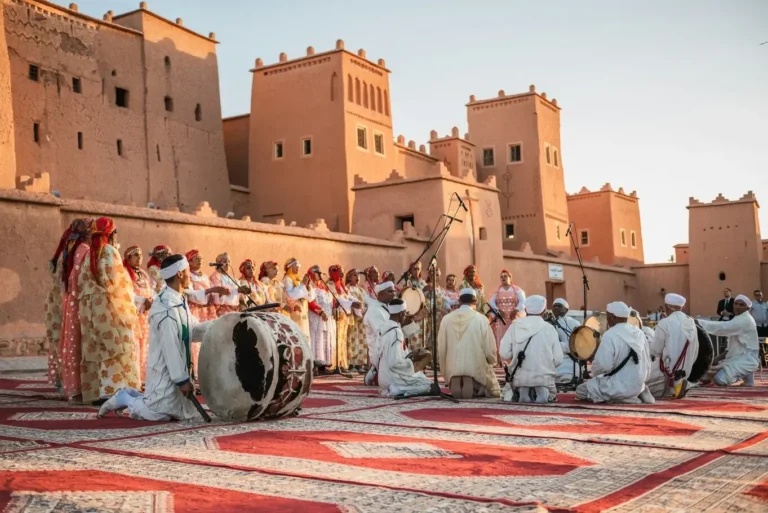
- Gnaoua music performances in the medinas
- Traditional storytelling (halqa) in public squares
- Street food stalls operating until 3–4 AM
- Tea houses and patisseries packed late into the night
- A general atmosphere of celebration and community that feels entirely different from the rest of the year
The Spiritual Atmosphere
Visiting Morocco during Ramadan allows encounters with a dimension of Moroccan life that is invisible the rest of the year. The medinas in the early morning — in the hour before the first prayer and the beginning of the fast — have a quality of stillness and spiritual focus that is genuinely moving. The sound of Quranic recitation drifting from mosque windows, the groups of men walking to the pre-dawn prayer, the extraordinary quiet before the city wakes — these are experiences that visiting Morocco during Ramadan provides uniquely.
The Generosity
Ramadan is associated with heightened generosity and communal spirit in Islamic culture — giving to those in need, inviting others to share meals, and extending hospitality to strangers are all considered particularly meritorious during the holy month. Visitors to Morocco during Ramadan frequently report that Moroccans are noticeably warmer and more openly hospitable than at other times of year — the season’s emphasis on generosity extends naturally to foreign guests.
It is not uncommon for shopkeepers to offer dates and sweets at iftar, for strangers to invite tourists to share their iftar meal, or for restaurants to provide complimentary Ramadan dishes to their customers at the breaking of the fast.
The Food
Ramadan produces a specific food culture in Morocco that is unavailable at any other time of year. The pastry shops fill with freshly made chebakia. The harira is at its most lovingly prepared — families compete for the finest version, and the street stall soup has been simmering all day. Special Ramadan dishes appear on restaurant menus. The entire Moroccan food culture intensifies around the iftar and the late-night meals that follow.
For food-focused travelers, visiting Morocco during Ramadan is the finest time to engage with Moroccan culinary culture — not despite the fasting day, but because of the extraordinary food that the breaking of that fast produces each evening. For a complete guide to Moroccan food culture, read our traditional Moroccan dishes guide.
How to Be a Respectful Visitor During Ramadan
Navigating visiting Morocco during Ramadan respectfully requires awareness and a few specific behavioral adjustments that most travelers find straightforward once understood.
Eating and Drinking in Public
Eating, drinking, and smoking in public during the daylight fasting hours is not technically illegal for non-Muslims in Morocco but it is genuinely disrespectful to those who are fasting and should be avoided in traditional areas.
The practical guideline: Eat and drink privately — in your hotel room, in a tourist restaurant, or in a discreet location away from public spaces and the medina streets. Carry a water bottle and snacks for private consumption but do not eat in the streets during the day.
This is not a significant restriction for most visitors — it simply means being thoughtful about where you eat and drink rather than what.
Dress Code
The dress code for visiting Morocco respectfully applies throughout the year but takes on additional significance during Ramadan. Cover shoulders and knees in the medina and at all public sites. This is not just a matter of cultural sensitivity during Ramadan — it demonstrates genuine respect for the spiritual significance of the month.
Noise and Behavior
During the fasting day, particularly in the afternoon when hunger and fatigue are most pronounced, Moroccan cities are quieter and the general atmosphere is more contemplative. Match this energy — loud behavior and obvious holiday-making in public spaces during the fasting day is inappropriate.
After iftar, the energy changes completely and the usual norms of public enjoyment apply.
Photography
During Ramadan, be particularly considerate about photographing people at prayer, at iftar, or in moments of religious observance. Always ask before photographing individuals — the general Morocco photography etiquette applies with additional sensitivity during the holy month. The iftar moment on Djemaa el-Fna is a spectacular photographic opportunity but should be approached with discretion.
Interacting with Fasting Moroccans
Most Moroccans who are fasting are entirely accustomed to interacting with tourists and will be perfectly pleasant and professional. Do not feel awkward about purchasing things, asking questions, or conducting normal tourist activities with people who are fasting — they are experienced at navigating the combination.
Offering food or drink to someone who is fasting is a considerate impulse but unnecessary — they are fasting by choice and will simply decline.
Responding to Ramadan Greetings
During Ramadan, the greeting “Ramadan Mubarak” (Blessed Ramadan) or “Ramadan Kareem” (Generous Ramadan) is used between Muslims. If someone greets you this way, responding with the same phrase — or simply “shukran” (thank you) with a smile — is entirely appropriate and will be warmly received.
Practical Planning for Visiting Morocco Ramadan
Accommodation
Book accommodation in advance — riads and hotels in the major tourist cities are often busier during Ramadan than in the surrounding months because of domestic Moroccan tourism within the country. Many riads continue to offer breakfast and dinner to guests throughout Ramadan — confirm this when booking.
Itinerary Adjustments
Structure your days differently during Ramadan. Mornings (before the heat and the midday fatigue of fasting) are the best time for medina exploration, museum visits, and day trips. Early afternoon is quietest — a good time to rest at your riad. Late afternoon to midnight is when Moroccan cities are at their most alive.
The Last Ten Nights
The final ten nights of Ramadan — particularly Laylat al-Qadr (the Night of Power, believed to fall on one of the odd-numbered nights in the final ten) — are the holiest of the year. During this period, mosques are open all night for prayer, Quranic recitation fills the air, and the spiritual intensity of the month reaches its peak. Visiting Morocco during Ramadan and being present for the last ten nights provides an experience of extraordinary depth.
Eid al-Fitr
The end of Ramadan is marked by Eid al-Fitr — the Festival of Breaking the Fast — which is celebrated on the first day of the following month after the new moon is sighted. Eid in Morocco is a public holiday lasting 2–3 days during which most businesses close, families gather, and the country celebrates. Visiting Morocco during Eid provides extraordinary festival atmosphere but very limited tourist services — plan accordingly.
The Ramadan Verdict: Should You Visit Morocco Ramadan?
Visit if: You are an experienced traveler comfortable with adjusting to a different daily rhythm. You are genuinely interested in Moroccan culture and want to experience it at its most authentic and most communally intense. You are flexible about meal timing. You are visiting a major city (Marrakech, Fes, or Casablanca) where tourist infrastructure remains available.
Consider alternatives if: You are traveling with young children who need regular meal times. You are visiting Morocco primarily for restaurant culture and food exploration during the day. You are making your first Morocco trip and want the full standard experience without additional complexity.
The honest bottom line: Visiting Morocco during Ramadan is not easier than visiting at other times. But it is, for the right traveler, more extraordinary. The iftar moment, the transformed medina after sunset, the extraordinary harira, the communal spirit and generosity, and the genuine cultural immersion that Ramadan provides are available nowhere else and at no other time. Many experienced Morocco travelers consider it the finest time of year to visit.
Final Thoughts
Ramadan in Morocco is not an obstacle to be navigated — it is an experience to be embraced. The fasting day requires adjustment and awareness, the daytime food situation requires planning, and the changed rhythm of city life requires flexibility. In exchange, visiting Morocco during Ramadan offers the iftar at sunset, the transformed medina, the extraordinary food, the late-night music, the generosity of the season, and a genuine encounter with the spiritual and communal heart of Moroccan culture.
Come prepared. Be respectful. Eat harira at iftar. And understand, in the extraordinary hour when the cannon fires and the call to prayer rolls across the rooftops and Morocco simultaneously breaks its fast, why this month holds such profound meaning for the country you are privileged to be visiting.
For more Morocco cultural immersion, read our complete guide to Moroccan hospitality, our Moroccan wedding traditions guide, and our Berber culture Morocco guide. For the best time to visit Morocco beyond Ramadan, read our complete month-by-month weather guide. For official information, visit Visit Morocco.