
The Ultimate Guide to Moroccan Hospitality: 10 Essential Customs Every Visitor Must Know
There is a saying in Morocco: “The guest is a gift from God.” Moroccan hospitality is not just a pleasantry — it is a deeply held belief that shapes the way Moroccan people interact with visitors from the moment they arrive. Understanding Moroccan hospitality and culture is not only respectful, it will fundamentally change the quality of your experience in the country. People will open doors for you — sometimes literally — that remain closed to those who don’t take the time to learn.
Moroccan hospitality is legendary among travelers worldwide — a genuine warmth that goes far beyond tourist-friendly smiles. This guide covers everything you need to know about Moroccan hospitality and etiquette as a tourist, from the basics of greeting people to navigating religious spaces, sharing a meal, and understanding the unwritten rules that govern daily life in one of the world’s most culturally rich countries.
Greetings: The Foundation of Every Interaction
In Morocco, how you greet someone matters enormously. A proper greeting is not just a formality — it is a signal of respect and goodwill that sets the tone for everything that follows.
The standard Arabic greeting is “As-salamu alaykum” (peace be upon you), to which the response is “Wa alaykum as-salam” (and upon you, peace). Even attempting this greeting as a tourist will be met with immediate warmth and appreciation. In Darija, the Moroccan dialect, you will also hear “Labas?” (How are you?) used constantly throughout the day.
Physical greetings between people of the same gender typically involve handshakes and, among close friends or family, cheek kisses. Between men and women who are not related or close friends, it is customary to wait for the other person to initiate physical contact. The respectful approach is to place your hand over your heart and nod slightly if a handshake is not offered.
Take time with greetings. Moroccans rarely rush straight to business without asking about your health, your family, and your journey. Matching this pace — even briefly — is one of the most appreciated gestures a visitor can make, and one of the clearest expressions of Moroccan hospitality in daily life.
Dress Code: Respecting Local Sensibilities
Morocco is a predominantly Muslim country, and while major cities like Marrakech and Casablanca are relatively cosmopolitan, dressing modestly is both respectful and practical throughout the country.
For women, this means covering shoulders and knees when in the medina, at religious sites, and in smaller towns and villages. A light scarf carried in your bag is invaluable — it can be used as a cover-up when needed and doubles as protection from the sun. Swimwear is perfectly acceptable on the beach and at hotel pools, but should not be worn in town.
For men, shorts are generally acceptable in tourist areas but long trousers are more respectful in the medina and at religious sites. Sleeveless tops are best avoided in traditional neighborhoods.
Packing for Morocco comes down to one principle: when in doubt, cover up. You will be more comfortable, attract less unwanted attention, and demonstrate the respect that Moroccan hospitality deserves in return.
The Art of Mint Tea: Morocco’s Most Important Ritual
If there is one cultural experience that defines Moroccan hospitality, it is the ritual of mint tea. Being offered tea in Morocco is not just a drink — it is an invitation into someone’s world, an expression of trust and generosity that carries significant social meaning.
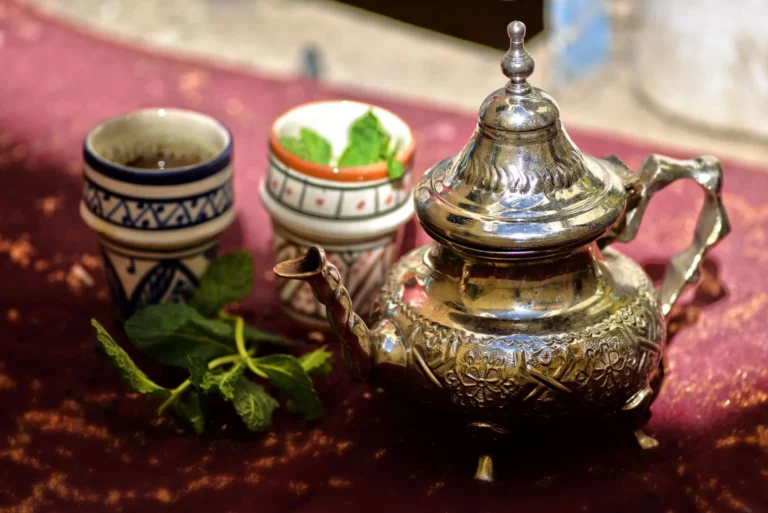
Moroccan hospitality finds its purest expression in the ritual of mint tea. Made from Chinese gunpowder green tea, fresh spearmint leaves, and a generous quantity of sugar, it is poured from a height into small decorated glasses to create a frothy top. The process is deliberate, unhurried, and almost ceremonial.
The most important thing to know is this: refusing tea is considered impolite. If someone offers you tea — a shopkeeper, a family, a host — accepting it is an act of social grace. You are not obligated to buy anything in return. Simply sit, accept the glass with your right hand, and enjoy the moment.
In traditional Moroccan culture, tea is served three times: the first glass is said to be “as gentle as life,” the second “as strong as love,” and the third “as bitter as death.” Most visitors find all three perfectly sweet.
Entering Homes and Private Spaces
Experiencing Moroccan hospitality in a private home is one of the greatest privileges a visitor can have. If you are fortunate enough to be invited into a Moroccan home — and this happens more often than you might expect — there are a few customs worth knowing.
Always remove your shoes at the door. This is standard practice in Moroccan homes and is expected without being asked. You may be offered slippers to wear inside.
Accept food and drink that is offered. Declining hospitality in a Moroccan home can cause genuine offense. If you have dietary restrictions, explain them gently and your host will almost certainly find an alternative.
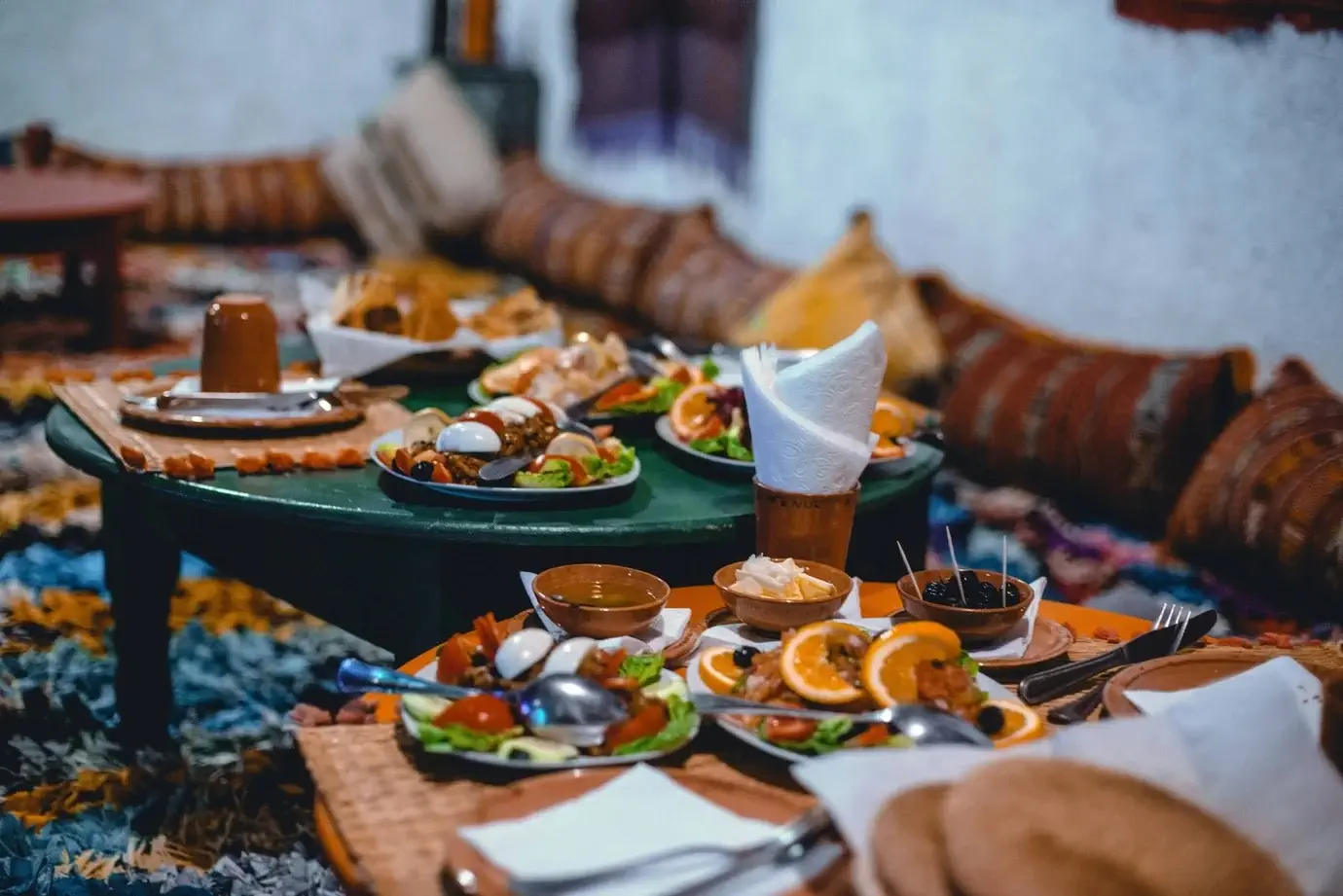
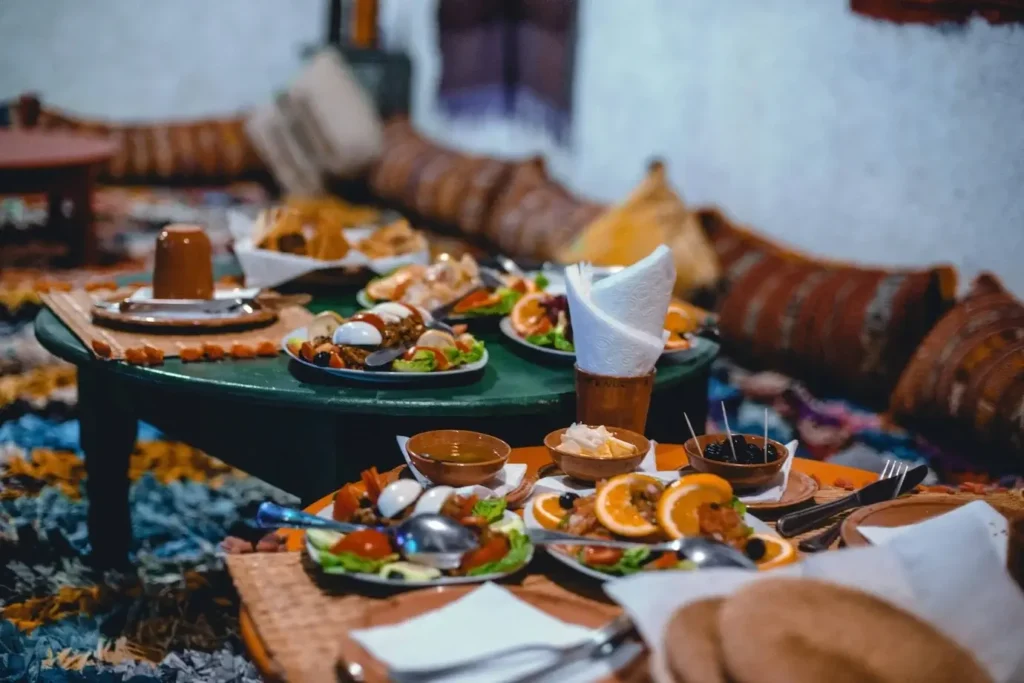
Meals are often eaten communally from a shared tagine or couscous pot placed in the center of the table. Use your right hand or bread to eat — the left hand is considered unclean in Islamic tradition and should not be used to handle shared food.
If you bring a gift — which is a lovely gesture — sweets, pastries, or fruit are always appropriate. Alcohol is not suitable as a gift for Muslim hosts.
Visiting Religious Sites
Morocco’s religious architecture is among the most breathtaking in the world — the ancient mosques of Fes, the mausoleums of Moulay Idriss, the stunning Hassan II Mosque rising from the Atlantic in Casablanca. Approaching these spaces with awareness and respect is essential.
Non-Muslims are not permitted to enter working mosques in Morocco, with the exception of the Hassan II Mosque in Casablanca, which offers guided tours. At shrines and mausoleums, dress codes apply strictly — shoes off, shoulders and knees covered, voices kept low. Photography is often restricted inside religious spaces; look for signs or ask before taking photographs.
During the call to prayer (adhan), which sounds five times daily, life pauses briefly. In souks and markets, some shopkeepers will stop to pray. Simply wait patiently, and business will resume shortly.
Ramadan: Visiting During the Holy Month
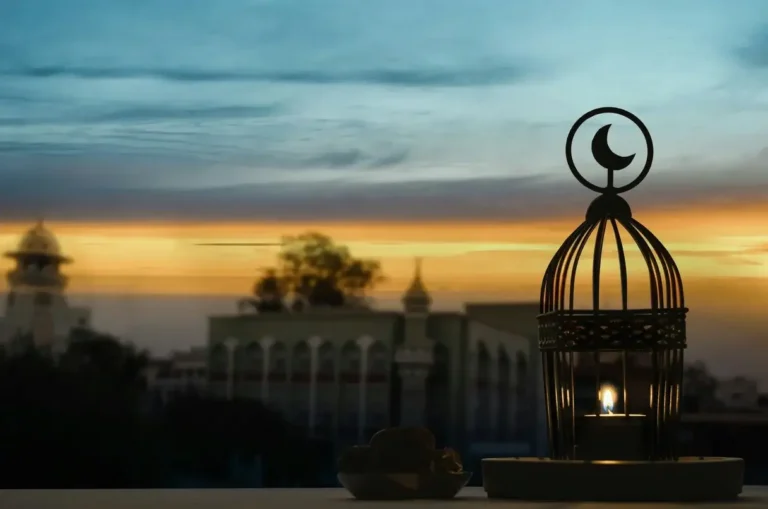
If your trip coincides with Ramadan, you will experience Morocco at one of its most spiritually intense and culturally fascinating times of year. During Ramadan, Muslims fast from dawn until sunset, abstaining from food, drink, and smoking during daylight hours.
As a visitor, eating, drinking, and smoking in public during daylight hours is considered disrespectful. Most restaurants will be closed during the day but will reopen after iftar (the breaking of the fast at sunset).
The atmosphere after iftar during Ramadan is extraordinary — streets that were quiet all day suddenly fill with families sharing harira soup, chebakia pastries, and dates. If you have the opportunity to share an iftar meal with a Moroccan family, accept without hesitation. It is one of the most memorable expressions of Moroccan hospitality the country has to offer.
Bargaining and Commercial Culture
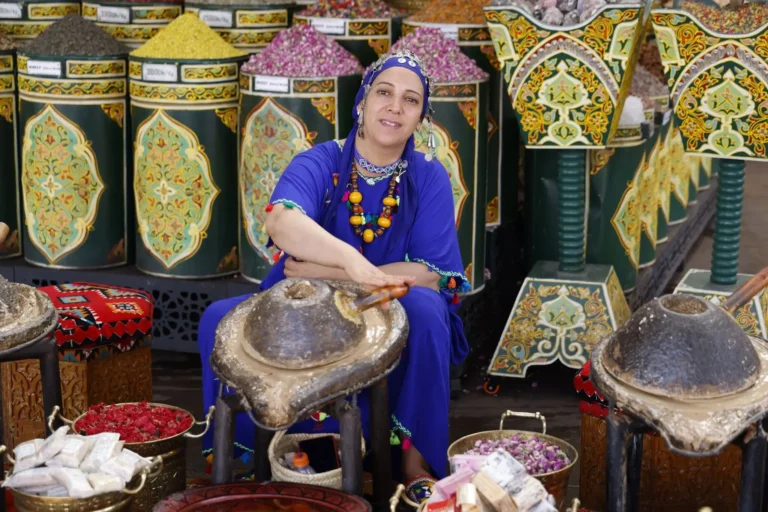
Even in the souks, Moroccan hospitality shapes the commercial culture in ways that visitors often don’t expect. Bargaining is expected, normal, and — once you understand the unwritten rules — genuinely enjoyable.
Start at around 40 to 50 percent of the asking price and work upward. Keep the tone light and friendly — bargaining in Morocco is a social interaction, not a confrontation. Always be willing to walk away, and if a vendor accepts your first counteroffer immediately, you probably went too high.
One important principle: if you agree on a price, you are expected to buy. Walking away after a price has been agreed is considered disrespectful.
Photography and Personal Privacy
Morocco is extraordinarily photogenic, but always ask permission before photographing people. Many Moroccans are happy to be photographed. Others are not, and their wishes must be respected. A simple gesture — raising your camera and making eye contact questioningly — communicates your intent clearly.
Final Thoughts
Moroccan hospitality is not a performance for tourists — it is a way of life that has been practiced for centuries and remains as genuine today as it has ever been. The customs and etiquette outlined here are not restrictions — they are invitations. Follow them, and you will find yourself welcomed into a culture of extraordinary warmth, generosity, and depth that will stay with you long after you return home.
For more on planning your Morocco trip, check out our 3 Days in Marrakech itinerary and our guide to traditional Moroccan dishes you must try. For official tourism information, visit Visit Morocco.
12 Comments