Berber Culture in Morocco: 7 Essential Traditions and Where to Experience Them
Long before Morocco was Arab, Islamic, French, or any of the other layers of identity that define the country today, it was Amazigh — Berber. The indigenous people of North Africa, the Amazigh (the word means “free people” in Tamazight, their language) have inhabited the mountains, valleys, and deserts of Morocco for at least 5,000 years, and their culture, traditions, and worldview remain woven into the fabric of Moroccan life in ways that most visitors barely notice but that, once pointed out, are impossible to unsee.
This guide to Berber culture in Morocco introduces you to the history and traditions of the Amazigh people, the places where their culture is most visible and most accessible to visitors, and the experiences that offer the most authentic engagement with one of the world’s oldest living civilizations.
Who Are the Amazigh? A Brief History
The Amazigh are the indigenous inhabitants of North Africa, stretching from the Atlantic coast of Morocco to the Siwa Oasis in Egypt and from the Mediterranean coast to sub-Saharan Africa. In Morocco alone, ethnic Amazigh people constitute between 40 and 60 percent of the population depending on how identity is measured, and Tamazight — the Amazigh language — was officially recognized as a co-official language of Morocco alongside Arabic in the 2011 constitution.
The history of Berber culture in Morocco is a history of extraordinary resilience. The Amazigh withstood and absorbed successive waves of Phoenician, Roman, Vandal, Byzantine, Arab, and French influence without losing the core threads of their identity — their language, their oral traditions, their music, their distinctive textile and jewelry arts, and their deep relationship with the landscapes they inhabit.
The Arab conquest of North Africa in the 7th and 8th centuries brought Islam to the Amazigh world — a religion that was adopted with genuine conviction and that merged with existing Amazigh spiritual traditions to create a form of Islam with distinctly Berber characteristics, including a strong veneration of local saints (marabouts) and a religious calendar that incorporates pre-Islamic seasonal festivals.
During the French Protectorate (1912–1956), colonial authorities attempted to divide Moroccan society along Arab-Berber lines through the notorious Berber Dahir of 1930, which subjected Berber communities to French rather than Islamic law. This policy backfired dramatically, galvanizing Moroccan nationalist sentiment across ethnic lines, and is today viewed as a significant catalyst for the independence movement.
In contemporary Morocco, Berber culture is experiencing a significant revival. The establishment of the Royal Institute of Amazigh Culture (IRCAM) in 2001, the official recognition of Tamazight in the 2011 constitution, and the growing presence of Amazigh language education in Moroccan schools all represent a partial restoration of cultural dignity after decades of marginalization.
The Amazigh Language: Tamazight
Tamazight is not a single language but a family of related languages and dialects spoken across North Africa. In Morocco, three main varieties are spoken:
Tarifit is spoken primarily in the Rif Mountains of northern Morocco, the region surrounding Chefchaouen and Al Hoceima. It is the most geographically distinct of Morocco’s Amazigh varieties.
Tamazight (in the narrow sense) is spoken in the Middle Atlas Mountains, the area around Azilal, Beni Mellal, and the central Atlas range. This is the variety closest to the standardized Tifinagh script used in official contexts.
Tachelhit (also written Tashlhiyt or Shilha) is spoken in the High Atlas Mountains and the Souss Valley south toward Agadir and Taroudant. It is the variety with the most speakers and the strongest presence in Moroccan popular music.
The Tifinagh script — the traditional alphabet of the Amazigh people — is one of the oldest writing systems still in use, with roots stretching back to the Libyan scripts of ancient North Africa. Today, Tifinagh is taught in Moroccan schools and appears on official signage alongside Arabic and French. As a visitor, you will encounter Tifinagh most visibly on road signs in the Atlas Mountains and on craft items sold in Amazigh communities.
Berber Culture in Morocco: Traditions and Practices
Architecture: Kasbahs and Ksour
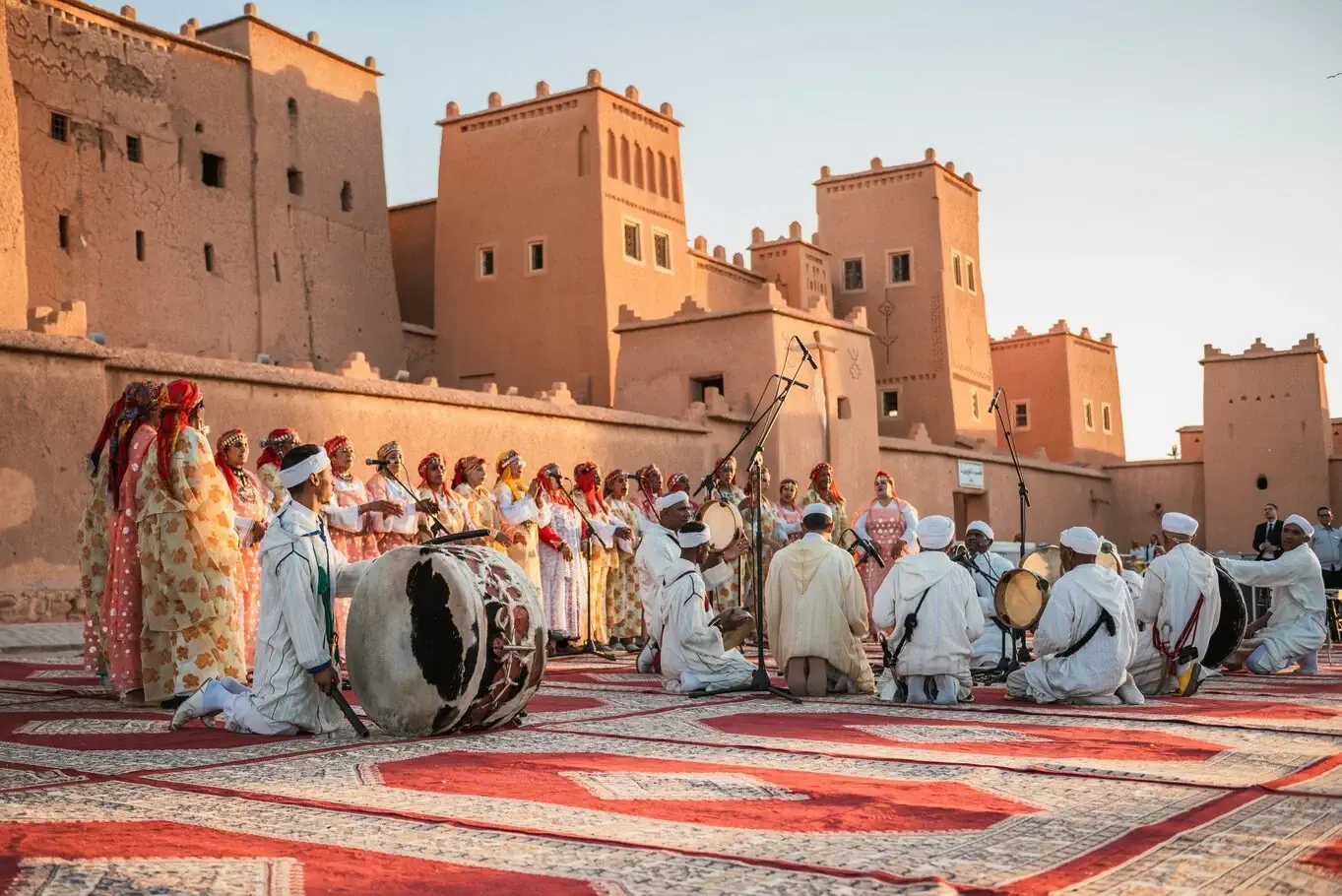
The most visible expressions of Berber culture in Morocco’s landscape are the extraordinary earthen architecture of the south — the kasbahs and ksour (plural of ksar, or fortified village) of the Draa Valley, the Dades Valley, and the area around Ouarzazate that have shaped the visual identity of Morocco more than almost any other built form.
A kasbah is a fortified residence, typically built for a tribal chief or powerful family from pisé (rammed earth) and mud brick, with distinctive tapered towers decorated with geometric patterns pressed into the dried clay. The kasbahs of southern Morocco are among the most remarkable examples of earthen architecture anywhere in the world.
Ait Benhaddou — a UNESCO World Heritage Site since 1987 — is the most famous ksar in Morocco, a collective earthen citadel that has served as a filming location for dozens of international productions. But Ait Benhaddou is the most visited of dozens of equally remarkable earthen settlements scattered across the Draa and Dades Valleys — Tamnougalt, Aït Hammou Said, Tifoultoute — most of which see a fraction of the visitors and offer a more authentic encounter with living Berber culture in Morocco.
Textiles and Carpet Weaving
Amazigh textile production is one of the most sophisticated and regionally diverse craft traditions in Morocco. Berber carpets differ fundamentally from the more widely known urban Moroccan carpets of Fes and Rabat — where urban rugs follow geometric patterns derived from Islamic art, Amazigh carpets encode personal, tribal, and cosmological meaning in patterns that have been passed down through generations of women weavers.
The symbols that appear in Berber carpets — diamond shapes (protecting against the evil eye), zigzag lines (water and fertility), cross-like forms (the four directions), and figurative motifs representing animals, humans, and celestial bodies — are not merely decorative. They are a language, readable to those who know the traditions, and each carpet is effectively a text that tells a story about its maker, her community, and her relationship with the world.
Different regions of Morocco have distinct carpet traditions. Middle Atlas carpets from the Beni Ouarain and Zemmour tribes are characterized by bold geometric patterns on ivory or black wool. Haouz carpets from the area around Marrakech tend toward denser pile and more complex polychrome patterns. High Atlas carpets from the Glaoua and other southern tribes often incorporate figurative elements not found in carpets from more conservative northern regions.
Jewelry and Metalwork
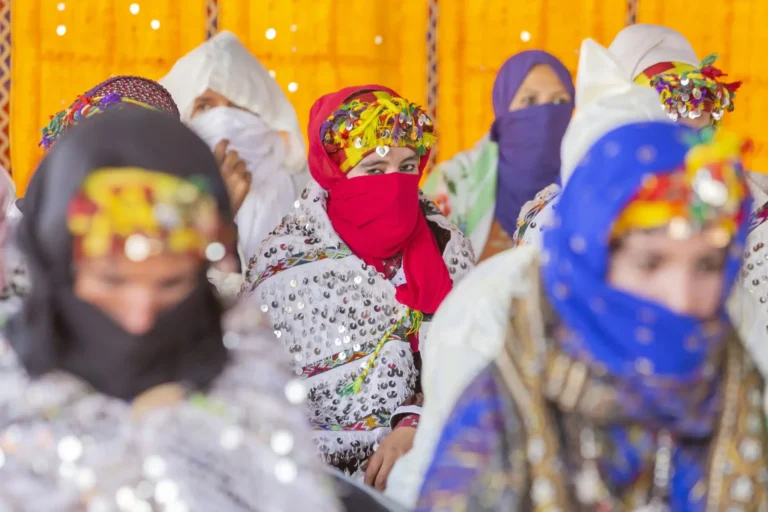
Amazigh jewelry is among the most spectacular traditional craft production in Morocco — massive silver pieces incorporating coral, amber, enamel, and coins that serve simultaneously as adornment, protection against evil, and portable wealth. The jewelry tradition is most strongly developed in the Anti-Atlas and the Souss Valley, where Tachelhit-speaking communities maintained a distinctive metalworking tradition for centuries.
The fibula (tizerzai) — a large ornamental clasp used to fasten the traditional Amazigh cloak — is one of the most iconic pieces of Berber culture Morocco’s craft heritage has produced. Antique fibulae, made from silver inlaid with coral and enamel, fetch high prices in Morocco’s antique markets; contemporary reproductions are widely available in the souks.
Music and Oral Tradition
Amazigh musical traditions are among the most vital and diverse in North Africa. Three main Amazigh musical genres deserve particular mention for visitors interested in Berber culture in Morocco.
Ahidous is the collective music and dance tradition of the Middle Atlas Amazigh communities — performed at weddings, seasonal festivals, and moussems (local saint festivals), ahidous involves large groups of men and women standing in a circle, alternating chanted verses with percussive clapping and the rhythmic stamping of feet. It is one of the most powerful communal musical experiences in Morocco.
Ahwach is the equivalent tradition of the High Atlas and southern Morocco, similar in structure to ahidous but with its own distinct rhythmic patterns and musical vocabulary. The large ahwach gatherings at moussems in the Draa Valley and the Ouarzazate region are among the most extraordinary musical events in Morocco.
Rwais is a tradition of itinerant poet-musicians — bards — who travel between communities carrying the oral literature of the Amazigh world. The tradition is most strongly associated with Tachelhit-speaking communities of the Souss Valley and the Anti-Atlas, and represents one of Morocco’s most endangered cultural forms.
Food Traditions
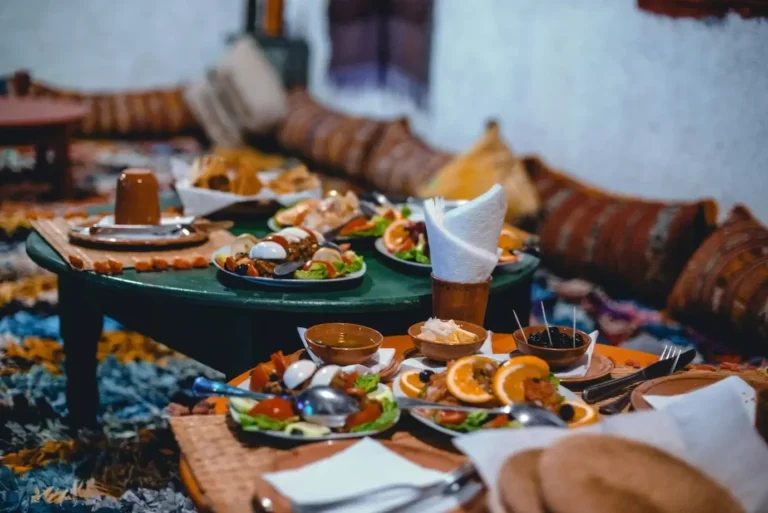
Berber culture Morocco is most directly experienced through food in the dishes of the Atlas Mountains and the Souss Valley that differ significantly from the more widely known urban Moroccan cuisine. Tafarnout — the traditional flat bread baked in a clay pot buried in embers — is the staple of Amazigh highland communities and has a flavor and texture entirely different from the urban khobz bread. Amlou — a thick paste of toasted almonds, argan oil, and honey — is one of the finest breakfast spreads in the world and is a specialty of the Souss Valley argan-producing region. Oufti — a slow-cooked stew of dried vegetables, preserved meat, and spices — represents the highland food traditions adapted to the long winters of the Atlas Mountains.
Where to Experience Berber Culture in Morocco
The Middle Atlas: Azrou and the Zemmour Territory
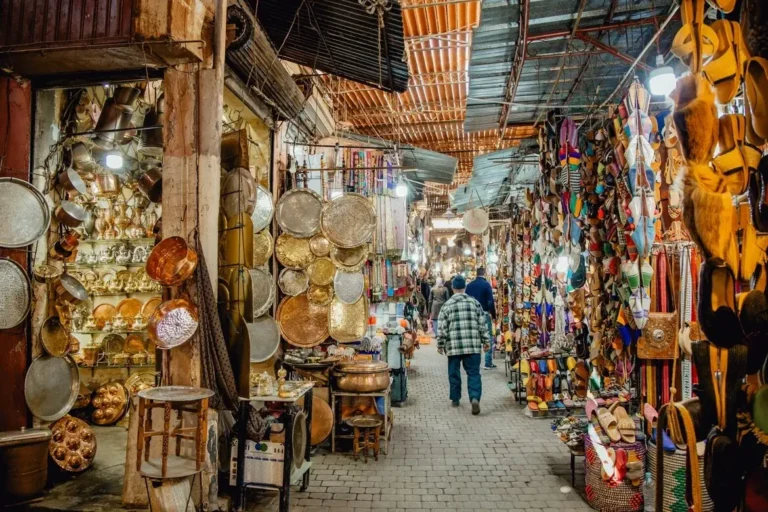
The Middle Atlas, accessible from Fes or Meknes, is one of the most accessible areas for experiencing living Berber culture in Morocco. The weekly markets (souqs) in towns like Azrou, Ain Leuh, and Timahdite bring Amazigh communities from across the surrounding plateau together for commerce, news exchange, and social interaction that has changed little in centuries. The Monday souk in Azrou and the Thursday souk in Ain Leuh are particularly recommended.
The High Atlas: Imlil and the Toubkal Region
The villages surrounding Imlil at the base of Jebel Toubkal offer direct encounters with High Atlas Amazigh communities — the Chleuh-speaking inhabitants of these extraordinary mountain valleys who have maintained their cultural traditions at high altitude for millennia. Staying in a local gite, eating with a family, and walking between villages with a licensed local guide is the most meaningful way to engage with Berber culture in Morocco’s highest mountains.
The Draa Valley and Ouarzazate Region
The Draa Valley south of Ouarzazate is arguably the richest concentration of living Berber culture in Morocco accessible to visitors. The valley’s string of ksour and kasbahs, its palm groves and irrigation systems (khettaras), its weekly markets, and the extraordinary landscape of red earth against date palms and distant Atlas peaks create an environment in which the deep historical layers of Amazigh civilization are continuously visible. The moussem of Moulay Abdallah Amghar near El Kelaa des Mgouna (the Rose Festival in May) is one of the finest Amazigh cultural events in Morocco.
The Anti-Atlas and the Souss Valley
The Anti-Atlas, stretching between Taroudant and Tata, is one of the least visited and most rewarding regions for Berber culture in Morocco. The dramatic landscape of volcanic rock and isolated plateaus shelters communities whose Tachelhit language and traditional practices have been preserved with extraordinary fidelity. The area around Tiznit is particularly known for its silversmithing tradition, and the weekly souk in Tiznit remains one of the finest traditional markets in the south.
Engaging Respectfully with Berber Culture in Morocco
Visiting Amazigh communities requires the same cultural sensitivity as any encounter with a living traditional culture. A few principles deserve particular emphasis.
Ask before photographing people. Photographing Amazigh women in traditional dress without permission is particularly inappropriate and commonly reported as disrespectful by community members.
Learn a few words of Tamazight. “Azul” (hello) and “tanemmirt” (thank you) will be met with delight and immediate warmth in any Amazigh community — these are not widely spoken by tourists and signal genuine interest in the culture.
Buy crafts directly from producers where possible. Purchasing carpets, jewelry, and textiles directly from the women’s cooperatives and artisan associations that have emerged in many Amazigh communities ensures a far greater proportion of the money reaches the people who made the object.
Engage with context. The most meaningful engagement with Berber culture in Morocco comes through guided visits with licensed local guides from within the communities themselves, rather than through the mediation of urban tour operators who may have limited connection to the traditions they present.
Final Thoughts
Berber culture in Morocco is not a heritage attraction or a museum exhibit — it is a living civilization of extraordinary depth that continues to shape Moroccan society, music, food, art, and identity in ways that both Moroccan and international visitors are only beginning to fully appreciate. The mountains, valleys, and deserts of Morocco are not simply beautiful landscapes — they are the homeland of the Amazigh people, and understanding something of their history, their traditions, and their contemporary experience transforms the act of traveling through Morocco into something richer and more meaningful.
For more on Moroccan culture and traditions, read our complete guide to Moroccan hospitality and our guide to the Moroccan hammam experience. For official information on Morocco’s cultural heritage, visit Visit Morocco.