A Beginner’s Guide to Moroccan Mint Tea Culture and Etiquette
In Morocco, tea is never just tea. A glass of Moroccan mint tea is an invitation, a conversation, a ritual, and a declaration of hospitality all at once. It is poured at the beginning of business negotiations and at the end of long journeys. It is offered to strangers and shared between lifelong friends. It appears at weddings and funerals, in the grandest riads and the most modest roadside stalls. To understand Moroccan mint tea is to understand something essential about Morocco itself.
This guide introduces you to Moroccan mint tea culture from the ground up — how it is made, what it means, the etiquette you need to know as a visitor, and where to experience it at its finest across the country.
What is Moroccan Mint Tea?
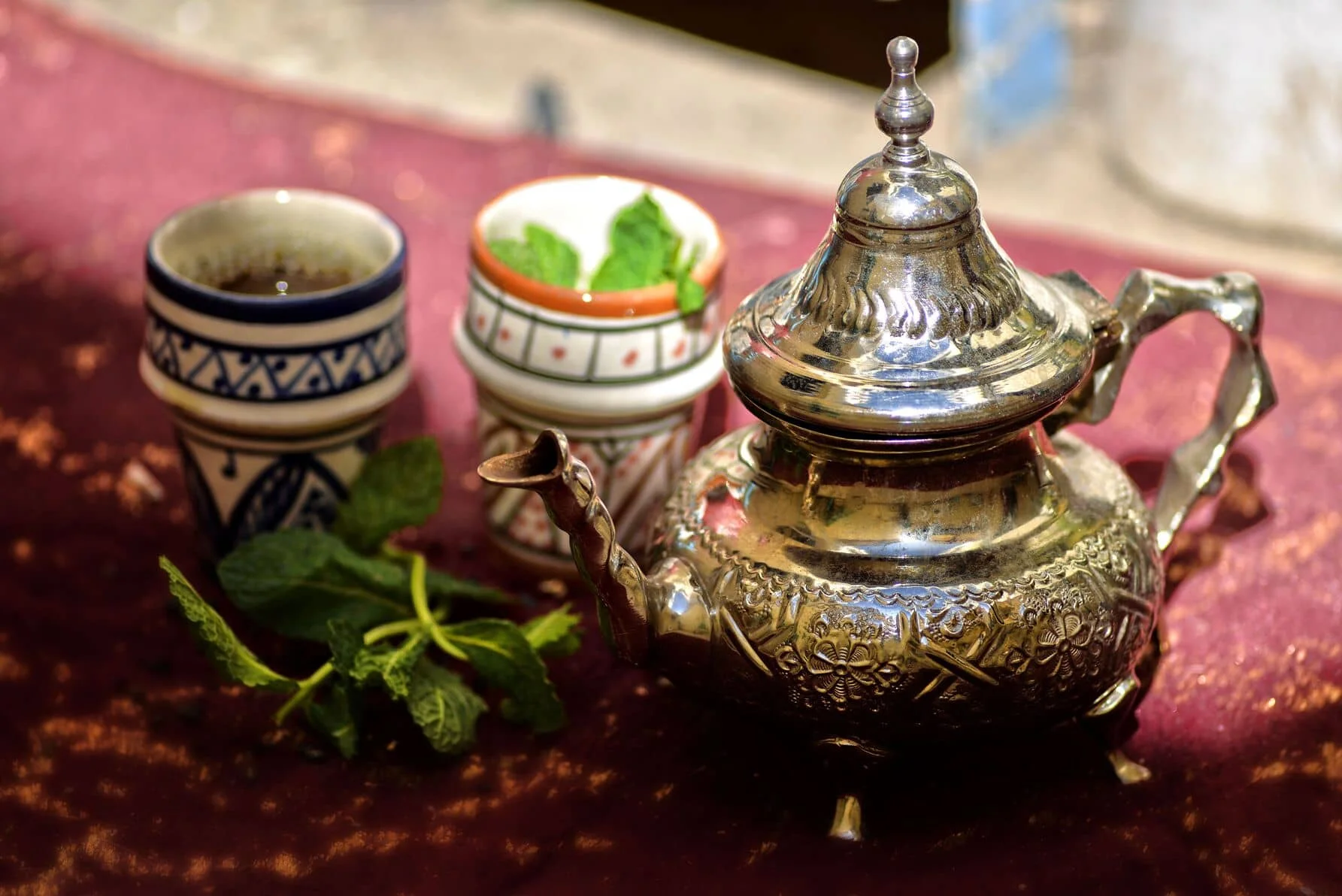
Moroccan mint tea — known in Darija as atay or simply as “Moroccan whisky” (a joking reference to its status as the country’s beloved national drink) — is made from three core ingredients: Chinese gunpowder green tea, fresh spearmint leaves, and sugar.
The combination sounds simple, and it is. But the magic of Moroccan mint tea lies not in the ingredients but in the preparation, the ritual of serving, and the social context in which it is consumed. A glass of Moroccan mint tea prepared by a skilled host in a traditional Moroccan home is one of the finest drinking experiences in the world — sweet, aromatic, slightly bitter from the tea, intensely fresh from the mint, and warm in a way that goes beyond temperature.
The History of Moroccan Mint Tea
Moroccan mint tea as it exists today is a surprisingly recent tradition. Green tea was not widely available in Morocco until the 18th century, when British merchants introduced Chinese gunpowder tea to the country in exchange for Moroccan goods. The tea quickly became embedded in Moroccan culture, absorbing the existing traditions of hospitality and communal gathering that had always defined Moroccan social life.
The sugar that sweetens Moroccan mint tea was, for centuries, a luxury product and a mark of generous hospitality. Offering sweet tea to a guest was an expression of wealth and respect. Today, the sweetness remains — though the quantities of sugar used in traditional Moroccan mint tea can be startling to visitors accustomed to less sweet drinks.
How Moroccan Mint Tea is Made
The preparation of Moroccan mint tea is a process that rewards patience and attention. While shortcuts exist — tea bags, pre-made mixes — the traditional method, passed down through generations, produces a drink of incomparably greater depth and flavor.
The Teapot: Moroccan mint tea is made and served in a traditional metal teapot, typically silver-colored and decorated with engraved patterns. The pot is specifically designed for this purpose and is not used for other teas.
Step 1 — Warming the Pot: The teapot is first rinsed with a small amount of boiling water to warm it, then this water is discarded.
Step 2 — The Tea: A tablespoon of Chinese gunpowder green tea is added to the warm pot. A small amount of boiling water is poured over the tea, swirled briefly, and then poured away — this first rinse removes bitterness and any dust from the tea leaves.
Step 3 — The Mint: A generous handful of fresh spearmint leaves is packed into the teapot. The quality and freshness of the mint is crucial to the quality of the Moroccan mint tea — wilted or dry mint produces a noticeably inferior result.
Step 4 — The Sugar: Traditional Moroccan mint tea is made with a quantity of sugar that most non-Moroccan visitors find startling — sometimes three or four teaspoons per small glass. The sugar is added directly to the pot, not to each individual glass.
Step 5 — Boiling Water: Boiling water is poured into the pot, which is then placed on a low flame for a few minutes to steep.
Step 6 — The Pour: This is the most theatrical part of the Moroccan mint tea ceremony. The tea is poured from a height of at least thirty centimeters above the glass — sometimes much higher — to create a frothy head. This froth is considered an important sign of quality. The tea is then poured back into the pot and the process is repeated two or three times to blend the flavors fully before serving.
The Three Glasses of Moroccan Mint Tea
Traditional Moroccan mint tea ceremony involves serving tea three times, and there is a saying that describes each glass:
The first glass is said to be “as gentle as life.” It is the lightest and most delicate of the three, with the flavors still developing.
The second glass is “as strong as love.” The tea has now fully steeped and the flavors are at their most intense and complex.
The third glass is “as bitter as death.” The tea has steeped longest and the bitterness of the gunpowder tea comes through more strongly, balanced by the sweetness of the sugar.
Most visitors find all three glasses perfectly sweet, but the progression in flavor between the three is real and worth paying attention to.
Moroccan Mint Tea Etiquette: What Every Visitor Should Know
Understanding the etiquette around Moroccan mint tea will significantly enrich your experience of drinking it in Morocco.
Always accept when offered. Refusing tea in Morocco is considered impolite and can give genuine offense. If you are offered Moroccan mint tea — by a shopkeeper, a host, or a new acquaintance — accept it. You are not obligated to buy anything, agree to anything, or stay longer than you wish. The tea itself is a gift, and accepting it graciously is the appropriate response.
Receive the glass with your right hand. In Moroccan culture, as in Islamic tradition more broadly, the right hand is used for eating, drinking, and receiving gifts. Accept your glass of Moroccan mint tea with your right hand, or with both hands if the glass is hot.
Don’t rush. Moroccan mint tea is not a drink to be consumed quickly. It is meant to be sipped slowly, enjoyed over conversation, and savored. Drinking your glass too quickly can be read as either extreme thirst (which a host will interpret as a failure of hospitality) or impatience to leave.
Compliment the tea. Moroccan hosts take genuine pride in the quality of their Moroccan mint tea, and a simple “zwina” (beautiful/delicious in Darija) or “shukran” (thank you) after your first sip is always well received.
It is acceptable to decline a third glass. While refusing the first offering of tea is impolite, it is perfectly acceptable to decline a third or fourth glass if you have had enough. Place your hand over your glass and say “baraka” (enough, thank you) with a smile.
Where to Experience the Best Moroccan Mint Tea
In a traditional home. The finest Moroccan mint tea is always served in a private home, prepared with care by a host who takes pride in their tea. If you are invited for tea in a Moroccan home, accept without hesitation.
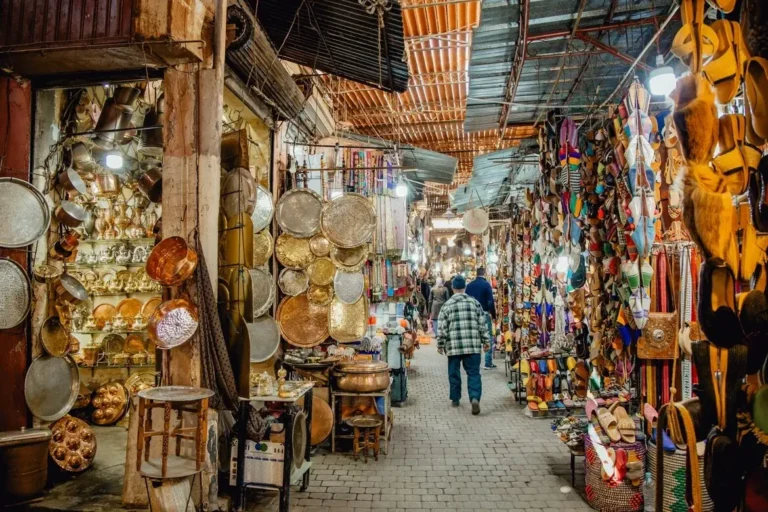
In a medina café. The cafés of Morocco’s old medinas serve Moroccan mint tea constantly throughout the day. The rooftop cafés overlooking Djemaa el-Fna in Marrakech, the terrace cafés of Fes’s Bou Jeloud square, and the small cafés tucked into the blue alleyways of Chefchaouen all offer excellent mint tea in beautiful settings. Expect to pay 10–25 MAD per glass.
In a riad. Most traditional riads in Morocco serve Moroccan mint tea to guests on arrival and throughout the stay. This is often the first authentic taste of Morocco many visitors experience, and it sets the tone for everything that follows.
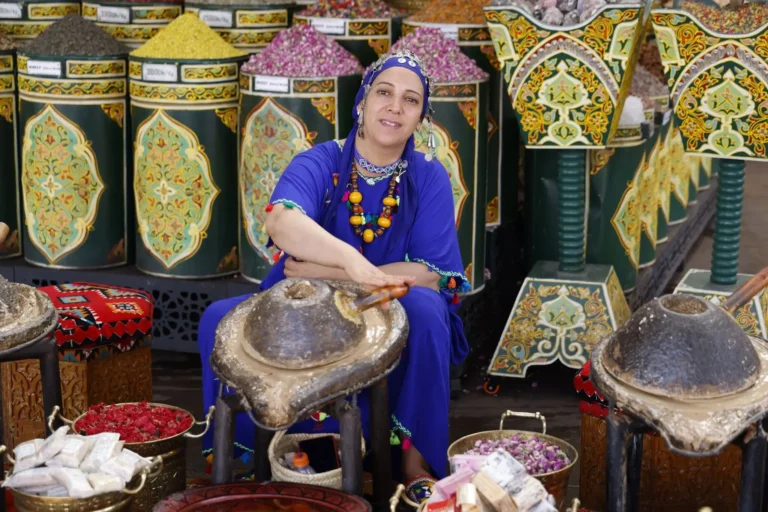
At a souk stall. Many spice merchants and souk stallholders offer a glass of Moroccan mint tea to visitors as a gesture of hospitality. This tea is genuine and freely given — it does not commit you to a purchase, though it is courteous to look at what is on offer before leaving.
Making Moroccan Mint Tea at Home
One of the most rewarding souvenirs to bring home from Morocco is the experience of making Moroccan mint tea yourself. The ingredients are widely available outside Morocco — Chinese gunpowder green tea can be found in specialty tea shops and online, and fresh spearmint is available in most supermarkets.
A traditional Moroccan teapot can be purchased in the souks of Marrakech, Fes, or Chefchaouen for 50–200 MAD depending on size and quality. Look for pots with a sturdy handle, a well-fitting lid, and a spout that pours cleanly.
The first time you attempt the high pour and achieve a proper froth, you will understand why Moroccan mint tea has been captivating visitors for centuries.
Final Thoughts
Moroccan mint tea is one of those rare cultural practices that is simultaneously simple and profound. A handful of leaves, some tea, sugar, and boiling water — and yet the result is a drink that carries centuries of hospitality, tradition, and human connection in every glass.
Drink it slowly. Accept it graciously. And whenever you find yourself on a rooftop in Marrakech or in a quiet corner of the Fes medina, with a glass of sweet, steaming mint tea in your hand and the sound of the city below, take a moment to appreciate exactly where you are.
For more on Moroccan culture and hospitality, read our complete guide to Moroccan hospitality and customs and our guide to traditional Moroccan dishes. For more on planning your Morocco trip, visit Visit Morocco.