
Tangier Travel Guide (2026) : Where Africa Meets Europe on Morocco’s Northern Coast
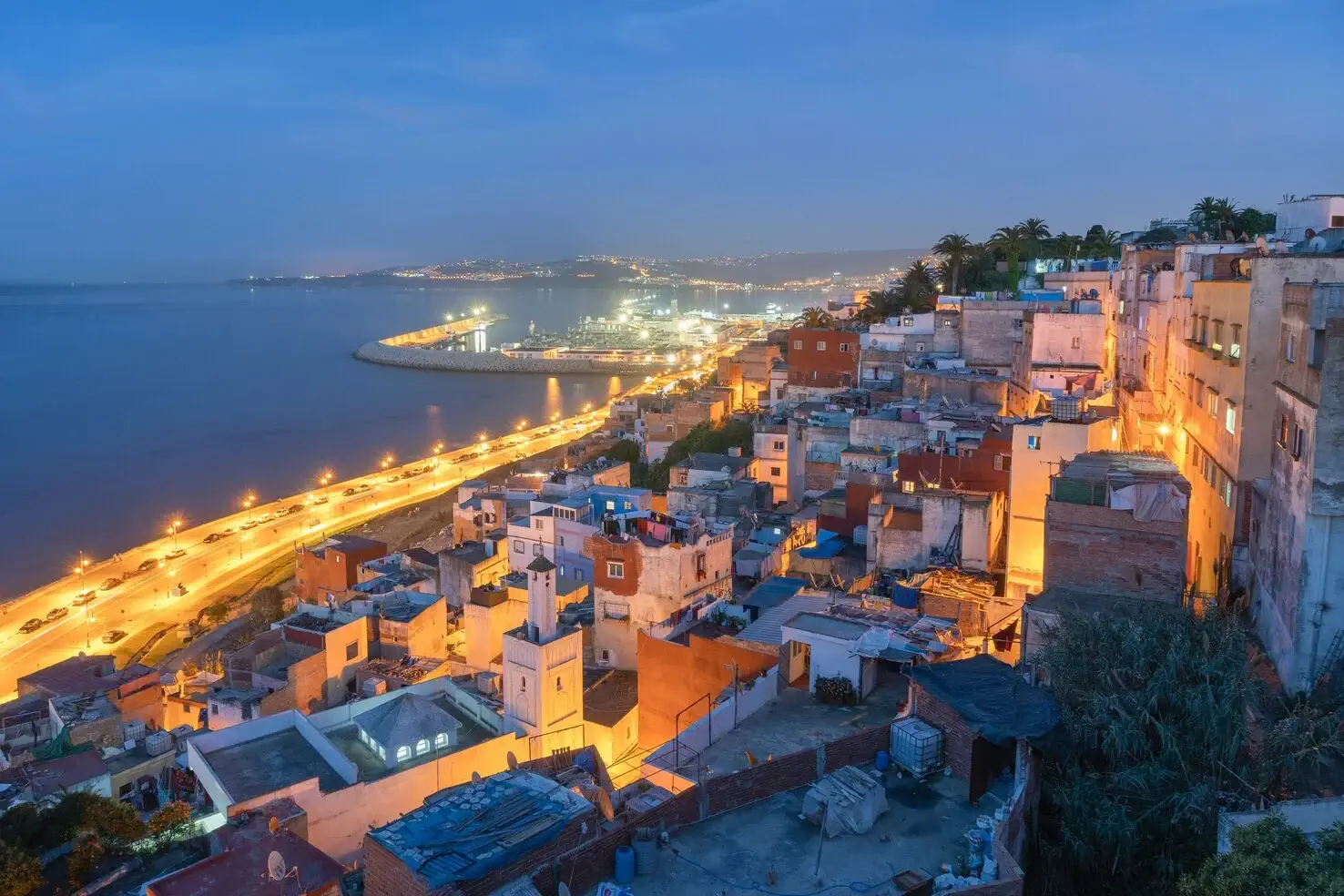
Tangier is unlike any other city in Morocco. Perched at the northwestern tip of Africa, where the Atlantic Ocean meets the Mediterranean Sea and the continent of Africa stares across fourteen kilometers of open water at the coast of Spain, Tangier has always been a city of crossings — of cultures, languages, ideas, and people. For centuries it was one of the most cosmopolitan, decadent, and artistically fertile cities on earth. Today, transformed by massive infrastructure investment and the arrival of the Al Boraq high-speed train, Tangier is experiencing a renaissance that makes it one of the most exciting destinations in Morocco.
This Tangier travel guide covers everything you need to know — the best things to do, where to eat, where to stay, how to get there, and why this endlessly fascinating city deserves far more than the quick stopover most Morocco itineraries allocate to it.
Why Visit Tangier?
Tangier’s reputation among Morocco travelers has historically been mixed. The city that enchanted Paul Bowles, William Burroughs, Henri Matisse, and the Rolling Stones was also, for decades, known for aggressive touts, persistent hustlers, and a general atmosphere of con artistry that put many visitors off. The Tangier of that era has largely been replaced — massive urban regeneration, a new corniche, a transformed port area, and a significant improvement in the tourist experience have made modern Tangier a genuinely rewarding destination.
What remains is the essential character that made Tangier extraordinary in the first place — the view across the strait to Spain, the mixture of Arabic, Berber, French, and Spanish languages audible on every street, the extraordinary literary and artistic heritage, and a medina that retains its labyrinthine character without the commercial pressure of Marrakech’s tourist-saturated souks.
The Best Things to Do in Tangier
1. The Kasbah and Kasbah Museum
The Kasbah of Tangier occupies the highest point of the medina, offering views across the strait that on clear days extend to the Spanish coastline — one of the most dramatic urban panoramas in North Africa. The Kasbah itself dates from the Portuguese and then Moroccan occupation of the city and has been the residence of sultans, foreign diplomats, and American legations over the centuries.
The Dar el-Makhzen — the former sultan’s palace at the heart of the Kasbah — now houses the Kasbah Museum of Mediterranean Cultures, one of the finest small museums in Morocco. The collection covers the archaeology of the Tangier region from prehistoric times through the Islamic period, displayed in beautifully restored palace rooms arranged around a garden courtyard. Entry costs 20 MAD and the museum deserves at least 90 minutes.
2. The American Legation
One of the most unexpected and most rewarding sights in any Tangier travel guide is the American Legation — a 19th-century palace in the medina that served as the first American diplomatic property outside the United States, gifted to the new American republic by Sultan Moulay Slimane in 1821. Today it operates as a museum dedicated to the long history of American-Moroccan relations and the role Tangier played in American diplomatic and artistic history.
The building is extraordinary — a labyrinth of rooms on multiple levels, filled with paintings, documents, photographs, and artifacts that tell the story of Tangier’s cosmopolitan past. Entry is inexpensive and the English-speaking staff provide genuinely illuminating context. One of the hidden gems of any Tangier travel guide.
3. The Medina
Tangier’s medina is one of the most authentic in northern Morocco — less polished and tourist-oriented than Marrakech’s but retaining a genuine neighborhood character that rewards slow, curious exploration. The main souk area around the Grand Socco (Place du Grand Socco) and the Petit Socco (Place Assarag) forms the commercial and social heart of the medina, with cafés, market stalls, fabric merchants, and spice vendors operating alongside the everyday commerce of a living Moroccan neighborhood.
The Petit Socco — a small square deep in the medina — is where the literary mythology of Tangier is most palpably present. The cafés here were frequented by Paul Bowles, Jack Kerouac, Allen Ginsberg, and William Burroughs during the 1950s and 1960s, when Tangier’s international zone status made it a refuge for writers, artists, and bohemians escaping the social conventions of their home countries. Today the square is considerably calmer, but the atmosphere of its past clings to the old café walls in a way that is difficult to define and easy to feel.
4. Cap Spartel and the Caves of Hercules
Approximately 14 kilometers west of Tangier, Cap Spartel marks the precise point where the Atlantic Ocean and the Mediterranean Sea meet — the northwestern corner of the African continent. The lighthouse at Cap Spartel has guided shipping through the Strait of Gibraltar for centuries, and the view from the cape across the meeting of two seas is one of the finest in Morocco.
Two kilometers further south, the Caves of Hercules are a series of sea caves carved into the cliffs by both natural erosion and centuries of human use — the caves were used by Berber communities to cut millstones, leaving a distinctive pockmarked texture on the cave walls. The famous opening of the caves onto the Atlantic, shaped remarkably like the continent of Africa viewed in reverse, has become one of the most photographed natural features in Morocco. Entry costs 15 MAD.
5. The Strait of Gibraltar Viewpoints
Several viewpoints around Tangier offer the extraordinary experience of seeing two continents simultaneously — Africa beneath your feet, Europe visible across the water. The terrace of the Kasbah Museum, the viewpoints along the Boulevard Mohammed VI above the port, and the café terraces on the Montagne neighborhood all offer this perspective. On exceptionally clear days, the detail visible on the Spanish coastline is remarkable.
6. The Grand Socco and Mendoubia Gardens
The Grand Socco — officially Place du 9 Avril 1947, named for the date of a famous speech by King Mohammed V — is the main gateway between the modern city and the medina, a large open square lined with cafés and market stalls that has been the commercial heart of Tangier for centuries. Adjacent to the Grand Socco, the Mendoubia Gardens — a beautiful public park surrounding an enormous ancient dragon tree — offer a peaceful escape from the bustle of the square.
7. The New Tangier Corniche and Port
The transformation of Tangier’s port area and seafront over the past decade has been remarkable. The new Tangier Med port (Morocco’s largest commercial port, located 40 kilometers east of the city) has relieved pressure on the old port, allowing the central waterfront to be developed as a public promenade. The new corniche offers pleasant walking with views across the strait, lined with cafés and restaurants that cater to both locals and visitors.
8. The Paul Bowles Literary Heritage
For visitors interested in the literary history that made Tangier internationally famous, the city offers several points of engagement with the Paul Bowles legacy. Bowles lived in Tangier from 1947 until his death in 1999 and made the city the setting for his most celebrated novel, The Sheltering Sky (1949). The Paul Bowles Collection at the American Legation contains documents, photographs, and manuscripts related to his life and work. His apartment building on Rue Italie, while not open to visitors, is marked and draws literary pilgrims from around the world.
Where to Eat in Tangier
Tangier’s food scene reflects its position at the crossroads of Moroccan, Spanish, and international influences — more cosmopolitan than any other Moroccan city and with a particularly strong tradition of fresh seafood.
El Morocco Club: One of the finest restaurants in Tangier, occupying a beautifully restored art deco villa and serving sophisticated Moroccan cuisine in an atmosphere that evokes the golden age of Tangier’s international period. Expect to pay 200–400 MAD per person.
Le Saveur du Poisson: A legendary Tangier institution serving a fixed daily menu of fresh fish and seafood in a small, informal dining room deep in the medina. No choice — you eat what the sea provided that day — but the quality is consistently extraordinary. One of the best seafood experiences in any Tangier travel guide. Expect to pay 150–200 MAD per person for the full menu.
Café Hafa: Not a restaurant but an essential Tangier experience — a terrace café perched on the cliffs above the Atlantic, operating since 1921, serving mint tea and simple snacks to multiple generations of Tangerines and famous visitors including Paul Bowles and the Rolling Stones. The view across the strait is extraordinary. Prices are very reasonable — 15–30 MAD for tea.
The Petit Socco cafés: The cafés around the Petit Socco serve good coffee, mint tea, and simple Moroccan food in the most historically atmospheric setting in Tangier. The food is unremarkable; the atmosphere is irreplaceable.
Where to Stay in Tangier
Budget: Several well-reviewed budget guesthouses and small hotels operate in the medina, offering private rooms for 200–400 MAD per night. The medina location provides the most atmospheric base for exploring the city.
Mid-range: A number of comfortable boutique hotels and restored riads in the medina and Kasbah offer rooms for 400–900 MAD per night. La Tangerina in the Kasbah and Dar Nour are consistently well-reviewed options with extraordinary views over the strait.
Luxury: The Tangier Inn and the Hilton Garden Inn represent the luxury end of the market, with rates from 1,200 MAD per night. El Morocco Club also offers a small number of beautifully appointed rooms.
How to Get to Tangier
By Al Boraq high-speed train: The most comfortable and most impressive way to arrive in Tangier is by the Al Boraq high-speed train from Casablanca, which covers the 340-kilometer journey in just 2 hours 10 minutes. This is one of the finest train journeys in Africa and makes Tangier genuinely accessible from anywhere in Morocco’s main rail network. For the complete guide to Morocco’s rail network, read our Morocco train travel guide.
By ferry from Spain: Tangier is served by regular ferry connections from Tarifa (35 minutes), Algeciras (1.5 hours), and Barcelona (24 hours). The ferry arrival at Tangier Med port (40 kilometers from the city center) requires a connecting bus or taxi to the city. The older Tangier Ville port in the city center handles some ferry services from Tarifa.
By air: Ibn Batouta Airport (TNG) serves Tangier with direct connections to multiple European cities. Read our Morocco airports guide for full details.
By car: Tangier is connected to Casablanca and the rest of Morocco by the A1 motorway. For tips on driving in Morocco, read our complete car rental guide.
Practical Tips for Your Tangier Travel Guide
- How long to stay: Two nights minimum; three nights allows a comfortable pace including the Cap Spartel day trip
- Best time to visit: April to June and September to November for the most pleasant weather. July and August are warm and busy with Moroccan tourists from the south
- Getting around: The medina and Kasbah are best explored on foot. Petit taxis (blue) cover longer distances within the city. For the complete guide to Morocco’s taxi system, read our Morocco taxi guide
- Language: Tangier is the most linguistically diverse city in Morocco — Arabic, Darija, Tarifit Berber, French, and Spanish are all audible on the streets. Spanish is particularly useful in the northern medina neighborhoods
- Safety: Modern Tangier is significantly safer and less aggressively touristed than its reputation from the 1980s and 1990s suggests. The tourist scam culture that historically defined the city has been substantially reduced, though the standard awareness advised in our tourist scams Morocco guide still applies
Tangier in a Morocco Itinerary
Tangier works best as either the beginning or the end of a Morocco itinerary — flying or ferrying in from Europe, traveling south by Al Boraq to begin the classic Fes-Marrakech-Sahara circuit, or completing that circuit by train and departing from Tangier back to Europe.
For the complete circuit, read our 14 Days in Morocco itinerary which begins in Tangier and works south through Chefchaouen, Fes, Marrakech, and the Sahara.
Final Thoughts
Tangier is a city that rewards visitors who arrive with curiosity rather than a checklist. The sights are real and worth seeing — the Kasbah, the American Legation, Cap Spartel — but the deepest pleasures of Tangier are more atmospheric than monumental: the view of Spain from an afternoon café, the sound of multiple languages in the Grand Socco, the feeling of standing at the precise point where two continents and two seas meet and understanding, viscerally, why this city has drawn artists, writers, and wanderers for centuries.
Come for two days. Stay for three. And leave, as almost everyone does, already planning when to return.
For more Morocco city inspiration, read our Chefchaouen travel guide and our Casablanca travel guide. For official tourism information, visit Visit Morocco.
One Comment