Agadir Travel Guide: The Complete Guide to Morocco’s Sunshine Coast
Agadir is Morocco’s great beach city — the destination where sun-seeking Europeans have been spending their winter holidays for decades, where Moroccan families from the interior cities come every summer to escape the heat, and where the combination of a magnificent Atlantic beach, a modern resort infrastructure, and easy access to the extraordinary landscapes of the Anti-Atlas and Souss Valley creates a travel experience unlike any other city in the country.
This Agadir travel guide gives you the complete picture — not just the beach (though the beach is genuinely excellent) but the full range of experiences that make Agadir worth more than the package holiday reputation it has acquired in some travel circles.
Understanding Agadir: What Kind of City Is It?
Before the recommendations, some honest context about what Agadir is and is not.
Agadir was almost entirely destroyed by a catastrophic earthquake on February 29, 1960 — one of the most devastating natural disasters in Moroccan history, which killed approximately 15,000 people and leveled the city in 15 seconds. The Agadir that exists today was entirely rebuilt after 1960 on a modern grid plan, which means it lacks the ancient medinas, labyrinthine souks, and centuries-old architectural heritage that characterize Fes, Marrakech, and Morocco’s other imperial cities.
What Agadir has instead is different but genuinely valuable — a long, magnificent beach, a modern and well-organized city that is easy to navigate, excellent seafood, good infrastructure, reliable sunshine (Agadir averages 300 days of sunshine per year), and accessibility to some of the finest landscapes in southern Morocco.
Visitors who arrive in Agadir expecting Marrakech will be disappointed. Visitors who arrive expecting a well-functioning beach resort city with easy access to Anti-Atlas adventures will be well served.
The Best Things to Do in Agadir
1. Agadir Beach — The Magnificent Atlantic Crescent
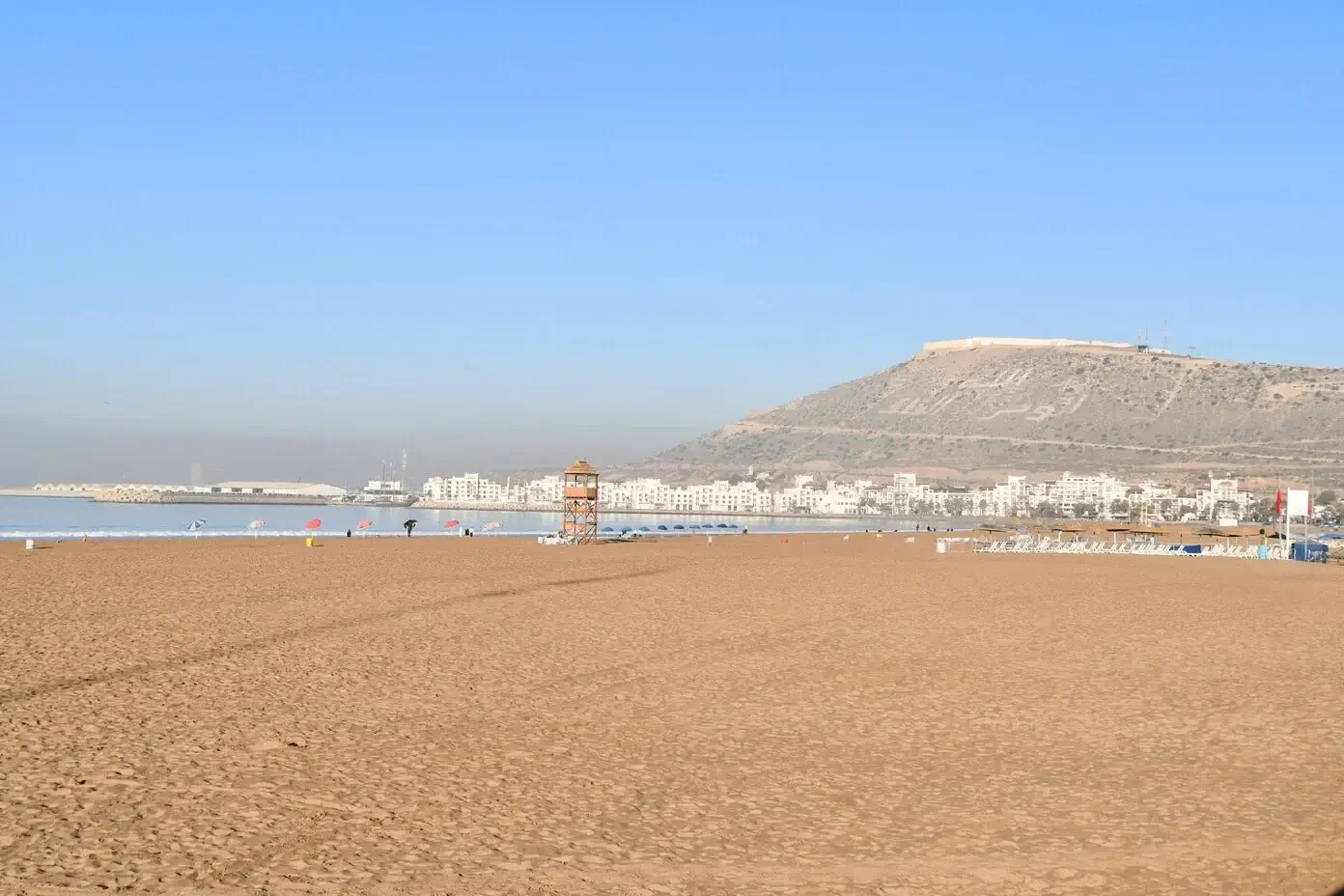
The centerpiece of any Agadir travel guide is the beach — a sweeping 10-kilometer crescent of golden sand backed by the Atlantic Ocean, one of the finest urban beaches in North Africa. The beach is clean, well-maintained, and equipped with sun loungers and parasols available for hire (approximately 30–50 MAD per day per lounger).
The water is clean and generally safe for swimming, though the Atlantic swell can be strong — always check conditions before entering the water, particularly with children. The beach is at its busiest in July and August when Moroccan families arrive for summer. In winter, the beach is warm enough for sitting in the sun (18–22°C) but cool for swimming.
The beach promenade (corniche) running parallel to the sand is one of the most pleasant walks in any Moroccan city — lined with cafés, restaurants, and palm trees, busy with joggers and families in the early morning and evening.
2. The Kasbah Ruins
On the hill above the modern city, the ruins of the pre-earthquake Agadir Oufella kasbah offer the most dramatic panoramic view available in this Agadir travel guide — the bay sweeping below, the modern city extending to the south, and on clear days the Anti-Atlas mountains rising to the east.
The kasbah was largely destroyed in the 1960 earthquake and only the walls remain, but the site has been carefully preserved and the views alone justify the climb or taxi ride to the top. Entry is free. The inscription above the main gate reads, in Arabic: “Love your country, your king, your faith” — placed there by the Dutch merchant Jan van Peycker in 1746.
3. Souk el Had — The Sunday Market
One of the largest traditional markets in southern Morocco and the finest market experience in any Agadir travel guide, Souk el Had operates every Sunday in the large market complex northeast of the city center. The souk covers an enormous area and sells everything — fresh produce, spices, textiles, leather goods, household items, traditional clothing, and crafts — at prices that reflect the local rather than tourist market.
Souk el Had is where Agadir’s modern resort exterior falls away entirely and the authentic Morocco of the Souss Valley emerges. Allow at least two hours and bring cash in small denominations.
4. Agadir Oufella Ruins by Night
The kasbah ruins are illuminated at night, and the view from the hill after dark — the city lights curving around the bay, the ocean black beyond the beach — is one of the most beautiful night views in Morocco. The ruins can be accessed by petit taxi (approximately 30–40 MAD from the city center) and the site is safe to visit in the evening.
5. Valley of the Birds (Vallée des Oiseaux)
A small but genuinely pleasant public garden and bird sanctuary in the center of Agadir, the Valley of the Birds provides a peaceful green escape from the city’s beach resort atmosphere. Home to flamingos, peacocks, and various exotic bird species in a landscaped garden setting. Entry is free or very inexpensive. Particularly enjoyable for families with children.
6. Agadir Marina
The modern marina development south of the beach offers a pleasant waterfront promenade with restaurants, cafés, and boutiques in a Mediterranean-style setting. Less authentically Moroccan than the city’s other attractions but pleasant for an evening walk and dinner by the water. Several good seafood restaurants overlook the marina.
7. Surf at Taghazout
Approximately 18 kilometers north of Agadir, the village of Taghazout is Morocco’s surf capital and one of the finest surf destinations in the world — the anchor point breaks, banana point, and the other waves of the Taghazout coast attract professional surfers from around the globe. For travelers staying in Agadir, Taghazout makes an excellent half-day or full-day excursion. Read our complete surf spots Morocco guide for everything you need to know.
Grand taxis run from Agadir to Taghazout for approximately 15–20 MAD per seat, or arrange a private taxi for approximately 80–120 MAD return.
8. Day Trip to Paradise Valley
One of the finest excursions from Agadir and a highlight of this Agadir travel guide, Paradise Valley is a lush palm oasis approximately 40 kilometers northeast of the city — a dramatic gorge carved by the Tamraght river through the Anti-Atlas mountains, filled with palm trees, natural swimming pools, and Berber villages that seem entirely disconnected from the beach resort world of Agadir below.
The natural pools of Paradise Valley are swimmable in summer and the hike through the gorge is beautiful. Organized day trips from Agadir cost approximately 200–400 MAD including transport and a local guide.
9. Day Trip to Taroudant
Known as the “grandmother of Marrakech” for its well-preserved pink earthen walls and traditional medina, Taroudant is located approximately 80 kilometers east of Agadir and makes the finest cultural day trip from the city. The medina is entirely authentic — no tourist pressure, excellent traditional craft shops, and a souk that has been operating since the 16th century. The city walls are among the best-preserved in Morocco.
Taroudant is best reached by grand taxi from Agadir (approximately 30–40 MAD per seat, 1.5 hours) or private transfer (approximately 300–500 MAD return). For a deeper exploration of the region, combine Taroudant with the Tioute Oasis and the Souss Valley palm groves. Read our renting a car in Morocco guide for tips on driving the Agadir region independently.
10. The Anti-Atlas Mountains
The dramatic landscapes of the Anti-Atlas begin just east of Agadir and offer some of the finest and least visited trekking and exploration in Morocco. The area around Tafraout — a beautiful pink granite landscape 152 kilometers from Agadir — is particularly spectacular, especially in February when the almond trees blossom. The painted rocks of Tafraout, decorated by Belgian artist Jean Vérame in 1984, add a surreal artistic element to an already extraordinary landscape.
Where to Eat in Agadir
Agadir’s restaurant scene is more internationally oriented than Morocco’s imperial cities — reflecting the large European tourist population — but the city also has excellent traditional Moroccan and particularly seafood options.
The Port Fish Market: The finest seafood experience in Agadir and the top food recommendation of this Agadir travel guide. In the working fishing port, fresh fish is sold in the morning market and cooked to order at the small restaurants surrounding it. Point at whatever looks freshest — prawns, sea bass, dorade, squid, sardines — and it will be grilled on the spot. A generous seafood lunch costs 60–120 MAD per person. Arrive by 12:30 PM for the best selection.
La Scala: One of Agadir’s most celebrated restaurants, serving excellent Moroccan cuisine in a beautiful traditional setting near the city center. The pastilla and the lamb tagine with preserved lemon are particularly good. Expect to pay 150–250 MAD per person.
Mezzo Mezzo: A reliable Italian restaurant near the beach that has been serving good pasta, pizza, and risotto to Agadir’s European visitors for decades. Useful for travelers with children or anyone craving something non-Moroccan. 100–180 MAD per person.
The Marina restaurants: Several good mid-range restaurants line the marina waterfront, serving a mix of Moroccan, Mediterranean, and international food. The quality varies — look for restaurants with local Moroccan customers rather than those displaying multilingual menus with photographs.
Jour et Nuit: A popular café-restaurant on the corniche serving good coffee, fresh juices, and light food in a pleasant beachfront setting. Excellent for breakfast or a mid-morning break. 30–80 MAD.
Where to Stay in Agadir
Agadir’s accommodation is dominated by large resort hotels — many international chains and all-inclusive properties that cater primarily to package holiday travelers from Europe. This model works well for families and travelers who want a beach resort experience with everything included, but offers less of the authentic Morocco atmosphere that riads and boutique hotels provide.
Budget: Several budget hotels and small guesthouses operate in the city center and near the beach for 200–400 MAD per night. Quality varies significantly — read recent reviews carefully.
Mid-range: The mid-range hotel options in Agadir are generally better value than in Marrakech — comfortable three and four-star hotels with pools and good facilities cost 500–1,000 MAD per night. The Sofitel Agadir Thalassa Sea and Spa represents the upper end of this range with excellent beach access.
Luxury: The Royal Decameron and the Atlantic Palace are among Agadir’s finest large resort hotels, with multiple pools, beach access, and full resort facilities. For a more boutique luxury experience, several riad-style hotels have opened in the city’s Talborjt neighborhood. From 1,500–3,500 MAD per night.
Alternative — Stay in Taghazout: For travelers interested in surfing or who want a more authentic atmosphere than Agadir’s resort strip, staying in Taghazout village (18km north) offers excellent surf camps, small guesthouses, and a genuinely bohemian beach village atmosphere at significantly lower prices than Agadir proper.
How to Get to Agadir
By air: Al Massira Airport (AGA) is located approximately 25 kilometers from the city center and receives direct flights from numerous European cities — London, Paris, Amsterdam, Brussels, Madrid, and many others via Ryanair, easyJet, TUI, Jet2, Royal Air Maroc, and charter operators. Read our Morocco airports guide for full details.
By CTM bus: CTM operates direct services from Casablanca (approximately 6–7 hours, 130–160 MAD), Marrakech (approximately 3 hours, 80–100 MAD), and Essaouira (approximately 3 hours, 70–90 MAD). Read our CTM bus Morocco guide for full booking details.
By car: Agadir is connected to Marrakech by the A7 motorway (approximately 250 kilometers, 2.5 hours). The drive through the Tizi n’Test pass (an alternative mountain route) is one of the most spectacular in Morocco but adds significant time. For tips on driving in Morocco, read our complete car rental guide.
Practical Tips for Your Agadir Travel Guide
Best time to visit: October to April for European visitors seeking winter sun — temperatures of 20–24°C, sunshine, and far smaller crowds than summer. July and August for Moroccan domestic tourism — lively beach atmosphere but crowded and significantly more expensive.
Getting around: Agadir is a modern, well-planned city and relatively easy to navigate. Petit taxis are orange and abundant. The city center, beach, and marina are all within comfortable walking distance of each other. For Taghazout and other out-of-town excursions, grand taxis depart from the main taxi stands.
Language: Agadir has a larger French and Spanish-speaking population than most Moroccan cities due to its proximity to the Western Sahara and its history of European tourism. English is also widely spoken in tourist areas.
Safety: Agadir is one of the safest cities in Morocco for tourists. The tourist scam culture that characterizes parts of Marrakech is largely absent here. Read our tourist scams Morocco guide for general Morocco safety advice.
Currency: ATMs are abundant throughout the city. Major hotels and restaurants accept cards but carrying cash is still advisable for smaller establishments and markets.
Agadir in a Morocco Itinerary
Agadir works best as either a beach recovery destination at the end of a Morocco circuit — allowing tired feet to rest after Marrakech and Fes medina walking — or as a base for exploring the Anti-Atlas and the surf coast of southern Morocco.
For the complete Morocco circuit incorporating Agadir, read our 10 Days in Morocco itinerary and our 14 Days in Morocco itinerary.
Final Thoughts
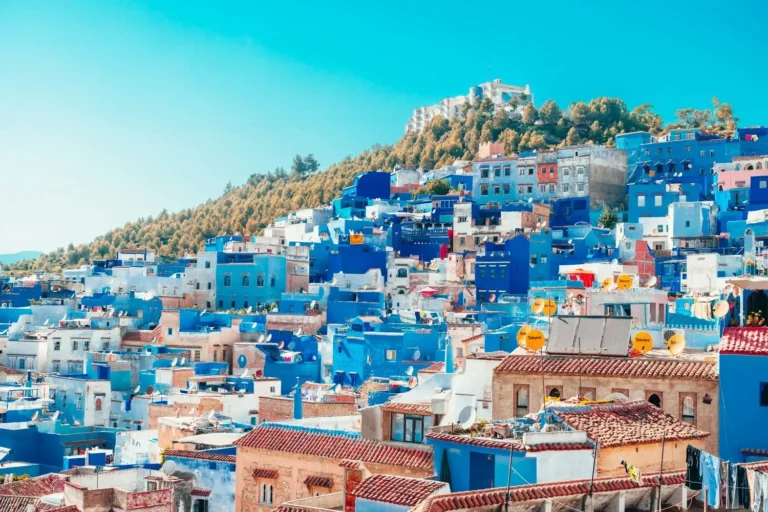
Agadir will never compete with Marrakech for ancient atmosphere or with Chefchaouen for sheer visual beauty. It does not try to. What Agadir offers instead — the finest urban beach in Morocco, reliable sunshine, excellent seafood, extraordinary day trip opportunities, and an ease of navigation that more complex cities cannot match — is genuinely valuable and genuinely enjoyable.
Come for the beach. Stay for Paradise Valley and Taroudant. Eat at the port. Surf at Taghazout. And appreciate a Moroccan city that has rebuilt itself from catastrophe with remarkable resilience and genuine charm.
For more Morocco inspiration, read our Essaouira travel guide for Morocco’s other great Atlantic coast city, and our Morocco trip cost breakdown for complete budget planning. For official tourism information, visit Visit Morocco.